

If you’ve spent any time around modified diesel trucks, you’ve heard the debate. Loud versus livable. Raw versus refined. Few exhaust mods spark more opinions than Duramax straight pipes, and for off-road owners chasing maximum flow and unmistakable sound, the appeal is obvious. A straight-piped Duramax doesn’t whisper. It announces itself. And for the right build, that’s the point.
But here’s the thing. Straight piping a Duramax isn’t just about noise. It’s about airflow, turbo response, heat management, and how the truck actually behaves once the novelty wears off. I’ve seen owners love it. I’ve seen others pull it off six months later. The difference usually comes down to expectations and setup.
This guide breaks it all down. No fluff. No forum myths. Just real-world insight into Duramax straight pipes, how they work, what they change, and when they make sense for an off-road truck built for performance.
What a Straight Pipe Really Means on a Duramax
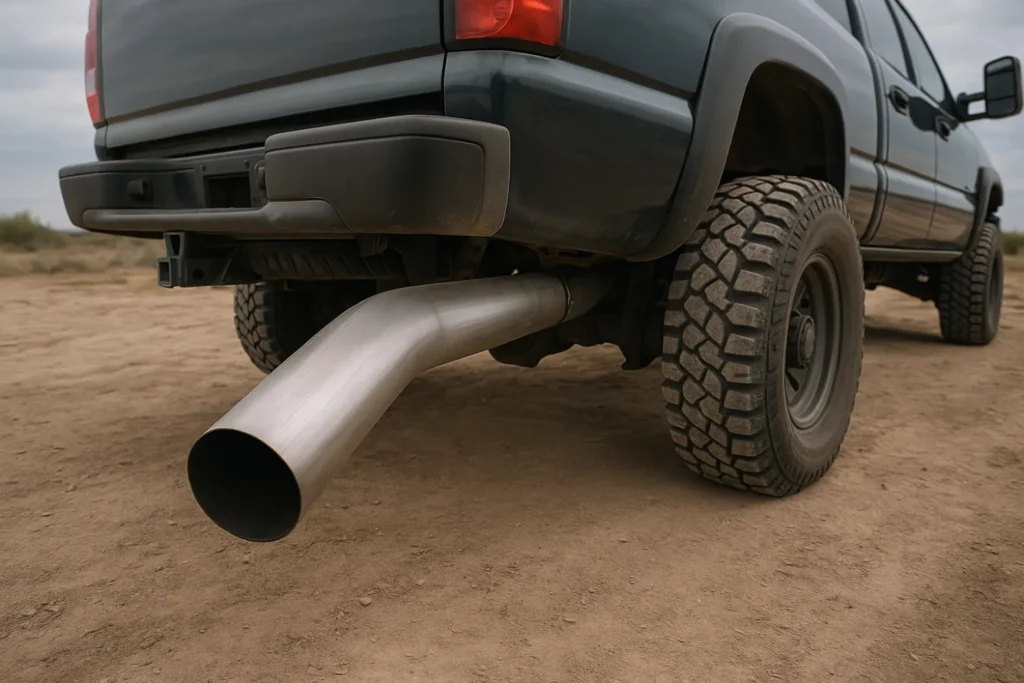
A straight pipe exhaust is exactly what it sounds like. A continuous section of pipe running from the downpipe back, with no muffler, no resonator, and no flow-restricting chambers. On emissions-equipped trucks used off-road, it typically follows a full delete setup.
What’s removed or replaced:
- Muffler
- Resonator
- Factory emissions hardware (off-road use only)
What stays:
- Turbocharger
- Exhaust piping (upsized or replaced)
Straight piping isn’t the same as a muffler delete. A muffler delete often leaves resonators or factory bends in place. A true straight pipe is a clean, open path for exhaust gases to exit as fast as physics allows.
Pipe diameter matters more than people realize. Most Duramax straight pipe setups fall into:
- 4-inch
- 5-inch
- 6-inch (rare, aggressive, and usually overkill)
Each size changes the sound and drivability in meaningful ways.
Duramax Generations and Straight Pipe Compatibility
Not every Duramax reacts the same way to a straight pipe. Generation matters.
LB7 (2001–2004)
The LB7 is almost unfair in this conversation. No factory emissions equipment. Simple exhaust routing. Straight piping an LB7 produces:
- Sharp turbo whistle
- Clean, mechanical diesel tone
- Minimal drone compared to newer trucks
For off-road builds, the LB7 is one of the most forgiving platforms for Duramax straight pipes.
LLY (2004.5–2005)
The LLY adds complexity, mostly around heat. Straight pipes help reduce exhaust restriction, which can actually support better thermal behavior when paired with proper tuning. Expect:
- Slightly deeper tone than LB7
- More pronounced cold-start bark
- Strong turbo response
LBZ & LMM (2006–2010)
This is the sweet spot. Many owners consider these the best years for Duramax straight pipes.
- Excellent sound balance
- Strong spool
- Predictable throttle response
LBZ and LMM trucks respond well to straight pipes when tuning is dialed in correctly.
LML (2011–2016)
Here’s where things change. The LML comes factory-equipped with DPF and SCR systems. In off-road applications:
- Straight pipes dramatically reduce backpressure
- Tuning becomes mandatory
- Sound gets louder, faster
Without proper calibration, an LML can feel rough with a straight pipe. With it? The truck wakes up.
L5P (2017+)
The L5P is powerful, sensitive, and smart. Straight piping one for off-road use requires:
- Advanced tuning
- Careful attention to EGTs
- Realistic expectations
The sound is aggressive. The margin for error is smaller.
Performance Gains: What Straight Pipes Actually Deliver
Let’s be clear. Duramax straight pipes don’t magically add massive horsepower by themselves. Anyone telling you otherwise is selling something.
What they do improve:
- Exhaust flow
- Turbo efficiency
- Throttle response
By removing restrictions, the turbo doesn’t work as hard to move exhaust gases. That translates into quicker spool and slightly lower exhaust gas temperatures.
Turbochargers rely on exhaust energy, not exhaust restriction, to function efficiently. Removing downstream bottlenecks allows the turbine to operate in a cleaner pressure environment, especially under sustained load. For a deeper technical explanation of how turbochargers work and why exhaust flow matters, Wikipedia’s breakdown of turbocharger operation is a solid reference.
Realistic performance expectations
| Setup | Expected Gain |
|---|---|
| Straight pipe only | 5–15 hp |
| Straight pipe + tuning | 25–60 hp |
| Straight pipe + tuning + turbo | Significant |
The real gains happen when a straight pipe supports other modifications. On its own, it’s a foundation piece. Not the whole structure.
Sound: The Real Reason People Go Straight Pipe
Let’s not pretend otherwise. Sound is why most people straight pipe their Duramax.
And yes it’s loud.
Cold starts are aggressive. Idle is mechanical and sharp. Wide-open throttle turns heads whether you want it to or not. The exhaust note is raw, unfiltered, and unapologetic.
But sound changes with setup.
Factors that shape sound:
- Pipe diameter
- Turbo size
- Tuning profile
- Cab insulation
A 4-inch straight pipe delivers a tighter, higher-pitched note. A 5-inch pipe deepens the tone and reduces some rasp. Six inches? That’s for trucks that live off-road and don’t care who hears them coming.
Drone is the wildcard. Some trucks barely have it. Others resonate at highway speeds. This often comes down to wheelbase length and gearing.
Straight Pipe vs Muffler Delete vs Full Exhaust

Not every owner needs to go full straight pipe. Here’s how the options stack up.
| Feature | Muffler Delete | Straight Pipe | Full Exhaust |
|---|---|---|---|
| Sound | Moderate | Aggressive | Tuned |
| Cost | Low | Low–Mid | High |
| Flow | Improved | Maximum | Optimized |
| Drone Control | Fair | Poor–Fair | Good |
A straight pipe is the most aggressive option. It’s also the least forgiving. Full exhaust systems cost more, but they’re designed to balance sound and drivability.
Supporting Mods That Make Straight Pipes Work Better
A straight pipe works best when it’s not alone.
Key supporting mods:
- Tuning (EFI Live, EZ Lynk, custom calibrations)
- Upgraded downpipe for smoother turbo exit
- High-flow intake to balance airflow in and out
- Turbo upgrades for controlled sound and performance
Without tuning, especially on newer trucks, straight pipes can feel rough. With tuning, they feel intentional.
Reliability and Long-Term Considerations
This is where the conversation gets serious.
Straight pipes don’t inherently damage engines. Poor setups do.
Things to monitor:
- Exhaust gas temperatures
- Turbo shaft speed
- Cab fatigue from noise
Lower backpressure can actually help EGTs under load. But aggressive tuning paired with a straight pipe can push components harder than intended.
Daily driving fatigue is real. Even owners who love loud trucks admit that constant drone wears on you over time.
Emissions, Legal, and Off-Road Use Disclaimer
Let’s be absolutely clear.
Duramax straight pipes are for off-road use only.
In the United States, emissions equipment is regulated under the Clean Air Act. Removing or altering factory-installed emissions components on vehicles operated on public roads can violate federal law. The U.S. Environmental Protection Agency outlines enforcement authority and compliance requirements directly in its air enforcement guidance.
This is why Explosive Diesels focuses on competition, farm, ranch, and off-road-only builds when discussing straight pipes and delete configurations.
Know your local regulations. Build responsibly.
Installation: DIY or Shop?
Straight pipes are mechanically simple. Installation quality still matters.
DIY installs typically involve:
- Pre-bent pipe sections
- Band clamps or welding
- Proper hangers
Shop installs offer:
- Cleaner routing
- Better welds
- Reduced leak risk
Typical costs
- DIY setup: $200–$500
- Shop install: $400–$1,000
- Stainless custom work: $1,200+
Cheap setups work. Clean setups last.
Who Should (and Shouldn’t) Run a Straight Pipe
Straight pipes make sense if:
- Your truck is primarily off-road
- You enjoy aggressive sound
- You’re running tuning and airflow mods
They’re a bad idea if:
- You daily drive long distances
- You want quiet cruising
- You expect “bolt-on horsepower”
Honesty here saves money later.
Common Myths About Duramax Straight Pipes
“Straight pipes ruin turbos.”
False. Poor tuning ruins turbos.
“They always drone.”
Not always. But it’s common.
“You can’t daily one.”
You can. Whether you want to is another story.
Real-World Owner Feedback
Most owners say the same thing:
- “I love the sound under throttle.”
- “Cold starts are intense.”
- “Highway drone surprised me.”
A smaller group says:
- “I added a resonator later.”
- “I switched to a muffled exhaust.”
None of them regret learning firsthand.
Final Verdict: Are Duramax Straight Pipes Worth It?
For the right truck, yes. Absolutely.
Duramax straight pipes deliver unmatched exhaust flow and unmistakable sound. They simplify the exhaust system and support serious off-road performance builds. But they demand commitment. To noise. To tuning. To understanding the trade-offs.
At Explosive Diesels, straight pipes are a tool not a requirement. Used correctly, they elevate a build. Used carelessly, they become a regret.
Choose based on how you actually use your truck. Not just how you want it to sound on day one.
If raw diesel sound and maximum flow are your goal, Duramax straight pipes deliver. Loudly.
FAQs
On their own, Duramax straight pipes provide small gains, but they significantly improve airflow and support larger horsepower increases when paired with proper tuning.
Drone depends on pipe size, cab length, and gearing, but many straight-piped Duramax trucks experience noticeable drone at highway speeds.
Most owners prefer a 5-inch straight pipe for a deeper tone and better flow balance, while 4-inch setups sound sharper and slightly quieter.
No, Duramax straight pipes are intended for off-road or competition use only and may violate emissions regulations if used on public roads.
A properly tuned straight pipe setup does not harm the turbo, but aggressive tuning without airflow management can increase component stress.
Reducing exhaust restriction can help lower EGTs under load, particularly on tuned off-road Duramax builds.
LBZ and LMM Duramax trucks are often favored for straight pipes due to their balanced exhaust tone and predictable performance response.
It can be daily driven, but increased noise and potential drone make it less comfortable for long highway commutes.
Straight pipes offer maximum flow and sound at a lower cost, while full exhaust systems provide better sound control and daily drivability.