

If you spend any time around modified Ram trucks, you’ve probably heard the term 6.7 Cummins race pipe come up more than once. Sometimes it’s mentioned casually, other times with strong opinions attached. That alone tells you something. This isn’t just another shiny bolt-on. It’s a modification that directly affects how your engine breathes, responds, and holds up over time in off-road conditions.
Modern diesel engines make incredible power. But they also carry a lot of hardware that wasn’t designed with performance as the top priority. The 6.7 Cummins is no exception. From the factory, airflow is carefully controlled, restricted, and redirected to satisfy emissions requirements first. A race pipe changes that equation. Clean airflow in. Fewer moving parts. Less restriction. More consistency when you actually lean on the truck.
At Explosive Diesels, the goal isn’t hype. It’s understanding what works, why it works, and when it makes sense. So let’s break down the 6.7 Cummins race pipe in practical terms how it functions, what it improves, where the gains come from, and what you should think through before installing one on your off-road build.
Understanding the Factory 6.7 Cummins Intake Setup
Before you can appreciate what a race pipe does, you need to understand what it replaces.
From the factory, the 6.7 Cummins uses an intake horn that incorporates a throttle valve, often called the air control valve. Unlike a gas engine, a diesel doesn’t need a throttle plate to regulate power. Fuel controls output. The throttle valve exists primarily to support emissions functions, especially the EGR system.
Here’s what that factory setup does well:
- Helps regulate airflow during EGR operation
- Assists with engine shutdown smoothness
- Supports emissions strategies under varying loads
Here’s what it doesn’t do well:
- Provide unrestricted airflow
- Stay clean over long service intervals
- Age gracefully under heat, soot, and boost
Over time, soot from the EGR system coats the intake path. The throttle valve can stick. Sensors get dirty. Actuators wear out. None of this helps performance. And when a component designed for emissions starts failing, it can take drivability with it.
This is where off-road owners start looking for alternatives.
What Is a 6.7 Cummins Race Pipe?
A 6.7 Cummins race pipe is a replacement intake component that removes the factory throttle valve and provides a straight, unrestricted airflow path into the intake manifold. No butterfly valve. No actuator. No internal obstructions.
Most race pipes are:
- CNC-machined or cast aluminum
- Designed with smooth internal transitions
- Built to handle high boost and heat
- Configured to accept factory sensors or block them off
The design philosophy is simple. Air should move into the engine with as little resistance and turbulence as possible. When you eliminate moving parts from the intake tract, you also eliminate common failure points.
It’s not flashy. But it’s effective.
How a Race Pipe Improves Airflow and Efficiency
Airflow is everything in a diesel engine. More clean air allows for better combustion. Better combustion leads to more usable power and lower exhaust gas temperatures under load.
A race pipe improves airflow in a few important ways.
First, it removes the throttle plate. Even when fully open, that plate disrupts airflow. It creates turbulence and pressure drop, especially at higher boost levels.
Second, it smooths the intake path. Many race pipes feature gradual bends and consistent diameters that keep airflow stable as it enters the intake manifold.
Third, it reduces intake contamination over time. Without EGR gases cycling through the intake horn, soot buildup slows dramatically on off-road trucks.
The result isn’t just peak power. It’s consistency. The engine breathes the same way every time you ask it to work.
Performance Gains: What to Expect (and What Not to Expect)
Let’s be realistic.
A 6.7 Cummins race pipe by itself is not a magic horsepower button. You’re not bolting on 80 horsepower with a single part. What you are doing is removing a bottleneck.
Most owners notice:
- Sharper throttle response
- Smoother power delivery
- Faster turbo spool under load
- More stable boost at higher RPM
Horsepower gains are usually modest on a stock-tuned truck. Where the race pipe really shines is when paired with tuning and supporting modifications.
Think of it like this. If your engine is trying to inhale through a partially closed door, tuning can only do so much. Open the door fully, and everything else starts working better.
Reliability: The Real Reason Many Owners Install One
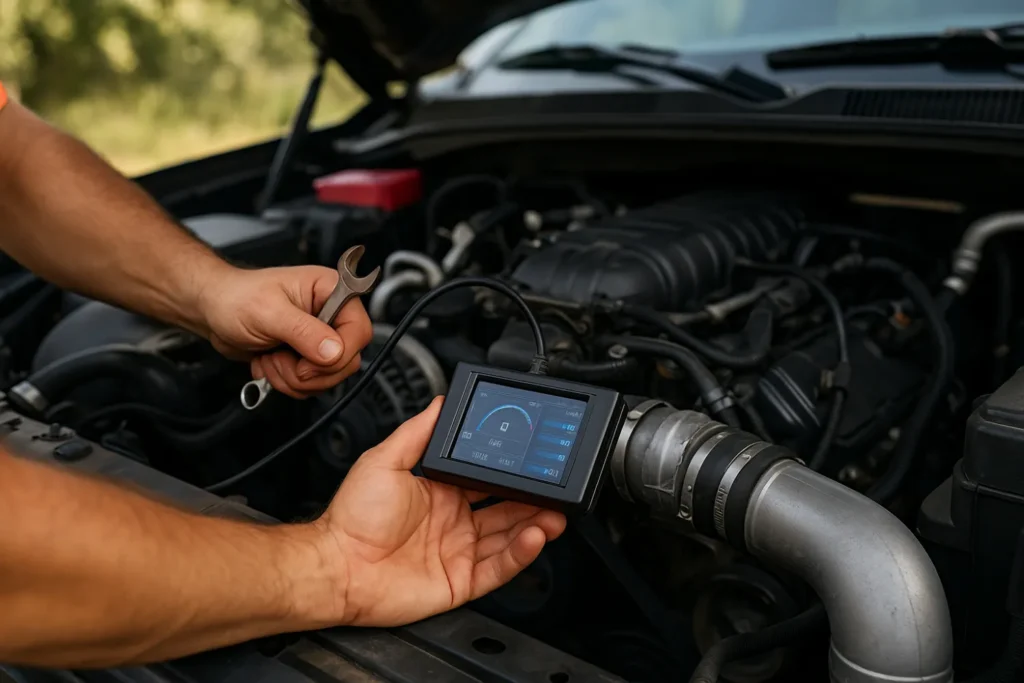
For a lot of off-road diesel owners, reliability matters more than peak numbers. A race pipe delivers real benefits here.
The factory throttle valve is a known failure point. When it sticks or fails, you can experience:
- Reduced power
- Check engine lights
- Limp mode
- Rough shutdowns
Removing it eliminates that risk entirely.
There’s also the issue of soot buildup. Over time, EGR contamination can choke the intake path and affect airflow consistency. A race pipe helps keep the intake cleaner for longer, especially on trucks used hard or driven infrequently.
Less complexity often means fewer problems. That’s not marketing. That’s mechanical reality.
Where a 6.7 Cummins Race Pipe Makes the Most Sense
Not every truck is used the same way. A race pipe tends to shine in specific scenarios.
Off-road performance builds
Trail trucks, desert rigs, and recreational builds benefit from improved response and reduced intake restriction.
Sled pulling and drag racing
Consistent airflow and fewer moving parts matter when the engine lives at high load.
Deleted off-road trucks
Once emissions equipment is removed for off-road use, the factory throttle valve no longer serves a meaningful purpose.
High-mileage trucks
Older engines often benefit from removing components prone to sticking or failure.
If your truck never leaves the pavement and remains fully emissions-intact, a race pipe may not be the right fit. Context matters.
Supporting Mods That Pair Well With a Race Pipe
A race pipe works best as part of a system, not a standalone upgrade.
Common supporting modifications include:
- EGR delete kits (off-road use only)
- Cold air intakes with high-flow filters
- Upgraded intercooler boots
- Performance tuning platforms
- Free-flowing exhaust systems
Together, these parts allow the engine to inhale, compress, burn, and expel air more efficiently. Each mod supports the next.
Here’s a quick overview:
| Modification | Benefit When Paired With a Race Pipe |
|---|---|
| Tuning | Maximizes airflow and response |
| Intake | Reduces restriction before the turbo |
| Intercooler boots | Handles higher boost safely |
| Exhaust | Lowers backpressure |
The race pipe becomes the foundation rather than the headline.
Tuning Considerations After Installation
This is important.
While some trucks can physically run a race pipe without tuning, that doesn’t mean they should. The ECU still expects to see certain airflow behaviors and sensor feedback.
Proper tuning can:
- Prevent check engine lights
- Optimize throttle response tables
- Improve drivability at low speeds
- Maximize gains from improved airflow
Most reputable tuners offer configurations specifically designed for race pipe setups on off-road trucks. Skipping this step leaves performance on the table.
Compatibility Across 6.7 Cummins Model Years
Not all 6.7 Cummins engines are identical.
Early models, mid-cycle updates, and newer trucks can differ in:
- Sensor placement
- Intake horn design
- Emissions strategy
Before purchasing a 6.7 Cummins race pipe, confirm:
- Your model year range
- Sensor requirements
- Intercooler boot compatibility
A quick check saves time, frustration, and unnecessary returns.
Installation Overview: What You’re Getting Into
Installing a race pipe is generally straightforward for a mechanically inclined owner.
Most installs require:
- Basic hand tools
- 1–2 hours of time
- New gaskets or O-rings
Key steps usually include removing the factory intake horn, disconnecting sensors, installing the race pipe, and reconnecting everything cleanly.
Common mistakes to avoid:
- Pinched O-rings
- Loose clamps
- Ignoring sensor orientation
Take your time. Cleanliness matters in the intake path.
Downsides and Tradeoffs to Consider
No modification is perfect.
With a race pipe, potential considerations include:
- Loss of factory throttle-assisted shutdown behavior
- Slightly louder intake sound
- Cold-weather drivability changes in rare cases
These are usually minor, but they’re worth acknowledging. Performance always comes with tradeoffs. The key is knowing whether they matter for your use case.
Legal and Emissions Disclaimer (Off-Road Use Only)
A 6.7 Cummins race pipe is intended for off-road use only. Removing or altering emissions equipment on a street-driven vehicle can violate federal and state regulations. At Explosive Diesels, the focus is education. Understanding the laws where you live is your responsibility. Build smart. Build informed.
Cost Breakdown: What a Race Pipe Setup Really Costs

Pricing varies, but most race pipes fall into a reasonable range.
Typical costs include:
- Race pipe: moderate investment
- Gaskets and hardware: minimal
- Tuning (if needed): variable
- Labor (DIY vs shop): flexible
When weighed against long-term reliability and supporting performance gains, many owners see it as money well spent.
Is a 6.7 Cummins Race Pipe Worth It?
So, is it worth it?
If you’re building an off-road 6.7 Cummins focused on reliability, responsiveness, and airflow consistency, the answer is often yes. The gains aren’t flashy. They’re functional. And they compound with other modifications over time. If your truck is bone stock and strictly street-driven, it may not be the first upgrade to consider. But for performance-oriented builds, it makes sense.
Final Thoughts from Explosive Diesels
The 6.7 Cummins race pipe isn’t about chasing trends. It’s about removing unnecessary restrictions and simplifying the intake system so the engine can do what it was designed to do make power efficiently and reliably. Done right, it supports every other performance upgrade you add later. Done without thought, it can feel underwhelming. Build with purpose. Understand the why. And always match the modification to how you actually use your truck.
That’s how real performance is built.
FAQs
A 6.7 Cummins race pipe replaces the factory intake horn and throttle valve with a straight-through design to improve airflow and reduce restriction.
On its own, gains are modest, but it noticeably improves throttle response and supports higher horsepower when combined with tuning and other mods.
Tuning isn’t always mandatory, but it’s strongly recommended to prevent check engine lights and optimize airflow and drivability.
Yes, removing the factory throttle valve eliminates a common failure point and reduces soot buildup in the intake on off-road trucks.
For off-road use, many owners tow successfully with a race pipe, especially when paired with proper tuning and cooling upgrades.
Yes, it can slightly improve turbo response by reducing intake turbulence and airflow restriction before the turbocharger.
Without tuning, some trucks may trigger a check engine light, which is why proper tuning is recommended.
No, race pipes are intended for off-road use only and are not legal for emissions-compliant street driving.
Most DIY installations take about one to two hours with basic hand tools.
For off-road performance builds focused on airflow, reliability, and future power upgrades, a race pipe is often a worthwhile modification.