
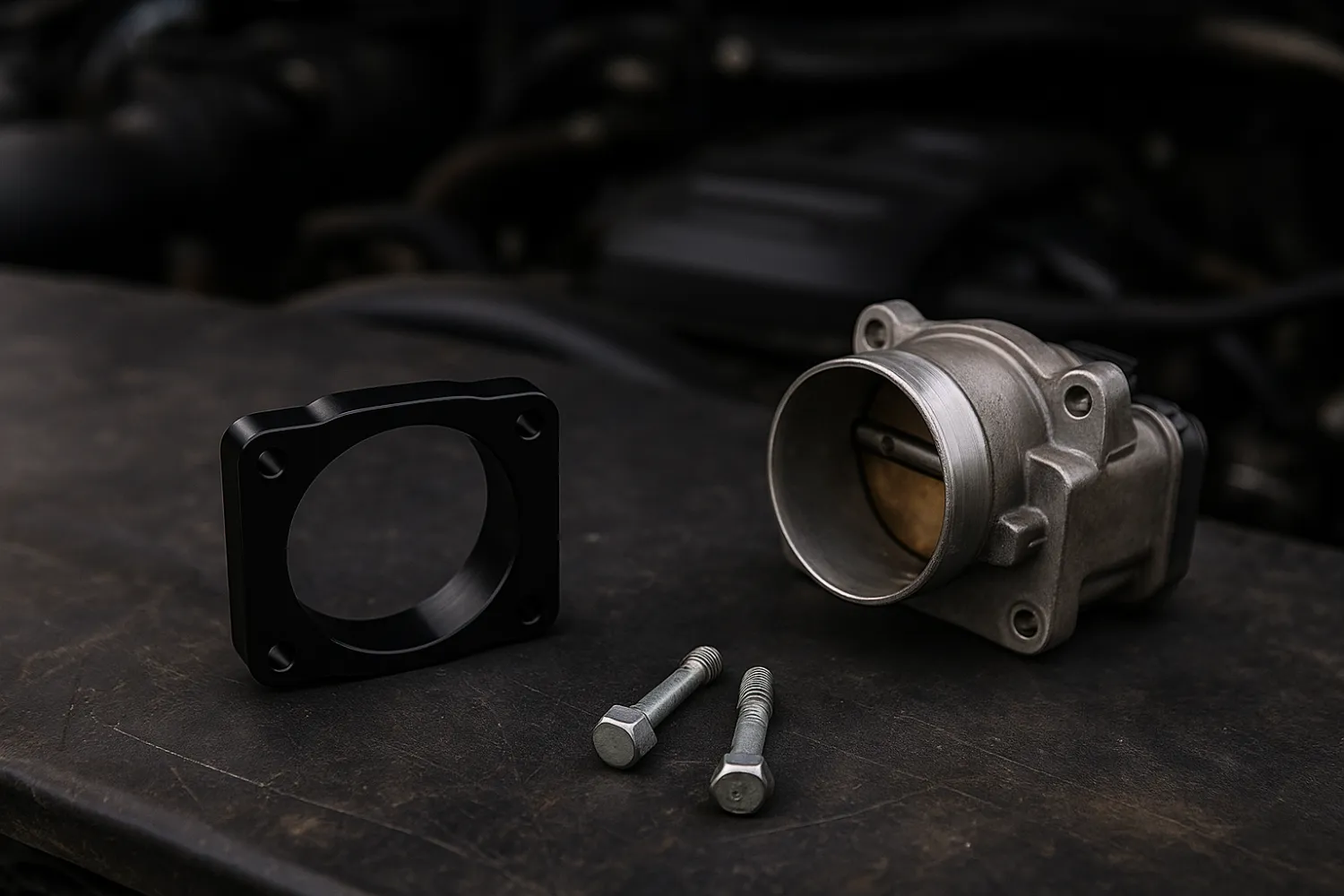
The 6.7 Cummins throttle valve delete has become one of the most talked-about airflow modifications in the off-road diesel community and for good reason. This single component has a reputation for failing at the worst possible moment, choking airflow when the engine needs it most. Off-road drivers often ask whether removing it can actually improve reliability and performance. The short answer? Under the right conditions, absolutely. But there’s more to the story than simply pulling a part and calling it a day.
Let’s break it all down. Cleanly. Honestly. With the level of detail you expect from Explosive Diesels.
I. Why the Throttle Valve Exists in the First Place
The throttle valve sits right on the intake horn of your 6.7 Cummins. Unlike gas engines, diesels don’t need a throttle body to meter air for combustion. But emissions systems do. The throttle valve’s primary role is to create artificial restriction so exhaust gases can be recirculated back into the intake during certain emissions strategies.
When you drive under normal load, the valve rarely closes completely. Instead, the ECM modulates it gently to control:
- EGR flow rate
- Turbo response
- Idle quality
- Regeneration events
It’s a fairly simple device. But simplicity doesn’t stop it from becoming a pain point.
II. The Problems No One Loves to Talk About
If you’ve spent any time in off-road forums, you’ve already seen the common complaints:
Carbon Buildup & Sticking
EGR soot loves to plate itself on the throttle valve. Over time, this sticky buildup causes the vane to move slower than the ECM expects. Eventually, it may get stuck.
Frequent DTCs
The most common codes include:
| Code | Meaning |
|---|---|
| P1514 | Throttle Valve Closed Performance |
| P1516 | Throttle Actuator Control Circuit Low |
| P2011 | Intake Manifold Runner Control Stuck Open |
These codes often force the truck into limp mode — the last thing you want on the trail.
Unpredictable Airflow
A closing throttle valve restricts air pressure, which can disrupt turbo efficiency and create uneven spool characteristics. For off-road applications where throttle control matters, this inconsistency is far from ideal.
Reduced Drivability
Many owners describe the truck as:
- Sluggish
- Hesitant
- Lazy off the line
- Unpredictable under towing load
Combine these issues long enough and the throttle valve becomes an obvious target for removal.
III. What a 6.7 Cummins Throttle Valve Delete Actually Does
A throttle valve delete is straightforward. You remove the throttle valve assembly and replace it with a billet plate, a machined aluminum tube, or a full intake horn that eliminates the restriction.
Deleting the throttle valve:
- Removes the vane that can stick
- Allows unrestricted, consistent airflow
- Removes the motor and gears that commonly fail
- Simplifies the intake tract
A key point: the 6.7 Cummins throttle valve delete does NOT add horsepower on its own. Its value lies in eliminating failure points and creating predictable airflow under heavy load.
IV. Why Off-Road Drivers Delete It
Let’s be real. Off-road diesel drivers are not deleting equipment for aesthetics. They care about reliability and consistent performance. Here’s where this mod shines.
1. Consistent Airflow, Every Time
No surprise dips. No unexpected closing. Just smooth airflow exactly when the turbo needs it.
2. Better Throttle Response
When airflow is stable, throttle inputs feel sharper and more controlled.
3. Reduced Soot Recirculation
Less soot in the intake means:
- Cleaner MAP sensor
- Cleaner turbo vanes
- Cleaner intercooler
4. Lower EGTs Under Load
A freer-breathing engine doesn’t need to work as hard.
5. Improved Reliability
With one less moving part relying on ECM timing, failures drop dramatically.
Here’s a quick benefit snapshot:
| Benefit | Impact Level |
|---|---|
| Reliability | ★★★★★ |
| Throttle Response | ★★★★☆ |
| EGT Reduction | ★★★☆☆ |
| Horsepower | ★☆☆☆☆ |
| Consistency | ★★★★★ |
The 6.7 Cummins throttle valve delete isn’t glamorous but it’s effective.
V. The Realistic Performance Gains
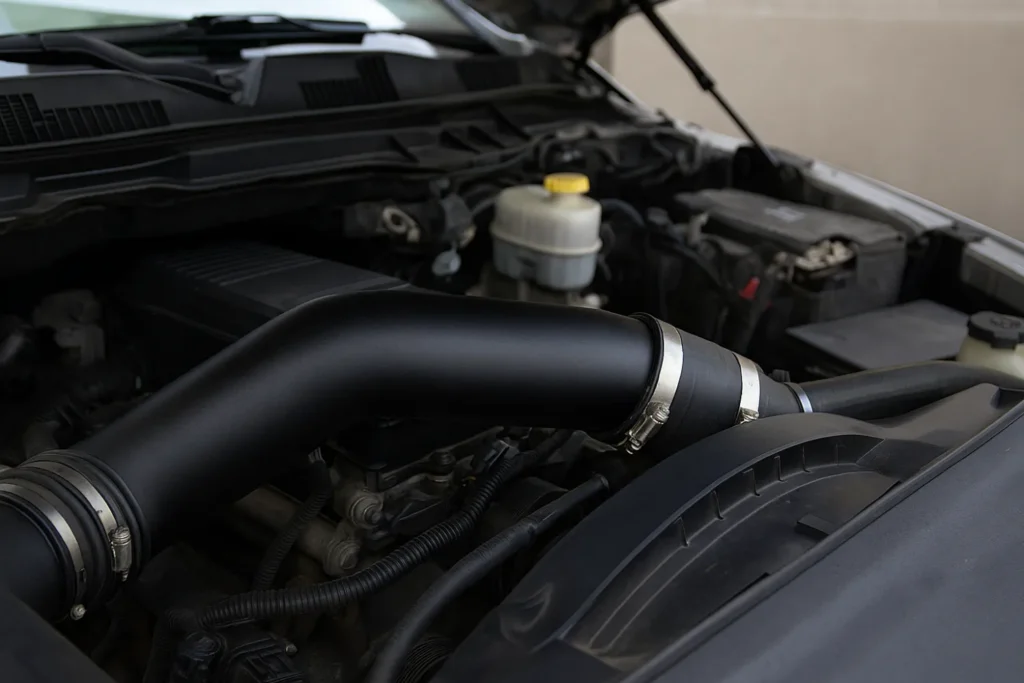
Let’s keep expectations grounded. This isn’t a turbo swap. It’s a refinement mod.
Where You Will Notice Gains
- Faster spool under light throttle
- Improved load response when towing off-road
- More stable boost curve
- Slight improvement in airflow temperature consistency
Where You Won’t Notice Gains
- Peak horsepower
- Peak torque
- High-RPM powerband differences
The gains become much more noticeable when paired with:
- An EGR delete (off-road use only)
- A DPF delete (off-road use only)
- A performance tune
- A higher-flow intake horn
Together, these mods create a freer-breathing engine that behaves predictably, even in harsh terrain.
VI. The Risks and Downsides — Yes, They Exist
Every mod has a trade-off. The throttle valve delete is no exception.
1. ECM Confusion Without Tuning
The ECM expects to see the throttle valve move. When it doesn’t, you may get:
- CELs
- Improper EGR calculations
- Rough idle (rare but possible)
2. Legal Restrictions
Removing emissions components on vehicles used on roads is illegal. This must be emphasized clearly and repeatedly.
3. Warranty Considerations
Any emissions-related modification can void manufacturer warranties.
4. Airflow Isn’t Always “More = Better”
In some load scenarios, emissions strategies rely on partial valve closure. With the valve gone, the ECM loses that control.
This is exactly why proper tuning matters.
VII. Explosive Diesels Legal Disclaimer (Required Section)
A 6.7 Cummins throttle valve delete is intended for off-road, competition, or closed-course use only.
Removing, altering, or disabling emissions equipment on any vehicle driven on public highways violates the U.S. Clean Air Act. Federal and state penalties may apply. Explosive Diesels does not encourage, promote, or condone the removal of emissions equipment on vehicles used on public roads.
This information is provided for educational purposes only for off-road diesel enthusiasts.
VIII. Installation Overview: What to Expect
This isn’t a step-by-step tutorial but here’s the high-level picture.
Tools Usually Required
- Basic socket set
- Torx bits
- Pick tools
- Shop rags
- Dielectric grease
Skill Level
Easy to moderate.
Most off-road drivers tackle it in under 90 minutes.
Process Overview
- Remove intake horn bolts
- Disconnect throttle motor connector
- Pull assembly from manifold
- Install delete plate or pipe
- Torque everything to spec
- Clear codes (if any)
Fitment Tips
Model years vary slightly.
2007.5–2012 trucks often require small adjustments.
2013+ trucks usually accept plate kits with no issue.
IX. Tuning Requirements: Don’t Skip This Part
This is where many off-roaders get confused. So let’s make it simple.
Do You Need Tuning?
| Configuration | Tuning Required? |
|---|---|
| Throttle Valved Deleted Only | Not always, but recommended |
| Throttle Valve Delete + EGR Delete | Yes |
| Full Emissions Delete (off-road only) | Yes |
| Throttle Valve Delete + Stock EGR/DPF | Sometimes triggers CELs |
Why Tuning Matters
The ECM expects feedback from the valve. When it doesn’t see it move, it panics. Tuning cleans up:
- DTCs
- EGR logic
- Idle control strategies
- Turbo vane transitions
A properly tuned truck behaves better with a throttle valve delete — not worse.
Best Practices
- Always load the tune before pushing the truck hard
- Avoid cheap tuning files
- Monitor EGTs the first few hours
The 6.7 Cummins throttle valve delete is a clean, reliable upgrade, but only when combined with proper calibration.
X. Maintenance After Deleting the Valve
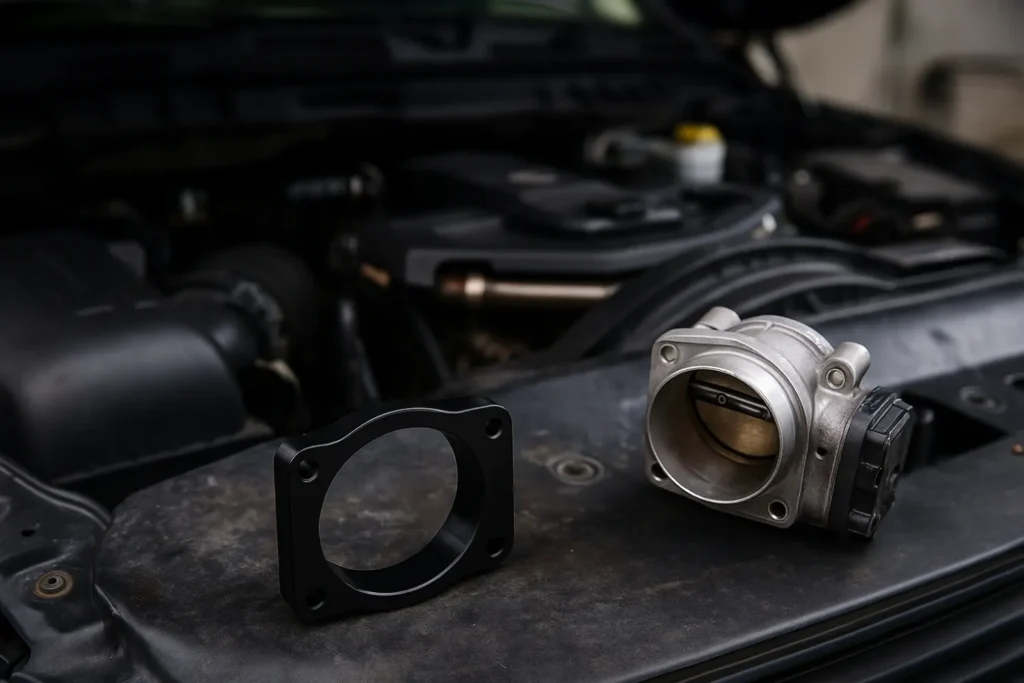
Even though the part is gone, your engine still needs attention.
1. Inspect the Intake System Regularly
Vibration can loosen bolts over time.
2. Monitor Boost Levels
Extremely abnormal boost may indicate an unrelated issue not the delete.
3. Clean the MAP Sensor More Often
With airflow fully open, soot pattern changes slightly.
4. Listen for Whistling or Leaks
A small leak near the delete plate can cause major performance issues.
Routine care keeps performance consistent.
XI. Throttle Valve Delete vs. EGR Delete vs. Full Delete
Drivers often confuse these or assume they serve the same purpose.
Quick Comparison
| Modification | Primary Benefit | Best For |
|---|---|---|
| Throttle Valve Delete | Reliability + airflow consistency | Off-road drivers wanting fewer failure points |
| EGR Delete | Lower soot production | Heavy-load drivers off-road |
| DPF Delete | Lower backpressure | Competition trucks only |
| Full Delete Kit | Maximum airflow + reliability improvement | Off-road/competition use |
The 6.7 Cummins throttle valve delete is the least dramatic of the three, but also the most practical for improving reliability without overhauling the entire emissions system.
XII. Cost Breakdown: What You Should Expect to Spend
Parts Cost
- Delete plate kit: $45–$120
- Full replacement intake horn: $150–$300
Optional Costs
- Custom tuning: $250–$600
- Shop installation: $120–$250
Long-Term Savings
A stuck throttle valve can cost $200–$400 to replace.
Avoiding limp mode situations during off-road use? Priceless.
XIII. Should You Do the 6.7 Cummins Throttle Valve Delete?
Here’s the most honest assessment you’ll read today.
You SHOULD consider it if…
- You use your truck exclusively off-road
- You want maximum airflow consistency
- You hate dealing with recurring throttle valve codes
- You tow or climb in dusty, hot environments
- You’re pairing it with tuning or other deletes
You SHOULD NOT consider it if…
- Your truck is driven primarily on public roads
- You’re concerned about warranty protection
- You don’t plan on tuning
- You prefer leaving emissions equipment untouched
Explosive Diesels Scorecard
| Category | Score |
|---|---|
| Reliability Improvement | ★★★★★ |
| Power Increase | ★☆☆☆☆ |
| Cost-Effectiveness | ★★★★☆ |
| Ease of Installation | ★★★★☆ |
| Off-Road Performance Consistency | ★★★★★ |
When done correctly, the 6.7 Cummins throttle valve delete gives you something every off-road driver wants: predictability.
XIV. Final Thoughts: The Smart Off-Road Upgrade
You came here looking for clarity, not hype. So here it is.
A 6.7 Cummins throttle valve delete won’t turn your truck into a fire-breathing monster. But it will make it behave better. It will make it more consistent. It will eliminate one of the most failure-prone parts of the 6.7 platform. And when paired with tuning and complementary off-road mods, it helps create a smoother, more responsive driving experience exactly what matters when the terrain gets rough.
Whether you wrench in the driveway or build competition trucks, this upgrade delivers real value where it counts: reliability.
And that’s why Explosive Diesels continues to recommend it for dedicated off-road builds.
FAQs
It creates controlled airflow restriction for emissions functions like EGR flow and idle stability. When it sticks, it can cause drivability issues and error codes.
It removes a common failure point and provides consistent, unrestricted airflow for off-road performance.
Not directly. The benefits come from smoother airflow, better response, and improved reliability not peak power gains.
Not always, but tuning is highly recommended to prevent CELs and restore proper ECM airflow logic.
Yes, if limp mode is caused by a sticking or failed throttle valve, removing it can eliminate the issue for off-road use.
No. It is legal only for off-road, competition, or closed-course applications.
It typically improves turbo consistency by preventing unexpected airflow restriction.
Yes, it helps reduce soot accumulation in the intake since the valve no longer restricts airflow.
Most off-road drivers complete it in 30–90 minutes using basic hand tools.
You can, but CELs are more likely without tuning, and airflow behavior may be unpredictable.