The 2021 Ram 3500 delete kit is a phrase every off-road diesel enthusiast eventually stumbles across, especially when they want more power, cooler temps, and better drivability from the 6.7L Cummins. And it makes sense this truck is already a beast, but take it off the pavement with a loaded trailer, and you start to feel every ounce of exhaust restriction and regen-related hesitation. Some owners look for ways to push past those limits. Others simply want to understand what all the hype is about. That’s what this guide is for: a clear, honest, in-depth look at what delete kits are, why enthusiasts talk about them, and equally important the legal, reliable alternatives that still give massive performance gains without touching federally regulated systems.
This article lives right at home on Explosive Diesels, because we’re here for one purpose: helping off-road trucks perform at their absolute best. Let’s dive into this with precision, clarity, and a bit of punch.
I. The 2021 Ram 3500: A Workhorse Built for Hard Terrain
Some trucks feel tough. The 2021 Ram 3500 proves it. With its 6.7 Cummins powerplant, towering torque output, and heavy-duty cooling system, this truck wants to pull, climb, crawl, and push through terrain that would make smaller rigs tap out. But the moment you get into remote land, deep mud, or dusty environments, exhaust aftertreatment systems start to complicate things. You may experience regens at the worst possible time. You may see temperatures spike. Or maybe you’ve hit limp mode after a sensor decided today wasn’t its day.
This is the real reason people search for “2021 Ram 3500 delete kit.” Not because they want to break rules but because they want reliability where support trucks don’t exist.
We’ll cover both sides:
- What delete kits theoretically offer (for off-road competition).
- And what legal alternatives achieve similar gains in a compliant way.
II. Understanding the Truck’s Emissions Systems
Before discussing any delete-related concept, you need a clear picture of what’s on the truck:
| Component | Purpose | Common Off-Road Challenge |
|---|---|---|
| EGR (Exhaust Gas Recirculation) | Reduces NOx by recirculating exhaust | Raises soot levels in intake under heavy load |
| DPF (Diesel Particulate Filter) | Captures soot | Requires regens; risk of clogging in low-speed off-road use |
| SCR & DEF System | Reduces NOx using DEF fluid | Sensor failures, DEF freezing issues |
| NOx, Temp, and Pressure Sensors | Monitors exhaust behavior | Can trigger limp mode if readings go unstable |
These systems are essential for on-road emissions compliance. But in slow, dusty, or high-load off-road environments, the regen frequency and airflow restrictions can influence drivability.
This is why many truck owners end up researching the 2021 Ram 3500 delete kit, even if they ultimately choose legal alternatives instead.
III. What a Delete Kit Typically Includes (Education Only)
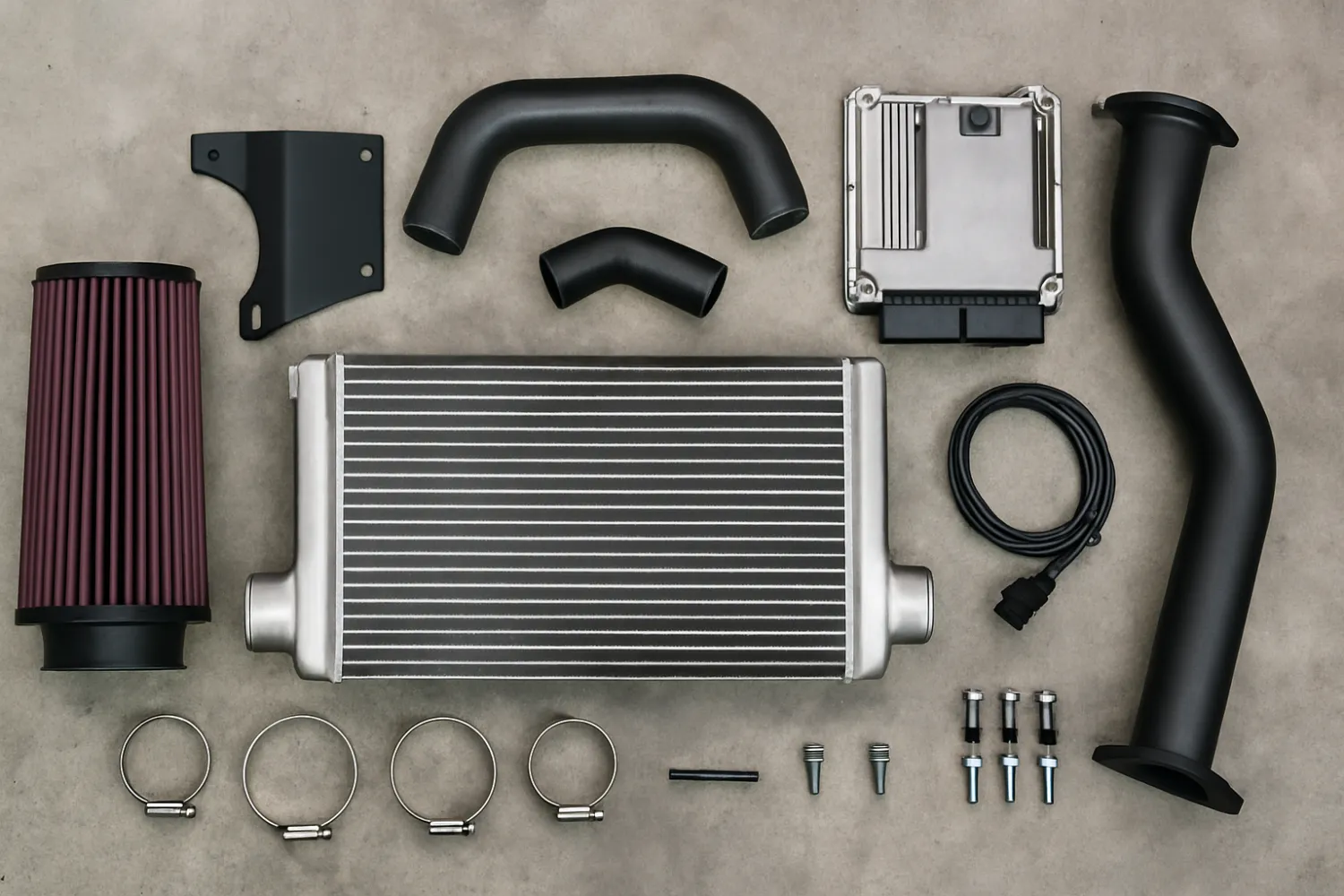
To understand conversations about delete kits, you must understand what’s inside one. Conceptually, a “2021 Ram 3500 delete kit” may refer to:
- EGR block-off plates
- EGR cooler bypass components
- Straight-section exhaust piping to replace DPF/SCR assemblies
- Wiring adapters or module simulators
- Supporting off-road-only tuning files
Again this is not an instruction manual. This is conceptual knowledge so readers understand the terminology floating around diesel forums.
IV. Why Off-Road Drivers Discuss Delete Kits
Not surprisingly, the conversations tend to center around reliability. When you’re pushing a Ram 3500 through terrain where a tow truck can’t reach you, the stakes rise dramatically.
Enthusiasts often mention the following theoretical benefits of the 2021 Ram 3500 delete kit in off-road competition setups:
- Lower exhaust gas temperatures
- Better turbo response thanks to reduced restriction
- Prevention of regen cycles mid-trail
- Reduced soot circulation
- Fewer sensor-related shutdown events
But here’s the part many articles skip: there are legal paths to achieving many of these gains. And we’ll talk about them soon.
V. Performance Changes Associated With Delete Kit Conversations
Owners researching the topic usually want numbers. So here is what people typically expect in off-road competition setups when deleting:
Potential Gains (Educational Illustration Only)
| Upgrade Type | Expected Impact |
|---|---|
| Off-road tuner + delete components | +60–120 HP potential, depending on tune aggressiveness |
| Reduced backpressure | Faster turbo spool |
| Cooler EGTs | Better sustained climbing ability |
These values vary widely. They’re tied to tuning, ambient temp, load, altitude, and turbo condition. They are not standardized results.
But here’s the key takeaway:
📌 Many of the same performance gains can be achieved through legal methods.
And that’s where the conversation gets interesting.
VI. Legal, High-Impact Alternatives to a 2021 Ram 3500 Delete Kit
This is the part most truck owners never hear because too many guides jump straight into mods that aren’t road-legal.
Below are powerful, EPA-compliant ways to boost your Ram 3500’s capability while keeping emissions systems intact.
1. CARB-Compliant Tuners & Monitors
Legal tuners focus on:
- Optimizing fuel timing
- Enhancing throttle response
- Smoothing torque delivery
- Improving drivability under load
These do not disable emissions systems. Instead, they improve the truck’s ability to handle the demands you’re placing on it.
2. Upgraded Intercoolers
A cooler charge means:
- Lower EGTs
- Higher sustained towing output
- Less thermal stress during climbs
No emissions components are touched here.
3. High-Flow, Emissions-Compliant Intakes
Better filtration + improved airflow = more consistency in dirty, dusty, off-road environments.
4. Emissions-Safe Exhaust Systems
Some performance exhausts maintain DPF/SCR housings but improve:
- Tone
- Flow ahead of the turbo
- Durability against trail impacts
5. Preventative Maintenance
Often overlooked but wildly effective:
- Clean MAP sensor
- Replace crankcase filter
- Keep DEF fresh (old DEF creates problems fast)
You’d be shocked how much drivability you gain from simple steps.
6. Turbo Upgrades Designed for Emissions Compatibility
Journal-bearing or low-inertia turbos maintain emissions systems but improve:
- Spool
- High-altitude performance
- Towing response
These upgrades give legal horsepower.
VII. Why Proper Tuning Matters Delete or Not
If there’s one truth in the diesel world, it’s this:
Tuning makes or breaks performance.
Even when staying fully legal, tuning platforms can:
- Improve pedal response
- Reduce gear-hunting during towing
- Adjust shift timing for the Aisin or 68RFE
- Optimize turbo mapping for high load
And if you’re running off-road competition tuning, it becomes even more essential. No other modification influences performance to this degree.
VIII. Off-Road Situations Where Restrictions Cause Problems
Let’s be blunt. Some terrains punish emissions systems harder than others.
Challenging Environments:
- Deep sand
- Mud bogs
- Low-speed rocky crawls
- Mountain towing
- High-dust regions
These environments restrict airflow, overwork turbos, and push EGTs upward. This is precisely why so many people search the internet for the 2021 Ram 3500 delete kit even though many ultimately decide on legal solutions.
IX. Compatibility Considerations on the 2021 Ram 3500
The 2021 model year has variations that matter.
Engine Output Differences
- Standard Output (68RFE) → Good headroom, but trans becomes the limiting factor
- High Output (Aisin) → Stronger platform for heavy off-road towing
DRW vs SRW
- DRW trucks handle load better
- SRW trucks excel in trail agility
Sensor Updates for 2021
Ram added tighter emissions diagnostics, which is why modern delete kits differ from older models and why legal tuning and upgrades have grown vastly more popular.
X. Legal Disclaimer & Compliance Reality Check

Explosive Diesels is committed to educating off-road enthusiasts, not directing illegal activity.
Important facts:
- Emissions deletes are not legal on public roads in the U.S.
- Delete kits are intended only for closed-course, off-road competition
- EPA penalties can apply to unlawful modification
- Many diesel shops no longer perform deletes due to regulation changes
This is why we push both:
education and legal alternatives.
XI. Post-Upgrade Maintenance Essentials
Whether you’re running legal upgrades or off-road competition parts, maintenance keeps everything alive.
Recommended Habits:
- Monitor EGTs consistently
- Change oil more frequently under heavy load
- Clean sensors regularly
- Keep an eye on turbo shaft play
- Inspect exhaust joints after rough trail use
A healthy Cummins lasts forever. A neglected one doesn’t.
XII. Common Myths About the 2021 Ram 3500 Delete Kit
Let’s clear up some misconceptions.
- Myth: “A delete always improves MPG.”
Reality: Driving habits matter more than hardware. - Myth: “Deleting fixes all reliability issues.”
Reality: Poor tuning ruins engines faster than restrictions. - Myth: “Deletes are cheap.”
Reality: Full setups + tuning can easily exceed $2,000–$3,000. - Myth: “You don’t need tuning.”
Reality: You absolutely do. - Myth: “Legal upgrades don’t make a difference.”
Reality: Some legal mods make massive improvements when paired correctly.
XIII. Pros & Cons of Delete Kit Conversations
Here’s a balanced view for readers trying to make sense of conflicting opinions.
Pros
- Lower soot load
- Cooler exhaust temps
- Fewer sensor shutdowns off-road
- Stronger throttle response
Cons
- Not legal for public-road use
- Requires off-road tuning
- Warranty considerations
- Higher upfront cost
XIV. Cost Overview
| Category | Estimated Cost |
|---|---|
| Delete hardware (off-road only) | $700–$1,800 |
| Tuning platform | $600–$1,200 |
| Legal performance upgrades | $300–$3,500 |
| Installation labor | $400–$1,500 |
Legal upgrades are surprisingly competitive in cost and carry far less risk.
XV. Should You Upgrade Your 2021 Ram 3500?

If your goal is:
- Better towing
- Cooler EGTs
- Higher reliability
- Stronger trail performance
…you have two paths:
1. Stay fully compliant
Use legal tuners, intercoolers, intakes, stronger turbos, and smart maintenance. Dramatically safer for daily-driven trucks.
2. Off-road competition only
Some teams utilize delete-style builds for competition where allowed. These are highly specialized setups, not general-use trucks.
For most enthusiasts?
Legal upgrades + thoughtful tuning hit the sweet spot.
XVI. Final Thoughts
The 2021 Ram 3500 delete kit is a heavily searched topic for a reason. It represents the desire for reliability, control, and pure mechanical freedom especially when you’re far from help and deep into rough terrain. But modern diesel performance has evolved. Today, you can achieve huge gains through EPA-compliant, emissions-safe upgrades that make your truck stronger, cooler, and more responsive than ever.
Explosive Diesels exists to empower that journey. Whether you’re building a dedicated off-road rig or a daily that occasionally sees the wild, you now know the landscape, the terminology, the risks, and the alternatives. Make it powerful. Make it safe. Make it yours.
FAQs
It’s designed for off-road competition setups that remove emissions restrictions to improve performance and reliability.
No emissions deletes are not legal on public roads and are restricted to off-road competition environments.
Yes, legal performance upgrades like CARB-compliant tuners and intercoolers can significantly boost drivability.
They want fewer regen interruptions, lower EGTs, and better throttle response in demanding terrain.
Not always; driving style, load, and tuning quality influence MPG more than hardware changes alone.
Yes, any emissions-related modification can impact manufacturer warranty coverage.
Yes, tuning is mandatory to ensure the engine operates correctly once emissions parts are removed.
Upgraded intercoolers, emissions-safe intakes, and high-quality turbos offer major improvements while staying compliant.
Frequent regens, clogged filters, high EGTs, and sensor faults in off-road environments.
Yes higher upfront costs, the need for specialized tuning, and strict limitations on where the truck can be used.