
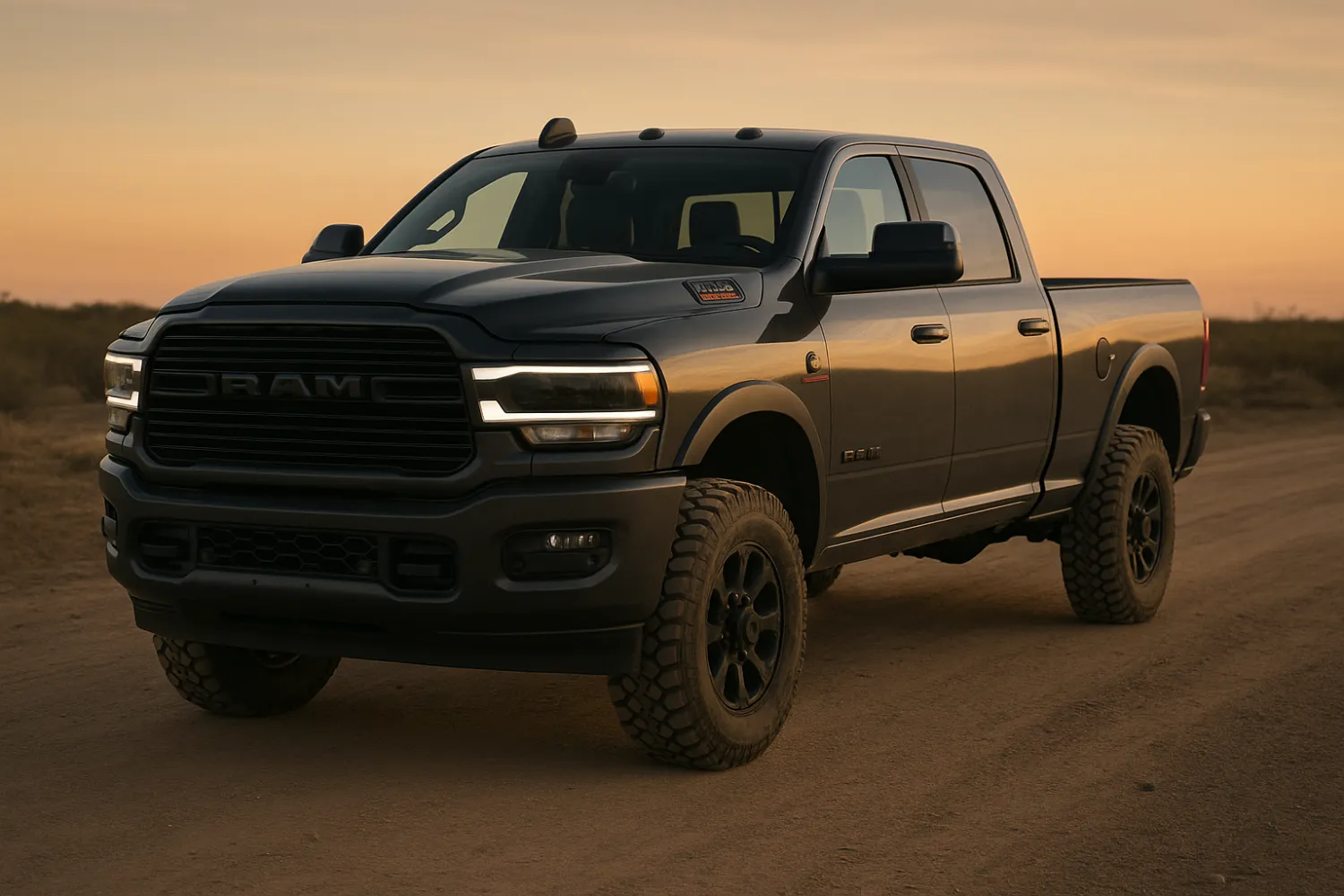
There’s a moment every Ram HD owner hits usually somewhere between a grueling climb, a trailer pulling downhill, or a regen that kicks in at the worst possible time when you wonder what this truck could really do without all the bottlenecks. And that’s exactly where interest in a 2022 Ram 2500 delete kit begins. I’ve talked to countless off-roaders who chase more torque, steadier temperatures, and a truck that feels alive under pressure. Some of them want long-haul reliability. Others want pure, unfiltered grunt. Either way, deleting for off-road use is a conversation that always circles the same point: unlocking the 6.7L Cummins the way it was meant to run in harsh terrain.
Of course, before we go any further, here’s a straightforward reminder tampering with emissions equipment is illegal for on-road vehicles. Everything discussed here is strictly for off-road, competition, or closed-course use. Now with that said, let’s dig into what actually happens, why people do it, and how to do it right.
I. Why So Many Off-Roaders Consider a 2022 Ram 2500 Delete Kit
Let’s be honest. The 2022 Ram 2500 is already a monster. But emissions systems EGR, DPF, SCR, the whole chain introduce heat, restriction, and maintenance cycles that aren’t always ideal for rugged environments. If your truck works in mud, sand, rock, deep woods, or constant load, you’ve seen how quickly exhaust temps soar.
A delete kit solves several off-road problems at once:
- Reduces exhaust backpressure
- Stabilizes EGTs under load
- Removes regen cycles that interrupt performance
- Creates smoother airflow and cleaner turbo behavior
When off-roaders talk about “wake-up power,” this is what they’re referring to. And the 2022 Ram 2500 delete kit is one of the most popular paths to get there.
II. Understanding the Emissions Puzzle on the 6.7L Cummins
To understand the transformation, you must understand the obstacles.
EGR (Exhaust Gas Recirculation)
Designed to reduce NOx emissions, it feeds exhaust back into the intake. Great for emissions. Terrible for off-road airflow and soot buildup.
DPF (Diesel Particulate Filter)
This catches soot. Over time, it packs up, forcing regen cycles that spike heat and fuel use. Off-roaders working low-speed trails feel this immediately.
SCR + DEF System
Uses DEF fluid to reduce emissions. Works fine on the highway. But off-road? DEF consumption becomes unpredictable, and system faults can trigger limp modes.
Let’s stack the effects clearly:
| Component | Off-Road Impact | Why It Matters |
|---|---|---|
| EGR | Heat + soot buildup | Reduces performance under load |
| DPF | Regen cycles | Interrupts torque delivery |
| SCR/DEF | Can fail mid-job | Can trigger derates or limp mode |
| Sensors | More points of failure | Not ideal for rugged terrain |
The takeaway? The emissions chain does its job well on highways, but its side effects show up when terrain gets brutal. That’s why conversations around a 2022 Ram 2500 delete kit keep coming up in off-road circles.
III. What’s Inside a Proper 2022 Ram 2500 Delete Kit?
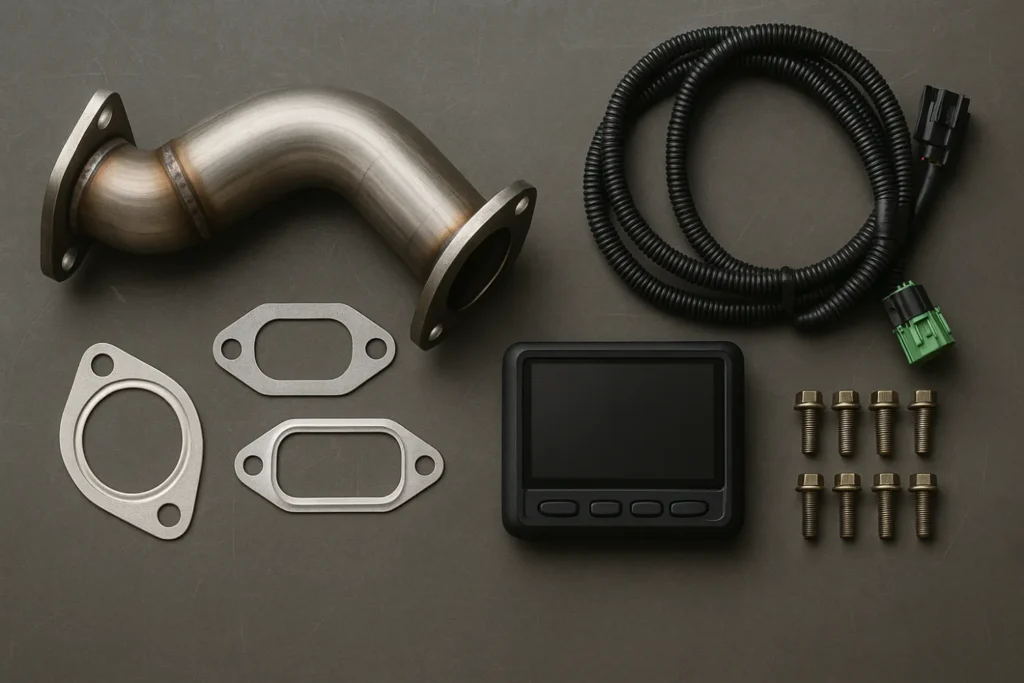
A true delete kit isn’t just a pipe. It’s a system. And every piece supports airflow, temperature control, or ECU recalibration.
Here’s what’s usually included:
- DPF/CAT Delete Pipe – Frees up exhaust restriction, simplifies the system.
- EGR Block-Off Plates + Coolant Reroute Fittings – Stops soot recycling and stabilizes airflow.
- Race Tuner or ECM Calibration – The brain of the transformation. Without tuning, the truck will throw nonstop codes.
- DEF System Bypass or Removal Hardware – Depending on your build goals.
- Sensors, Clamps & Heat-Resistant Hardware – Small components that prevent installation headaches.
When evaluating kits, I always tell off-roaders: Match the kit to your specific performance goals. A crawler needs different tuning from someone towing 15,000 lb through uneven terrain.
IV. Off-Road Performance Gains After Deleting: What’s Real vs. Hype
Let me make this clear I’m not here to promise fantasy numbers. I’ve seen plenty of misleading claims floating around. But with a 2022 Ram 2500 delete kit, you can expect several real, measurable improvements.
Actual Gains Many Off-Roaders Experience
- 75–120+ HP increase depending on tune
- 150–280 lb-ft torque gains at usable RPMs
- EGT drops of 150–300°F under load
- Better turbo spool thanks to less backpressure
- A more consistent torque curve on climbs
Those aren’t magic numbers. They’re the result of removing restrictions that choke the Cummins during peak demand.
Fuel Efficiency Off-Road
Deleted trucks often see 1–3 MPG improvement in off-road settings. Not because deleting saves fuel magically, but because:
- No regens
- Cooler combustion
- Cleaner airflow
- Reduced parasitic load
On rough terrain, fuel economy matters. Especially when pulling gear into the backcountry.
V. The Legal, Mechanical, and Safety Realities
Explosive Diesels always keeps this part transparent.
Legal Realities
- Emissions system removal is prohibited for on-road use.
- Fines can be severe.
- Reinstating emissions equipment is costly if you want to return to road-legal status.
Warranty Considerations
Once deleted, don’t expect warranty repairs on:
- Turbo components
- Engine internals
- Emissions-related systems
Deleting can also affect trade-in value with dealers.
Mechanical Risks
If someone installs a delete kit incorrectly or tunes aggressively without proper support mods, risks include:
- High cylinder pressure
- Turbo overspeed
- Transmission strain
- Coolant leaks from poorly sealed EGR block-offs
Deleting isn’t a hack. It’s a process that requires precision. That’s why choosing quality components matters.
VI. How to Choose the Right Delete Kit for a 2022 Ram 2500
Not all kits are equal. Some are meant for budget builds. Others are engineered for heavy competition use. When evaluating a 2022 Ram 2500 delete kit, focus on the details.
Key Factors to Compare
- Material Quality
- Aluminized steel: budget-friendly, decent longevity
- Stainless steel: best for harsh climates and heavy mud exposure
- Pipe Diameter
- 4″ is balanced and ideal for most builds
- 5″ is louder and flows more air, fitment may be tight
- Tuner Type
- Pre-loaded devices for plug-and-play
- Custom tuning for torque optimization or altitude-specific use
- Fitment Variations
- Cab/bed length
- Aisin vs 68RFE transmission differences
- Factory exhaust routing
Budget Tiers
| Tier | Typical Price | Best For |
|---|---|---|
| Entry Level | $900–$1,400 | Light off-roaders, weekend runs |
| Mid Range | $1,400–$2,100 | Tow rigs, mixed-use off-road |
| Pro Level | $2,100+ | Heavy competition, extreme climates |
Think long-term. A quality delete kit lasts, but a cheap one creates problems you don’t want to troubleshoot on the trail.
VII. Step-By-Step Overview of the Off-Road Delete Install
I won’t pretend installation is effortless—but it’s doable with patience and the right tools. If you want a big-picture walkthrough, here it is.
1. Prepare Your Workspace
- Truck on level ground
- Allow exhaust to cool fully
- Disconnect batteries
- Have penetrating oil ready for exhaust bolts
- Lift or jack stands rated for HD trucks
2. Remove the Stock DPF/CAT Assembly
This is the most physically demanding step. The factory exhaust is heavy, and bolts can be stubborn. Don’t rush. Let penetrating oil do its job.
3. Install the Delete Pipe
Align it carefully. Gaps or misalignment can introduce exhaust leaks that skew sensor readings or create noise.
4. Remove EGR Components + Install Block-Off Plates
Follow torque specs. A coolant leak on the trail is a nightmare you don’t want.
5. Handle the DEF Tank
Some off-roaders keep it for weight balance. Others remove it to simplify the system. Do what fits your terrain profile.
6. Load Your Race Tuning
This is the heartbeat of the entire transformation. Without the right tune:
- Turbo logic may misbehave
- Transmission shift points may feel off
- MPG improvements won’t show
7. First Startup Checklist
- No exhaust leaks
- Stable idle
- No fluid loss
- Monitor EGTs and boost
8. Break-In Habits
Give the tune time to “learn.” Avoid immediate wide-open throttle runs.
This whole process takes time, but installing a 2022 Ram 2500 delete kit is one of the most rewarding off-road upgrades you can make when done correctly.
VIII. Best Off-Road Tuning Options After Deleting
Tuning is where the magic happens. You can use a delete pipe without tuning, but the truck won’t run correctly. The tune determines how the 6.7L Cummins responds to pressure, temperature, load, and boost.
Off-Road Tuning Styles
- Tow Tune – Balanced temps and power for load stability.
- Performance Tune – Maximum thrust for competitive off-road use.
- Eco-Crawl Tune – Ideal for slow-speed technical terrain.
What Tuning Adjusts
- Injection timing
- Pulse width
- Boost limits
- VGT vane control
- Turbo braking behavior
- Idle characteristics
When someone asks me why their deleted truck still feels sluggish, tuning is almost always the bottleneck. A proper tune is the difference between “It runs” and “This thing is a beast.”
IX. Supporting Mods That Pair Perfectly With a Delete
Deleting is one of the best upgrades you can do but pairing it with the right supporting mods creates something special.
Highly Recommended Add-Ons
- Lift Pump (FASS/AirDog)
Removes air/vapor from fuel, keeps rail pressure consistent. - Aftermarket Intake
Reduces restriction and pairs nicely with free-flowing exhaust. - Upgraded Intercooler
Lowers intake temps under high boost. - Transmission Tuning
Especially important for the 68RFE. - Monitoring Gauges
Keep an eye on EGT, boost, and trans temps. The more power you add, the more data matters.
Supporting mods are optional, but they stabilize your setup long-term and that’s something every serious off-roader understands intuitively.
X. Long-Term Maintenance After Deleting
Here’s the part many people overlook. A deleted truck still requires discipline. Yes, maintenance becomes more predictable, but only if you stay ahead of it.
Maintenance Checklist
- Oil Changes: Every 5,000 miles or sooner in dusty conditions
- Fuel Filters: Replace at manufacturer intervals—don’t stretch them
- Turbo Actuator Monitoring: Calibrate as needed
- Boost Leak Checks: Especially after trail runs
- Sensor Cleaning: MAP, IAT, and boost sensors deserve attention
Deleting removes restrictions. Maintenance preserves your gains.
XI. Cost Breakdown: What You Should Expect to Spend
Here’s a transparent look at the typical cost structure of a 2022 Ram 2500 delete kit and related expenses.
| Component | Typical Range |
|---|---|
| Delete Pipe | $250–$500 |
| EGR Delete Kit | $100–$350 |
| Tuner + Tune | $650–$1,500 |
| Labor (if not DIY) | $300–$1,200 |
| Total Expected | $1,300–$3,500 |
The real value comes from consistent off-road performance, improved durability, and reduced downtime.
XII. Is a 2022 Ram 2500 Delete Kit Worth It for Off-Road Use?

Short answer? For many off-roaders yes. But it depends on how you use your truck.
Best Candidates for Deleting
- Heavy hauling on ranch or farmland
- Off-road tow rigs
- Overlanding setups
- Performance-focused builds
- Low-speed crawling environments
People Who Should Avoid Deleting
- Anyone needing emissions compliance
- Owners who depend heavily on dealership servicing
- Trucks under warranty
- Urban or highway commuters
When used in the right setting, a 2022 Ram 2500 delete kit transforms the Cummins into a stronger, cooler-running, more predictable engine. But context matters.
XIII. Final Thoughts — The Explosive Diesels Take
Every off-roader wants reliability, power, and control. And when installed correctly, the 2022 Ram 2500 delete kit delivers exactly that cooler temps, more torque, and a Cummins that feels like it’s breathing freely again. I’ve worked with countless builds and seen the difference firsthand. It’s dramatic. It’s satisfying. It makes the truck feel honest.
But deleting isn’t something you jump into blindly. It requires attention. Care. The right parts. The right tune. And respect for the laws that govern emissions on public roads.
In the world of off-road performance, though? A properly built deleted Ram is nothing short of a powerhouse. And with the right mindset and maintenance, your 2022 Ram 2500 can become the dependable, trail-crushing machine you always knew it could be. If you’re building for power, longevity, and off-road dominance this upgrade belongs on your shortlist.
FAQs
A delete kit removes or bypasses emissions components like the EGR, DPF, and DEF systems for off-road or competition use only. It improves airflow, reduces restriction, and allows custom tuning.
Most trucks see 75–120+ HP and 150–280 lb-ft of torque depending on tuning and supporting mods.
Emissions removal is illegal for on-road vehicles in the U.S., and deleted trucks are for off-road/competition use only.
Yes, removing emissions components generally voids the powertrain and emissions warranty.
Absolutely without race tuning, the truck will throw codes, run poorly, and may damage components.
Most owners see a 1–3 MPG improvement due to reduced regens and smoother airflow.
DIY installs usually take 4–8 hours depending on tools and experience, while shops typically complete it faster.
No, you can leave it in place for weight balance or remove it for simplicity your off-road goals determine the choice.
Lift pumps, upgraded intakes, intercoolers, and monitoring gauges help maximize reliability and performance.
For heavy towing, crawling, or remote work environments, the gains in torque, cooling, and reliability make it a strong upgrade.