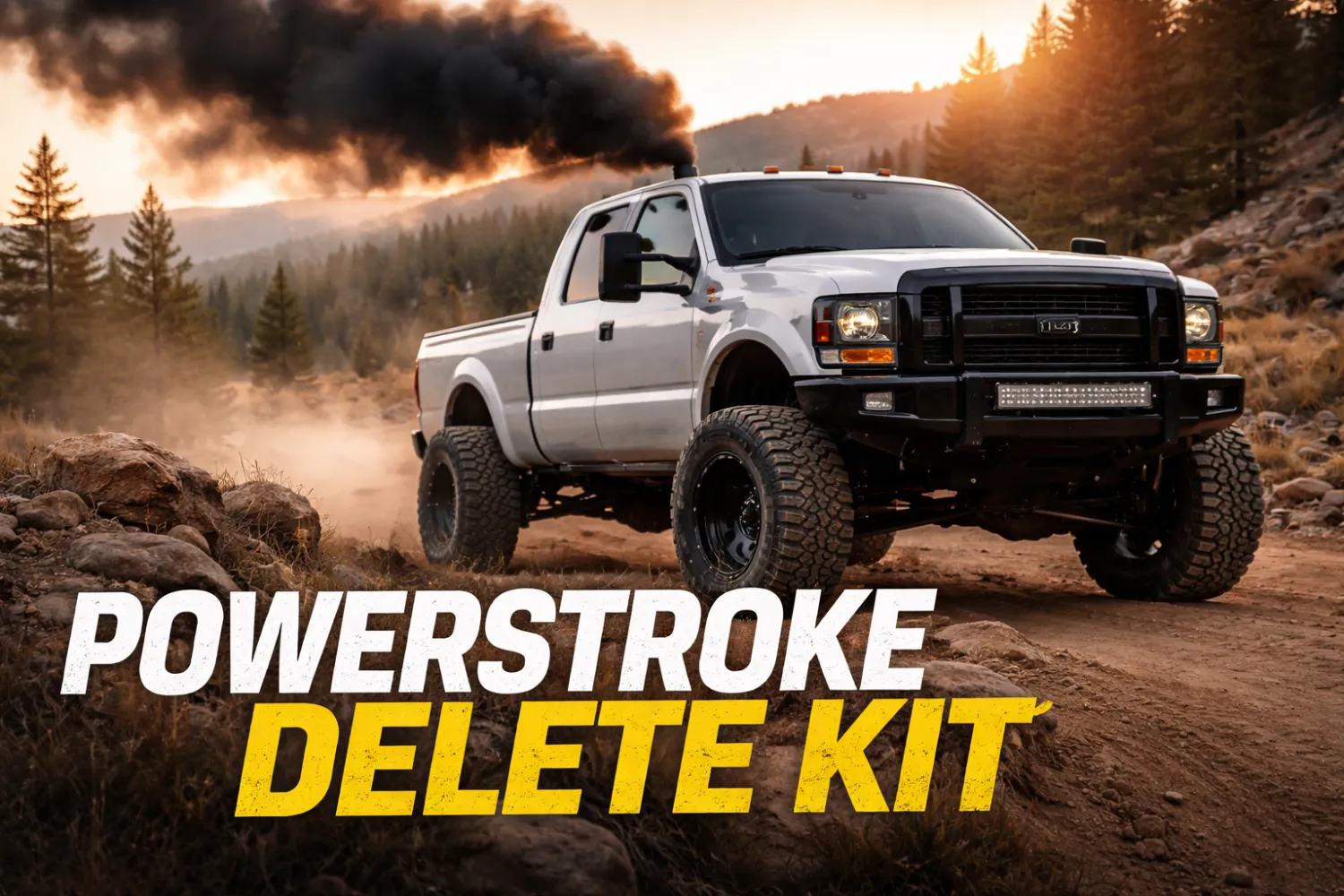
If you run a Powerstroke off-road, you’ve probably heard the phrase powerstroke delete kit more times than you can count. I hear it daily. And for good reason. When Ford added modern emissions systems, they also added heat, restriction, complexity, and long-term headaches. Off-road owners quickly learned that removing those systems properly can unlock a very different truck.
This guide is written for serious owners. Not hype chasers. Not shortcuts. Real performance. Real reliability. Real off-road use. I’ll walk you through what a Powerstroke delete kit actually does, why people run them, how they affect performance and longevity, and what mistakes to avoid if you want your truck to last. Let’s get into it.
Off-road use only. This article is intended for competition, farm, and off-highway vehicles. Always follow local laws.
Why Powerstroke Owners Consider Delete Kits
Powerstroke engines were never weak. The 6.0L, 6.4L, and 6.7L platforms all have strong blocks, stout rotating assemblies, and serious towing potential. The problem isn’t the engine. It’s what was added around it.
Modern emissions equipment was designed to meet regulations, not to maximize durability or off-road performance. Systems like the diesel particulate filter (DPF) were introduced to reduce soot emissions by trapping and burning particulates inside the exhaust stream, a process explained in detail by Wikipedia’s breakdown of the Diesel Particulate Filter. That process creates intense heat and backpressure two things off-road diesel engines don’t need.
Off-road owners don’t have that luxury.
A powerstroke delete kit removes those restrictive systems so the engine can breathe, cool, and operate the way a diesel naturally wants to. When paired with proper tuning, the truck feels lighter, stronger, and more responsive. It’s not magic. It’s physics.
What Is a Powerstroke Delete Kit?
At its core, a powerstroke delete kit is a collection of parts that removes or disables factory emissions systems. Which systems are involved depends on your engine year, but most kits address the same three components.
The Systems Removed
- DPF (Diesel Particulate Filter)
- EGR (Exhaust Gas Recirculation)
- DEF / SCR system (primarily 6.7L trucks)
Each of these systems exists to reduce emissions. None of them exist to improve engine life.
Delete kits are common in off-road trucks, race trucks, farm rigs, and work vehicles that spend their lives far from inspection lanes. When done correctly, they simplify the engine bay and dramatically reduce long-term risk.
Understanding Factory Emissions Systems (And Why They Fail)
Let’s break this down simply.
DPF: The Heat Trap
The DPF captures soot and burns it off during regeneration. That regeneration cycle requires extreme exhaust temperatures and extended run time.
High heat. High backpressure. High stress.
According to the U.S. Environmental Protection Agency (EPA), emissions systems like DPFs and SCR units are designed to meet federal clean air standards, not to optimize engine durability under heavy-load or off-road conditions, as outlined in the EPA’s overview of heavy-duty diesel emissions controls.
When regen fails or happens too often you get clogged filters, cracked housings, melted sensors, and turbo strain. It’s not if it fails off-road. It’s when.
EGR: Hot Exhaust Back Into the Engine
EGR routes hot exhaust gases back into the intake to lower combustion temperatures and reduce NOx emissions.
In the real world, this causes:
- Carbon buildup in intake runners
- Oil cooler and EGR cooler failures
- Higher intake air temperatures
- Reduced airflow efficiency
Over time, EGR systems choke the engine and introduce reliability problems that simply don’t exist on pre-emissions diesels.
DEF / SCR: Sensor Overload
DEF systems rely on heaters, pumps, injectors, and multiple sensors. When any single component fails, the truck derates or enters limp mode.
That’s unacceptable for off-road use.
What’s Included in a Powerstroke Delete Kit?
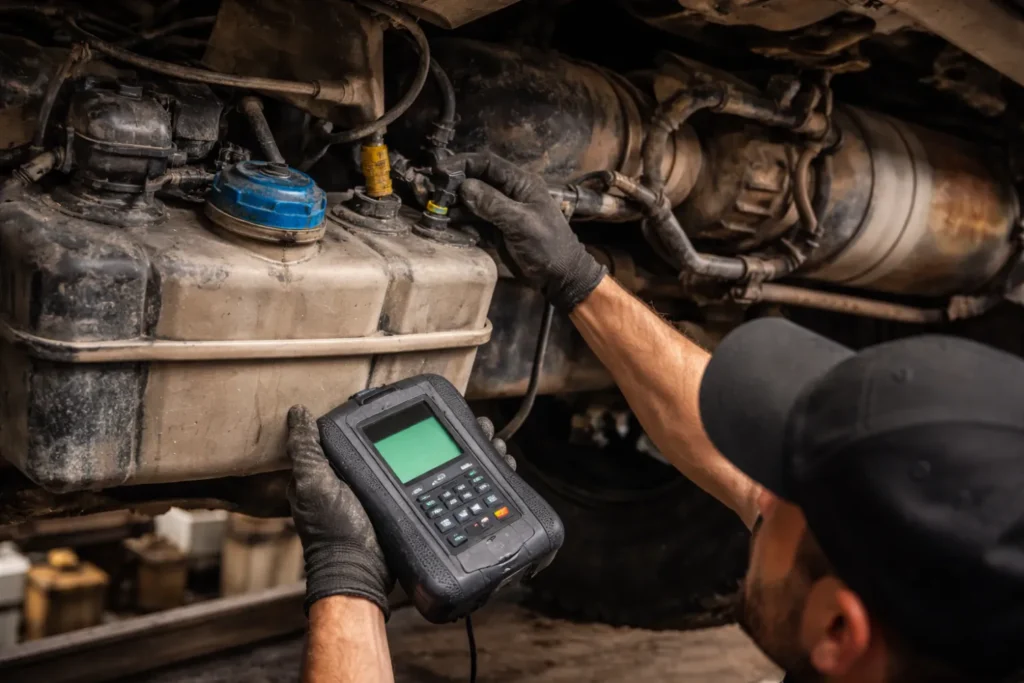
A proper powerstroke delete kit is more than just a pipe. Quality matters here.
Core Components
- EGR delete kit (cooler removal or block-off)
- DPF delete pipe or full exhaust
- DEF system removal components (6.7L)
- Hardware, clamps, and block-off plates
Supporting Mods You’ll Need
- Custom tuning (mandatory)
- Coolant reroute components
- Exhaust hangers
- Sensor solutions or eliminations
| Component | Purpose | Benefit |
| EGR Delete | Removes hot exhaust recirculation | Lower temps, cleaner intake |
| DPF Delete | Removes exhaust restriction | Faster spool, lower EGTs |
| DEF Delete | Eliminates SCR failures | No derate risk |
| Custom Tune | Reprograms engine logic | Safe, controlled power |
Skip any of these steps and you’re asking for trouble.
Tuning: The Most Important Part of Any Delete
I’ll say this clearly.
A powerstroke delete kit without proper tuning is a mistake.
The engine computer is programmed to monitor emissions systems constantly. Remove hardware without tuning and the truck will throw codes, reduce power, or refuse to operate correctly.
Good tuning:
- Removes emissions logic safely
- Controls fuel delivery and timing
- Manages transmission behavior
Custom tuning always beats canned files. Always.
Performance Gains You Can Actually Feel
A properly deleted Powerstroke doesn’t just make more power. It delivers it better.
Expect:
- Faster turbo spool
- Sharper throttle response
- Lower exhaust gas temperatures
- Smoother towing under load
Horsepower gains of 80–150 HP are common with conservative tuning. Torque arrives sooner. The truck pulls grades without constant downshifts.
Fuel economy often improves as well, because the engine isn’t fighting restriction or forced regen cycles.
Reliability: The Real Reason Deletes Matter
Power isn’t the main benefit. Longevity is.
By removing heat sources and exhaust restriction, you reduce stress on:
- Turbochargers
- Pistons and rings
- Valvetrain components
- Cooling systems
You also eliminate the most failure-prone systems on the truck. Fewer sensors. Fewer limp modes. Fewer surprises.
That matters off-road.
Delete Kits by Powerstroke Generation
6.0L Powerstroke
The 6.0L benefits heavily from EGR deletion, especially when paired with:
- Oil cooler upgrades
- Head studs
- Coolant filtration
Done right, the 6.0L becomes a reliable off-road platform.
6.4L Powerstroke
Deletes are nearly mandatory for longevity.
DPF regen leads to fuel dilution and oil breakdown. Removing those systems dramatically improves reliability and turbo life.
6.7L Powerstroke
The most complex emissions system of all.
Deleting removes:
- DEF tank and lines
- Multiple sensors
- Derate and limp-mode risks
Tuning quality matters more here than any other generation.
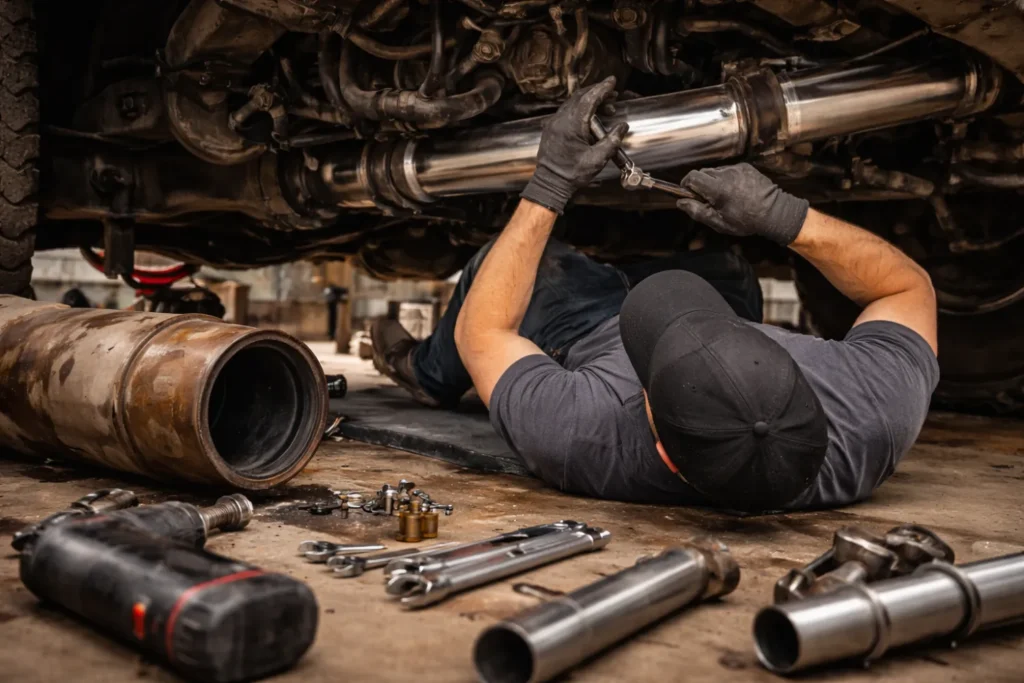
Installation: What to Expect
Installing a powerstroke delete kit takes planning.
- DIY: 1–2 full days
- Professional shop: 8–12 hours
Common mistakes include poor coolant routing, rushed sensor removal, and cheap exhaust hardware. Take your time.
Is a Powerstroke Delete Kit Worth It?
For off-road use? Yes.
For long-term ownership? Yes.
For trucks that tow, work, or live hard? Absolutely.
For emissions-compliant street vehicles? No.
This is about building the right tool for the job.
Final Thoughts from Explosive Diesels
I’ve seen deleted Powerstrokes rack up hundreds of thousands of miles when built correctly. I’ve also seen rushed builds fail fast. The difference is quality parts, smart tuning, and realistic goals.
A powerstroke delete kit isn’t about chasing numbers. It’s about removing obstacles so the engine can do what it was built to do. Breathe. Pull. Last.
Build responsibly. Build off-road. And build it once.
FAQs
A Powerstroke delete kit removes factory emissions components like the DPF, EGR, and DEF systems to improve off-road performance and reduce mechanical complexity.
Delete kits are intended for off-road, competition, or farm-use vehicles only and are not legal for emissions-controlled street use in the U.S.
Yes, with proper tuning, most Powerstroke engines see noticeable horsepower and torque gains due to reduced exhaust restriction and optimized fuel delivery.
Yes, custom tuning is mandatory to recalibrate the engine and transmission for removed emissions components and prevent fault codes or limp mode.
Many off-road owners report improved fuel efficiency because the engine no longer performs regeneration cycles or pushes exhaust through restrictive filters.
Deleted trucks are generally louder, but sound levels depend on whether the exhaust system uses a muffled or straight-pipe configuration.
The 6.4L Powerstroke typically sees the largest reliability improvement due to the removal of its problematic DPF and EGR systems.
Yes, removing emissions equipment lowers exhaust gas temperatures and reduces heat-related stress on the turbo and engine components.
Reinstalling emissions systems is possible but often costly and time-consuming, especially if sensors and hardware were removed.
For off-road, towing, and work trucks, a delete kit can significantly improve reliability, drivability, and long-term ownership experience when installed correctly.