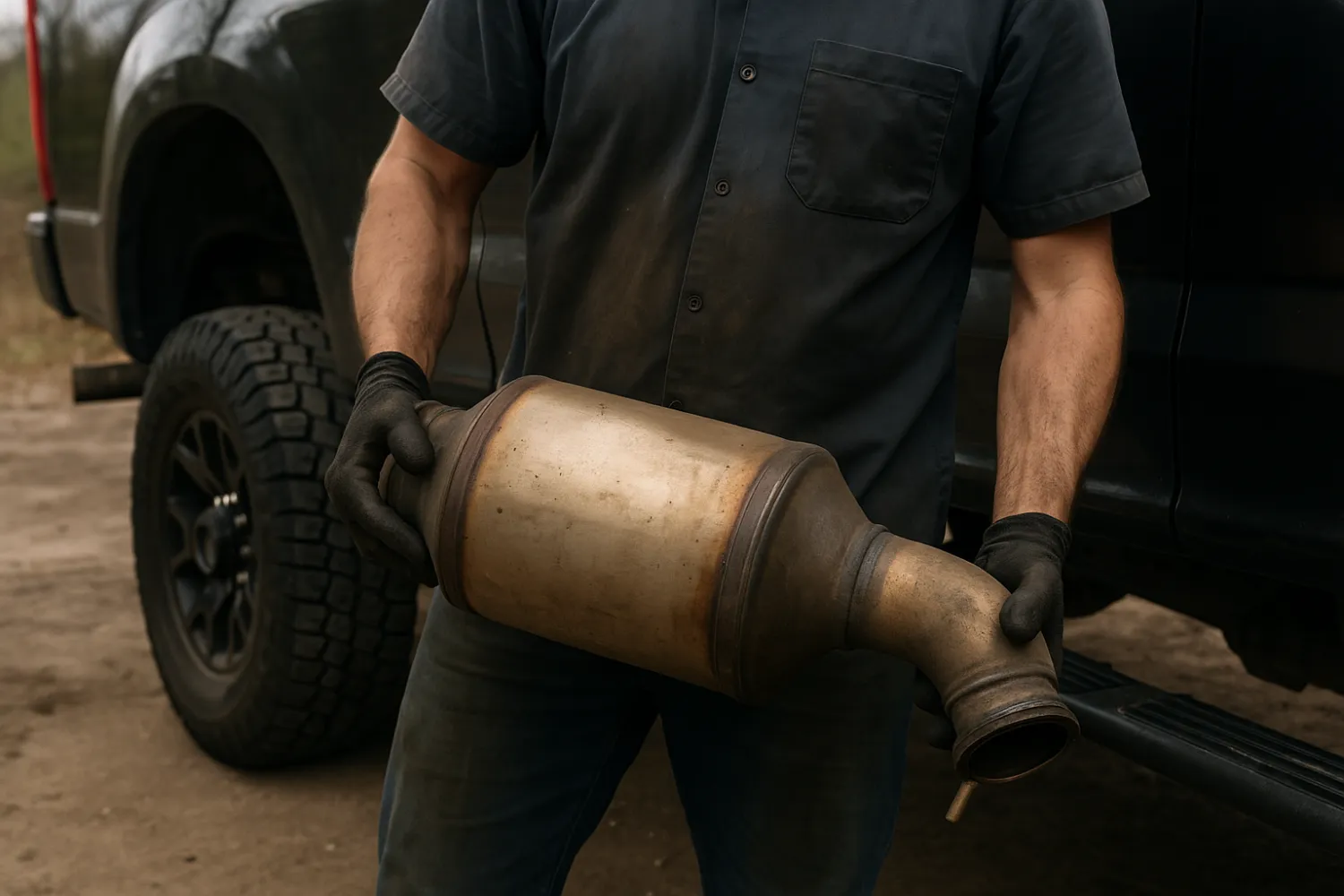
The 2019 Powerstroke delete kit has become one of the most talked-about upgrades in the off-road diesel world. And for good reason. When you’re running trails, towing equipment across a ranch, or putting a truck under constant load, you start to feel every restriction holding the 6.7L Powerstroke back. Some are mechanical. Some are digital. And some are simply the consequence of a system designed for a different environment than the one you’re actually using. But once you understand what a 2019 Powerstroke delete kit can do and what it cannot you get clarity. You gain control. You unlock the performance that feels unmistakably yours.
Before we go deeper, it’s helpful to understand how emissions systems influence thermal load and airflow. Concepts like enthalpy the total heat content of a system play a role in why exhaust restrictions raise temperatures under load. If you want a deeper technical foundation, you can explore the hard-science explanation.
This article dives deep into everything: components, tuning, gains, risks, supporting mods, real-world results, and maintenance tips. Nothing vague. Nothing fluffy. Just an honest, highly practical breakdown designed for diesel owners serious about off-road capability and long-term engine health.
I. Why Many Off-Road Drivers Consider a 2019 Powerstroke Delete Kit
Let’s be real. The 2019 6.7L Powerstroke is a tank. It’s powerful, refined, and built with modern engineering that’s leagues ahead of older generations. But even with all the advancements, many off-road drivers still hit the same wall: heat, regen cycles, and unpredictable derates in remote environments. A 2019 Powerstroke delete kit reduces that friction by removing the systems that generate it.
When you’re far from pavement, consistency matters more than anything. The smoother the airflow, the easier the cooling, and the more predictable the engine response the better your Powerstroke handles the terrain. That’s why delete kits have become cornerstone upgrades in remote-use applications. They create stability in places where the truck can’t afford surprises.
II. What’s Inside a 2019 Powerstroke Delete Kit?
A modern delete kit is not a single part. It’s a system and each piece plays its role in the transformation.
Common Components of a 2019 Powerstroke Delete Kit
| Component | Purpose | Off-Road Benefit |
|---|---|---|
| DPF Delete Pipe | Replaces diesel particulate filter | Freer exhaust flow, reduced EGTs |
| EGR Delete Kit | Removes exhaust gas recirculation system | Prevents soot buildup, cooler intake temps |
| DEF/ SCR Delete | Deactivates DEF injection system | Eliminates DEF consumption and cold-weather issues |
| Off-Road Tuner | Reprograms ECM | Unlocks power, optimizes fueling, prevents regen logic |
Each part works together to reconfigure the truck’s combustion environment and exhaust flow. And this is where understanding combustion kinetics helps. Combustion chemistry directly affects exhaust gas composition and the load on emissions systems. For a deeper technical resource, the U.S. Department of Energy offers an excellent breakdown.
III. Performance Gains After Deleting the 2019 Powerstroke
This is where the conversation gets exciting. The difference after a full off-road delete setup is immediate. You feel it as soon as you roll onto the throttle.
Typical Gains Seen With a 2019 Powerstroke Delete Kit
- 50–120 HP increase
- 75–200 lb-ft torque gain
- Lower EGTs by 100–300°F
- Faster spool-up
- Better stability under heavy load
Heat and airflow tell the whole story, and a delete kit optimizes both.
IV. Reliability Improvements for Off-Road Setups
Many drivers choose a 2019 Powerstroke delete kit not for peak HP, but for overall stability. Lower soot buildup, more predictable EGTs, and fewer regen interruptions make a massive difference in tough terrain.
Off-road environments stress engines differently slower airflow, more resistance, longer pulls, and frequent throttle variation. Removing hot exhaust recirculation components and restrictive filtration helps the 6.7L operate at a steadier temperature curve.
V. Risks & Considerations You Should Know
Even in off-road use cases, deleting isn’t a shortcut. It’s a shift in how your engine manages airflow and combustion. That means mistakes can be costly.
Potential Risks
- Incorrect tuning can create dangerous fuel pressure curves
- Cheap pipes can warp or crack
- Poor EGR block-off installation can create coolant leaks
- Higher exhaust noise levels
- Must monitor temps more proactively
Precision matters. If you’re not comfortable with mechanical work or advanced tuning, professional installation is the safer choice.
VI. Installation Overview (High-Level)
This isn’t a step-by-step manual, but a clear preview of what to expect during the installation process.
Tools Commonly Used
- Torque wrench
- Pick tools
- Penetrating oil
- Socket set
- Line wrenches
- Pry bars
- Tuning cable
Basic Install Flow
- Disconnect battery
- Remove emissions components
- Install delete pipe
- Install block plates
- Cap coolant/exhaust ports
- Load off-road tune
- Perform inspection after initial startup
This is a hybrid mechanical-electronic upgrade both halves matter.
VII. Best Tuners for a 2019 Powerstroke Delete Kit
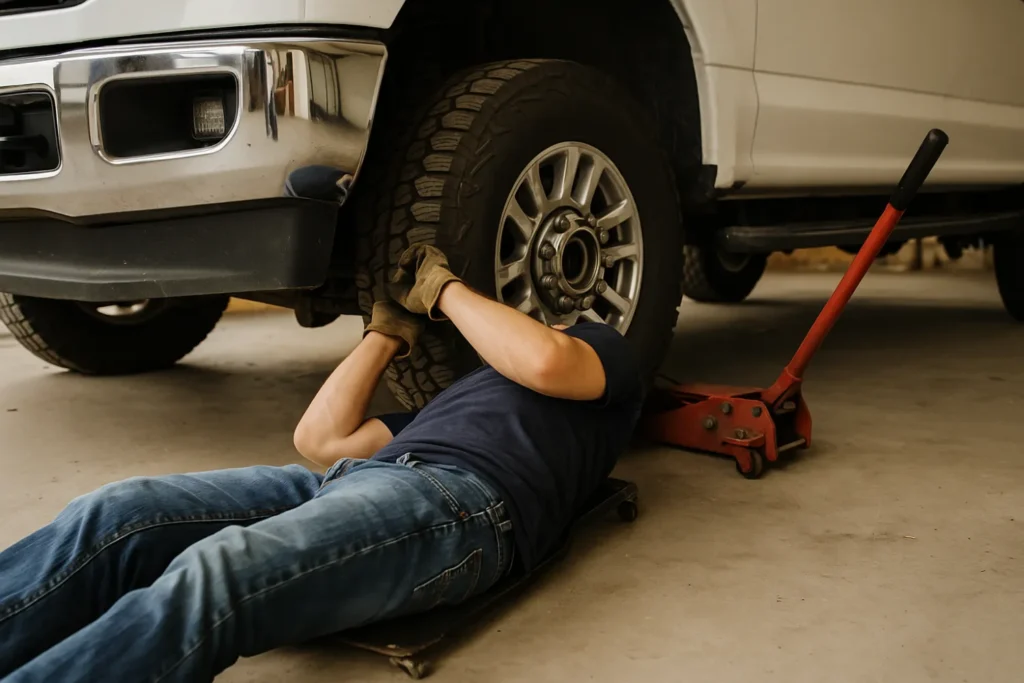
Your tune is the heart of the delete process.
Top Tuning Platforms
| Tuner | Pros | Cons |
|---|---|---|
| EZ Lynk 3.0 | Wireless updates, simple interface | Higher pricing |
| SCT Livewire | Proven, stable platform | Older UI |
| MM3 | Customization-friendly | Technical learning curve |
What a Good Tune Should Do
- Keep smoke output controlled
- Maintain safe timing and pressure curves
- Deliver smooth throttle transitions
- Lower EGTs under load
A good tune protects the engine, turbo, and transmission not just boosts power.
VIII. Supporting Mods for Maximum Performance
A delete kit can stand alone, but supporting upgrades create a more complete off-road build.
Suggested Add-ons
- Upgraded intercooler
- Cold-air intake
- Boost/EGT monitoring
- Transmission tuning
- Heavy-duty downpipe
These widen your usable powerband and strengthen the engine’s resilience.
IX. Real-World Off-Road Results from 2019 Powerstroke Owners
Drivers consistently report:
- Smoother towing
- No more regen interruptions
- Cooler temps during long climbs
- Stronger low-RPM torque
- Cleaner throttle behavior
Once deleted and tuned correctly, the truck tends to feel more “awake,” especially when working under load.
X. Maintenance Changes After Deleting
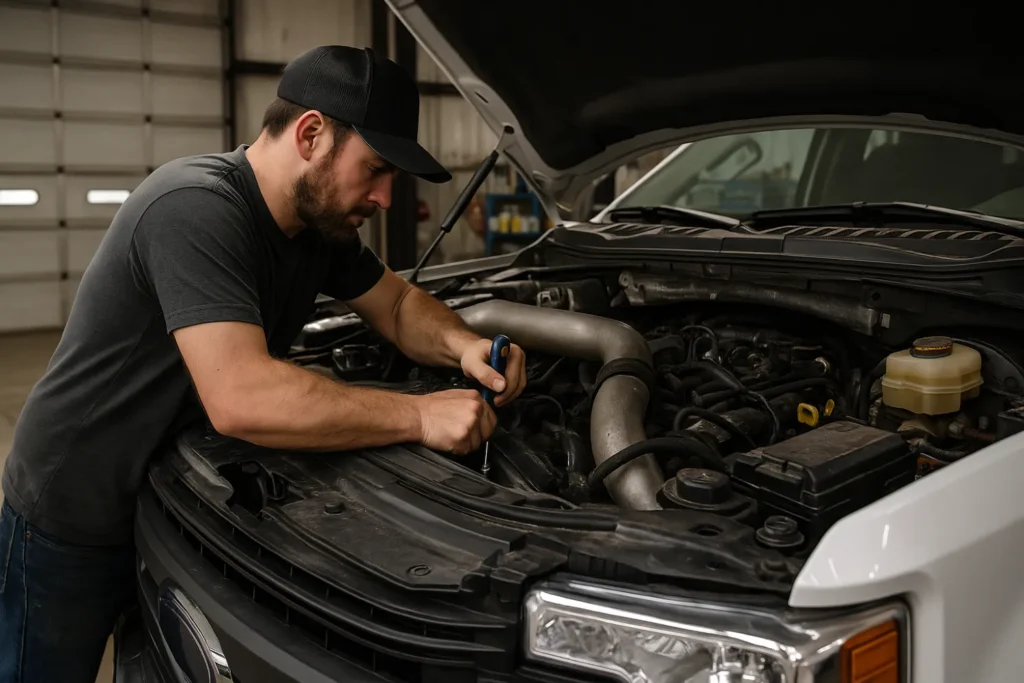
After installing a 2019 Powerstroke delete kit, your maintenance routine shifts slightly.
Key Adjustments
- Change oil more frequently when towing off-road
- Inspect clamps and couplers after rough terrain
- Monitor EGTs during extended pulls
- Clean intake piping occasionally
The engine is often cleaner internally, but tuning introduces new variables worth watching.
XI. Myths About 2019 Powerstroke Delete Kits
Let’s clarify a few things:
- Myth: Deletes always create massive MPG gains
- Reality: Gains vary; they depend heavily on load and terrain
- Myth: A delete tune cannot damage the engine
- Reality: Bad tuning can ruin it quickly
- Myth: All delete kits are interchangeable
- Reality: Material quality differs drastically
Myth busting helps ensure realistic expectations.
XII. Cost Breakdown of a Full Off-Road Delete Setup
Typical Costs
| Item | Price Range |
|---|---|
| DPF Delete Pipe | $300–$700 |
| EGR Delete Kit | $350–$900 |
| DEF Delete Solutions | $150–$400 |
| Tuner + Custom Tune | $900–$1,600 |
| Labor | $600–$1,200 |
| Supporting Mods | $200–$2,000 |
Total Off-Road Build Cost
Approximately $2,500–$5,500
Well within range for a reliable, performance-focused 6.7L build.
XIII. Should You Delete Your 2019 Powerstroke for Off-Road Use?
A 2019 Powerstroke delete kit transforms how the truck operates in rugged environments. It increases consistency, stability, and thermal control the three pillars of off-road reliability.
Ideal Candidates
- Ranchers
- Farmers
- Off-grid haulers
- Overlanding builds
- Off-road towing setups
If your truck works hard where regens fail, a delete kit can be a game-changer.
XIV. Conclusion
The 2019 Powerstroke delete kit isn’t a gimmick. It’s a systematic reconfiguration of your truck’s breathing, temperature management, and power delivery. For off-road drivers who demand predictable performance in rough environments, it’s one of the most impactful upgrades available. With the right parts, the right tuner, and the right maintenance strategy, the 2019 6.7L Powerstroke evolves into a cleaner-running, harder-working, and more responsive machine built for terrain instead of pavement.
FAQs
A typical kit includes a DPF delete pipe, EGR delete components, DEF system removal hardware, and an off-road tuner to recalibrate the ECM.
Most off-road tunes produce 50–120 additional horsepower depending on the setup and supporting modifications.
In many off-road applications, drivers see a 1–3 MPG improvement due to reduced backpressure and cleaner combustion.
Yes, exhaust tone typically becomes deeper and more pronounced, especially when removing the DPF and SCR systems.
EZ Lynk, SCT Livewire, and MM3 are the most common platforms, offering stable tuning and support for custom files.
Not always, but upgrades like a better intercooler, cold-air intake, and monitoring gauges improve reliability and temperature control.
Professional installations usually take 4–7 hours depending on exhaust condition, rust, and tuning setup.
Yes, improper timing, fuel pressure, or boost mapping can cause engine, turbo, or transmission damage.
Oil changes may need to be more frequent, and monitoring EGTs, boost, and coolant temps becomes more important.
Most builds range from $2,500 to $5,500 including parts, tuning, and optional upgrades.