
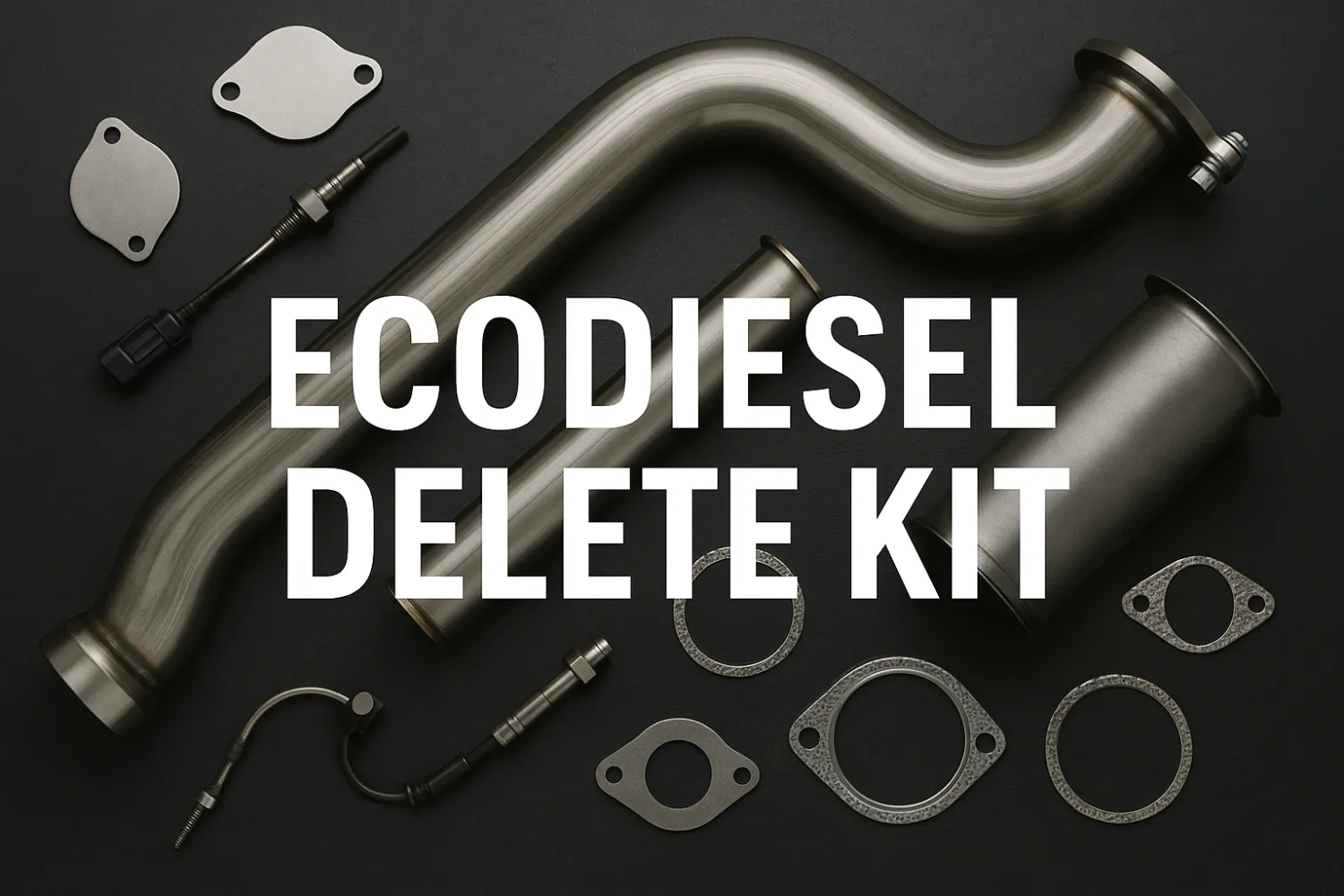
If you spend enough time in the off-road world, you’ll eventually hear one phrase tossed around more than turbo whistles on a mountain climb: EcoDiesel delete kit. Some talk about it with excitement. Others whisper about it like a forbidden upgrade that transforms the Ram 1500 or Jeep Grand Cherokee into a completely different animal. And honestly? I get why. The 3.0L EcoDiesel is already impressive, but when you’re bouncing around rough terrain, pushing long trail routes, or hauling heavy toys off-road, you want reliability and response not constant regen cycles or rising EGTs slowing you down.
Explosive Diesels exists for one reason: to help off-road drivers squeeze every ounce of performance out of their machines while staying informed, intentional, and safe. So if you’re considering a delete, keep reading. This guide isn’t fluffy. It’s everything you should know before you commit, from performance gains to installation tips to the realities most people don’t discuss openly.
And yes we’ll include the moderate disclaimer throughout, because delete kits must remain off-road only. No exceptions.
Let’s get into it.
I. Why EcoDiesel Owners Consider a Delete Kit
Some EcoDiesel owners notice the symptoms early: sluggish response, hotter temps than expected, or too many regens happening at the worst times. Others simply want more power and better off-road stamina. Whatever your reason, you’re not alone. The demand for off-road performance upgrades has exploded.
An ecodiesel delete kit removes major airflow and exhaust restrictions that hold the 3.0L back in rugged environments. When you’re pushing through sand, climbing rocky trails, or towing a side-by-side into the mountains, your diesel needs efficiency and cooling not exhaust bottlenecks.
Here’s the quick truth many won’t say out loud: deleting doesn’t magically turn your truck into a race machine. But it does unlock the EcoDiesel’s natural potential when used responsibly, off-road, and paired with a proper tune.
Moderate Disclaimer Reminder: Everything discussed here applies solely to off-road use. Explosive Diesels does not endorse violating emissions laws. Use delete kits responsibly and legally.
II. What Exactly Is an EcoDiesel Delete Kit?
At its core, an ecodiesel delete kit removes restrictive emissions components and recalibrates the engine to operate without them strictly for off-road environments.
A full kit normally includes:
Typical Components
- DPF delete pipe – replaces the diesel particulate filter
- EGR block-off plates – prevent recirculation of exhaust gases
- DEF system disable hardware or software
- Off-road ECM tune – tells the engine how to operate after components are removed
- Sensors, plugs, gaskets, and harnesses
To avoid confusion, here’s a quick comparison:
| System / Term | What It Does | Included in Delete Kit? |
|---|---|---|
| DPF | Traps soot | Removed / Bypassed |
| DEF/SCR | Reduces NOx | Disabled via tune |
| EGR | Recirculates exhaust | Blocked off |
| Tune | Recommands ECU | Yes, mandatory |
| Exhaust upgrade | Changes sound/flow | Optional add-on |
A delete kit is NOT the same as:
- A tune-only upgrade
- A performance exhaust
- An EGR-only block-off
- A “smoke tune” (don’t do this; it’s pointless and damaging)
A proper ecodiesel delete kit optimizes airflow, simplifies exhaust routing, and recalibrates your engine for safe off-road performance.
III. Off-Road Performance Benefits of an EcoDiesel Delete Kit

This is the part everyone wants to talk about and honestly, it’s the part that gets off-roaders excited. When you remove restriction from a diesel engine, you let it do what it does best: breathe.
Let’s break it down.
1. More Horsepower & Torque Off-Road
The stock EcoDiesel is strangled by emissions components designed for smooth highway operation. That’s fine on the street but not ideal when you’re crawling, hauling, or hammering tough trails.
A high-quality ecodiesel delete kit paired with a custom off-road tune typically results in:
- 20–40 extra horsepower
- 40–70 additional lb-ft of torque
- Sharper low-end pull
That extra torque helps you climb hills and navigate rough terrain without overworking the motor.
2. Lower EGTs (Exhaust Gas Temperatures)
Heat kills diesels. Anyone running long trail routes knows how quickly temps can rise under throttle.
Deleting helps:
- Reduce turbo strain
- Lower EGTs by 75–150°F in most off-road situations
- Cut heat-related limp-mode triggers
Lower temps = better off-road reliability.
3. Better Throttle Response
This is one of the most noticeable improvements. A deleted EcoDiesel feels alive. No laggy hesitation. No clunky shifts caused by emissions components fighting the flow.
You press the pedal.
The truck reacts.
Simple.
4. Off-Road MPG Gains
When you’re not constantly regenerating or choking airflow:
- Fuel burn becomes more efficient
- Turbo doesn’t struggle
- Off-road MPG bumps up by 1–3 mpg
Is it always guaranteed? No. Aggressive driving cancels everything out. But with a solid tune and smart throttle control, the gains are real.
5. Fewer Limp-Mode Events & More Reliability
Off-roaders hate limp mode. It hits when you least expect it and usually at the worst time like mid-hill or mid-trail.
Deleting helps prevent:
- Soot buildup
- Unpredictable regen timing
- DPF backpressure issues
Is this a magic bullet? No. But an ecodiesel delete kit does eliminate several factory systems that commonly trigger limp mode when used off-road.
Moderate Disclaimer: This reliability applies to off-road conditions only. On-road deletion remains illegal.
IV. The Downsides & Risks You Must Understand
Deleting isn’t free of drawbacks. And ignoring them is how people ruin trucks. Let’s be upfront.
1. On-Road Legality (This Is Non-Negotiable)
Delete kits are illegal for road use in the U.S.
No soft wording. No loopholes. No wiggle room.
Explosive Diesels provides information for off-road use only.
2. Increased Risk of Engine Wear Without Proper Tuning
Anyone who buys a cheap tune or guesses their way through ECU adjustments is playing with fire.
Bad tuning can cause:
- Excessive EGTs
- Overfueling
- Turbo overspeed
- Crankcase pressure spikes
- Weak head gasket zones
A high-quality tune is not optional it’s the heart of the delete.
3. Possible Warranty Impacts
Deleting generally voids:
- Emissions components warranties
- Powertrain coverage (depending on dealer)
If warranty matters to you, stop here.
4. Resale Implications
Some buyers want a deleted rig.
Many don’t.
Dealers especially avoid them.
Just be prepared for a smaller buyer pool.
5. Environmental Considerations
Deleting increases emissions.
Be honest with yourself about this tradeoff.
Off-road only. Always.
V. What Comes in a High-Quality EcoDiesel Delete Kit?
All delete kits are not created equal. Some are engineered like performance equipment. Others are cut-rate pipes and generic maps slapped together.
A good kit includes:
1. Exhaust/DPF Delete Pipe
- 304 stainless recommended
- Mandrel-bent
- OEM mounting orientation
2. EGR Block-Off Plates
Choose plates designed for your specific platform:
- Ram 1500 3.0L EcoDiesel
- Jeep Grand Cherokee EcoDiesel
3. Harnesses, Plugs & Gaskets
Cheap kits cut corners here. Don’t.
4. Tuning
The most important part.
Look for:
- Tow/off-road tune
- Economy/off-road tune
- Performance/off-road tune
5. Hardware That Actually Fits
Nothing is worse than discovering half the bolts don’t match.
Here’s a sample comparison table:
| Kit Tier | Price Range | Ideal For | Pros | Cons |
|---|---|---|---|---|
| Budget | $300–$600 | Light off-road use | Cheap, easy to get | Poor fitment, weak tuning |
| Mid-Tier | $700–$1,000 | Most off-roaders | Good pipes, decent fit | Tune may be generic |
| Premium | $1,200–$1,800 | Serious off-road builds | Custom tuning, best pipes | Higher cost |
If you’re serious about longevity, premium kits are worth every dollar.
VI. Installation Overview: DIY vs. Professional Shop
Let’s be honest: deleting isn’t complicated, but it’s not exactly plug-and-play either.
Here’s what the process generally looks like.
Tools You’ll Likely Need
- Jack stands or a lift
- Impact gun
- O2 sensor socket
- Torx bits
- Breaker bar
- Penetrating oil (lots of it)
- Trim tools
- Scan tool or programmer
High-Level Installation Workflow
1. Remove the DPF and DEF Systems
This usually takes 1–3 hours depending on rust.
2. Block Off the EGR
Install plates and reroute coolant if necessary.
3. Flash the Off-Road Tune
This step matters more than the hardware.
4. Clear Codes & Validate
- Check for leaks
- Monitor EGTs
- Verify boost is within safe limits
Should You DIY or Hire a Shop?
DIY Recommended If:
- You’ve wrenched before
- You’re comfortable with exhaust work
- You have scanner or tuner experience
Professional Recommended If:
- Rust belt truck
- Broken sensors
- You’re unsure about tuning
- You want custom adjustments
Most shops can install a full ecodiesel delete kit in 2–5 hours, depending on difficulty.
VII. Maintenance After a Delete (Important!)
Deleting isn’t “set it and forget it.”
Your truck will change and so should your maintenance habits.
1. Oil Change Frequency
With more airflow and fewer restrictions, an EcoDiesel benefits from:
- 5,000–6,000 mile oil changes for moderate off-road use
- Shorter intervals for heavy off-road towing
Use quality synthetic oil and good filters.
2. Boost Leak Checks
Deleted setups expose weak couplers quickly.
Check every:
- 2–3 months
- After long trail trips
- After towing heavy off-road loads
3. Monitor Key Engine Parameters
Even with a good tune, pay attention to:
- EGTs
- Boost pressure
- Fuel rail pressure
- Frequent data logging
A simple digital gauge setup makes this easy.
4. Exhaust System Tightening
Off-road vibration loosens clamps—period.
Re-tighten after the first 200 miles, then quarterly.
VIII. What an EcoDiesel Delete Actually Costs
Here’s a realistic breakdown of what off-roaders spend:
| Item | Cost Range |
|---|---|
| EcoDiesel delete pipe | $250–$600 |
| EGR block-off kit | $50–$150 |
| Off-road tune | $350–$1,000 |
| Installation (shop) | $300–$700 |
| Optional upgrades | Varies |
Total: $950–$2,400 for a full upgrade
This lines up with most performance builds.
IX. Best Upgrades to Pair With an EcoDiesel Delete Kit
Want your EcoDiesel to perform even harder off-road? Pair your delete with:
1. Turbo Improvements
- Upgraded compressor wheel
- Better cooling lines
- Stronger bearings
2. Suspension & Drivetrain Reinforcement
More power = more stress on parts like:
- Driveshaft
- U-joints
- Transfer case
3. Braking System Upgrades
Bigger power needs bigger stopping ability.
X. Common Myths About EcoDiesel Deletes
Let’s clear the air.
Myth 1: Deletes destroy your engine.
Reality: Bad tuning destroys engines. Big difference.
Myth 2: All delete kits are identical.
Reality: Quality varies wildly.
Myth 3: You don’t need a tune.
Reality: Without a tune, your truck will barely run.
Myth 4: Deletes reduce MPG.
Reality: Not off-road. Properly tuned, MPG improves.
Myth 5: You can run a deleted truck on the street.
Reality: Illegal. Off-road only.
XI. Moderate Disclaimer (As Required)
Throughout this article, we’ve emphasized it—and we’ll say it once more:
EcoDiesel delete kits are for off-road use only.
Explosive Diesels does not encourage or endorse violating emissions regulations.
Always use qualified professionals for tuning and installation.
Operate responsibly, safely, and legally.
XII. Final Verdict: Should You Upgrade to an EcoDiesel Delete Kit?
If you’re an off-road enthusiast who wants:
- Lower EGTs
- Better throttle response
- More torque
- More reliability
- A longer-lasting engine under off-road stress
Then yes a well-built ecodiesel delete kit with a high-quality tune can unlock a whole new level of capability.
But if you’re looking for a street-legal upgrade? This isn’t it. Stay within the law and keep your truck compliant. At the end of the day, deleting is a tool. A powerful one. When used responsibly and legally, it can transform your off-road diesel into the strong, responsive, trail-ready machine it was always meant to be.
FAQs
An EcoDiesel delete kit removes restrictive emissions components and retunes the engine for off-road performance only.
Most off-road tunes add around 20–40 HP and 40–70 lb-ft of torque depending on the setup.
No delete kits are illegal for on-road use and must be used exclusively in off-road environments.
Yes, the engine requires a proper tune to run safely and efficiently once emissions components are removed.
Usually yes many off-roaders see a 1–3 MPG improvement thanks to reduced restrictions.
Yes, removing DPF and EGR-related restrictions often reduces limp-mode triggers in rough off-road terrain.
Most of the time, deleting will void emissions and powertrain-related warranty coverage.
A shop typically needs 2–5 hours, while DIY installs may take longer depending on rust and experience.
You’ll need more frequent oil changes, regular boost leak checks, and periodic retightening of exhaust components.
You risk fines, failed inspections, and legal issues since deleted vehicles are not road-legal.