

The 3.0L EcoDiesel has always lived in an awkward space. It’s not a heavy-duty workhorse like a Cummins, and it’s not a simple, old-school diesel you can abuse without consequence. Yet years after its release, the 3.0L EcoDiesel continues to attract off-road builders, overlanders, and drivers who want torque and efficiency without stepping into a full-size truck.
I’ve spent enough time around EcoDiesel platforms to say this clearly: the 3.0L EcoDiesel is not inherently flawed. It’s restricted. And when those restrictions are understood—and addressed properly for off-road use the engine shows a completely different personality. This article breaks down what the 3.0L EcoDiesel really offers, where it struggles, and how to build one the right way if performance and reliability actually matter.
Why the 3.0L EcoDiesel Still Matters
Diesel trucks keep getting larger, heavier, and more expensive. Meanwhile, many off-road enthusiasts want something different. They want range. Torque. Control. And they want it in a platform that still fits on tight trails and urban streets.
That’s exactly where the 3.0L EcoDiesel fits.
It was designed to bring diesel torque to half-ton and midsize platforms. Not to dominate drag strips. Not to tow 40,000 pounds. Instead, it delivers usable power at low RPM, long highway range, and a driving experience that feels composed rather than aggressive. When you stop expecting it to behave like a heavy-duty diesel, the EcoDiesel starts making sense.
3.0L EcoDiesel Engine Overview
The 3.0L EcoDiesel is a turbocharged V6 diesel originally developed by VM Motori and refined through multiple generations under FCA and Stellantis. Its design priorities are efficiency, packaging, and torque delivery rather than peak output.
Core Engine Characteristics
| Feature | Details |
| Displacement | 3.0 liters |
| Layout | V6 turbo diesel |
| Block & Heads | Aluminum |
| Turbo | Variable geometry |
| Fuel System | High-pressure common rail |
| Factory Output | ~240–260 hp / 420–480 lb-ft |
Aluminum construction keeps weight down, which benefits handling and fuel economy. The tradeoff is tighter thermal margins. Heat control becomes a critical factor, especially during towing or low-speed off-road driving.
Torque delivery is where this engine shines. Peak torque arrives early and stays consistent, making it well-suited for crawling, towing, and long grades without constant downshifting.
Vehicles Powered by the 3.0L EcoDiesel
One reason the 3.0L EcoDiesel gained traction is simple: availability in platforms people actually want to build.
Factory Applications
- Ram 1500 EcoDiesel
- Jeep Grand Cherokee EcoDiesel
- Jeep Wrangler EcoDiesel
- Jeep Gladiator EcoDiesel
For Jeep owners, this engine offered diesel torque without moving to a full-size truck. For overlanders, it delivered range and efficiency in lighter platforms. That combination remains rare even today.
Driving Characteristics in Stock Form
Stock EcoDiesels feel refined. Quiet. Smooth. Almost too polite.
Throttle response is controlled rather than aggressive. Torque builds early but arrives softly. On the highway, the engine feels relaxed and effortless. Around town, it’s easy to live with.
Off-road, things get complicated.
Stock Strengths
- Strong low-RPM torque
- Excellent highway fuel economy
- Smooth, predictable power delivery
- Low cabin noise
Stock Limitations
- Turbo lag off idle
- Throttle intervention during emissions events
- Forced DPF regenerations
- Heat buildup during slow crawling
The engine itself isn’t the issue. The emissions strategy is.
Emissions Systems: Where the Problems Start
Most complaints about the 3.0L EcoDiesel trace back to emissions hardware rather than internal engine components.
Key Emissions Components
- EGR system and cooler
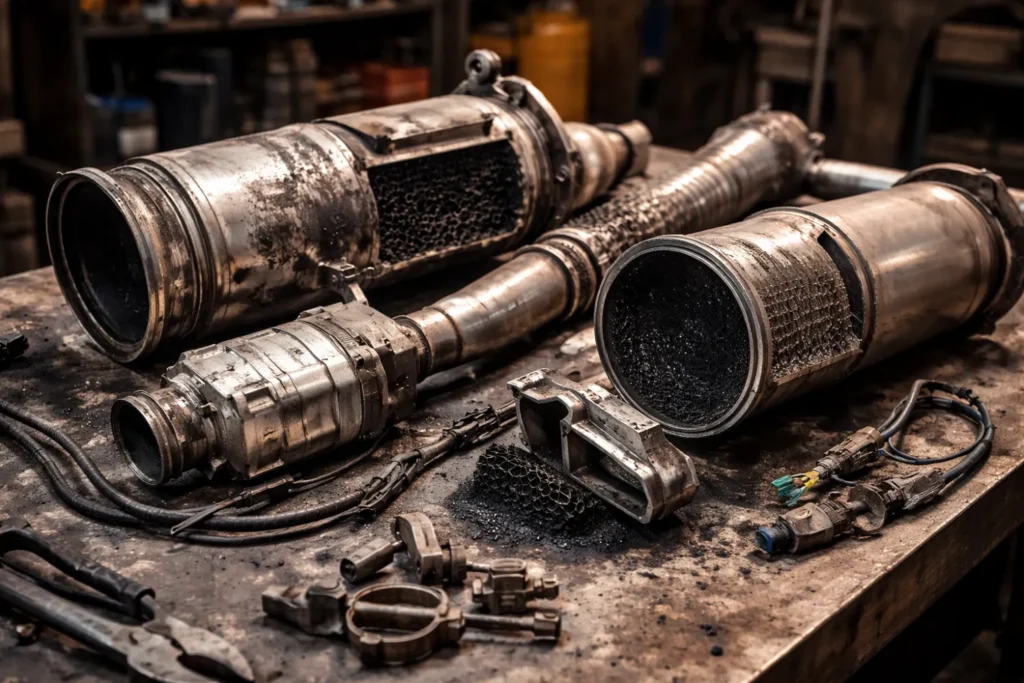
- Diesel Particulate Filter (DPF)
- DEF/SCR system
- Throttle valve and sensors
The Diesel Particulate Filter deserves special attention. It traps soot and periodically burns it off through regeneration, a process that requires sustained exhaust heat. According to the U.S. Environmental Protection Agency, DPF systems rely on consistent high exhaust temperatures to function correctly conditions that rarely exist during short trips or slow off-road driving.
That explains why EcoDiesel owners often see warning lights, limp modes, and drivability issues long before any internal engine failure occurs.
Common 3.0L EcoDiesel Problems
Some issues are exaggerated online. Others are very real.
Common Weak Points
- EGR cooler failures leading to soot buildup
- DPF clogging from frequent regeneration cycles
- Oil dilution from post-injection events
- Heat management challenges under load
Early generations also developed a reputation for crankshaft failures. Later revisions improved this issue, but it remains part of the engine’s public image.
The important point is this: many failures start with emissions problems, not mechanical abuse.
Off-Road Performance: Where the EcoDiesel Excels
This is where the 3.0L EcoDiesel starts to make sense.
Low-RPM torque means less throttle input. Less throttle means better traction. Better traction means control. On technical trails, that matters more than peak horsepower.
Off-Road Strengths
- Predictable torque delivery
- Excellent fuel range for overlanding
- Compact size for tight platforms
- Smooth response for technical terrain
Off-Road Challenges
- Heat buildup at low speed
- Regeneration interruptions
- Sensor-triggered limp modes
Most of these challenges disappear once emissions restrictions are addressed correctly for off-road use.
Delete Kits and Off-Road Emissions Removal (Off-Road Use Only)
For off-road applications, deleting emissions equipment fundamentally changes how the 3.0L EcoDiesel behaves.
Typical Delete Components
- EGR delete
- DPF delete
- DEF/SCR delete
Benefits After Deleting
- Lower exhaust gas temperatures
- Faster turbo response
- Reduced soot accumulation
- Consistent throttle behavior
- Fewer limp-mode events
This isn’t about chasing dyno numbers. It’s about restoring thermal control and mechanical simplicity.
Legal note: These modifications are intended for off-road use only. Always comply with local regulations.
Tuning the 3.0L EcoDiesel
Deletes without tuning are a mistake. Period.
The EcoDiesel relies heavily on software. Once hardware changes, tuning becomes mandatory.
What Proper Tuning Delivers
- Correct fuel and timing maps
- Stable turbo control
- Improved transmission shift behavior
- Increased torque without excessive stress
Mild tuning focused on drivability and reliability outperforms aggressive tuning in the long run. Most EcoDiesels fail from heat and stress, not lack of power.
Exhaust and Airflow Improvements
Factory exhaust systems exist to support emissions equipment, not performance. Once restrictions are removed, airflow improves dramatically.
Exhaust Upgrade Benefits
- Reduced backpressure
- Lower EGTs
- Improved turbo efficiency
- Cleaner exhaust tone
Intake upgrades matter less than many expect, but improved filtration and consistent airflow still help in dusty off-road environments.
Supporting Mods That Actually Matter
Power mods get attention. Supporting mods keep engines alive.
High-Value Supporting Upgrades
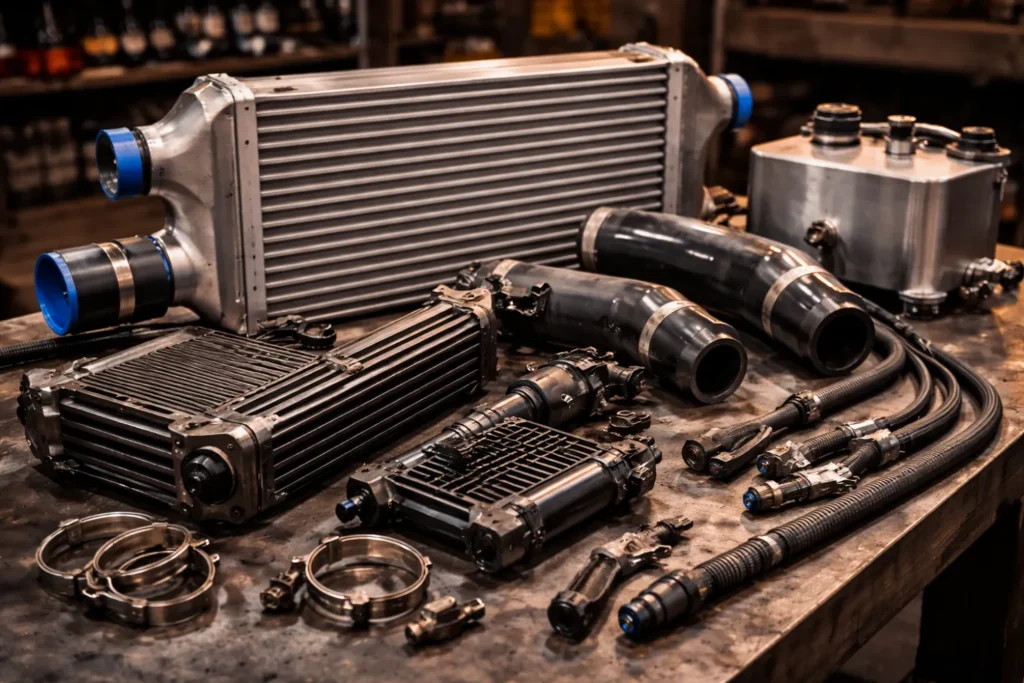
- Larger intercooler
- Upgraded charge pipes
- Oil catch can
- Transmission cooling upgrades
These modifications don’t increase horsepower. They increase longevity.
Fuel Economy After Modifications
One of the most surprising aspects of the 3.0L EcoDiesel is how often fuel economy improves after proper deletes and tuning.
Less regeneration. Less restriction. More efficient combustion.
Real-World MPG Comparison
| Configuration | Highway MPG |
| Stock | 22–26 |
| Tuned & Deleted | 25–30+ |
Driving style, tire size, and gearing still matter, but efficiency usually improves rather than declines.
Longevity: Can the 3.0L EcoDiesel Last?
Yes when built with restraint.
Longevity Best Practices
- Conservative tuning
- Frequent oil changes
- Monitoring EGTs and oil temperatures
- Proactive heat management
- Avoiding unnecessary high-RPM abuse
This engine rewards disciplined use. Treat it like a torque motor, not a race engine.
Is the 3.0L EcoDiesel Worth Building?
The answer depends on expectations.
If you want maximum horsepower, look elsewhere.
If you want torque, efficiency, and versatility in a lighter platform, the 3.0L EcoDiesel still makes sense.
Best Use Cases
- Overland builds
- Trail-focused rigs
- Daily-driven off-road trucks
Poor Use Cases
- Drag racing
- High-RPM abuse
- Budget builds without proper tuning
Understanding the Engine’s Design Intent
The 3.0L EcoDiesel traces its roots to VM Motori, a manufacturer known for compact, torque-focused diesel engines. European diesel design prioritizes efficiency, early torque delivery, and packaging flexibility over peak output. Wikipedia’s technical overview of the EcoDiesel platform highlights its aluminum construction, variable-geometry turbocharging, and emissions-focused calibration across multiple generations.
Source: Wikipedia – EcoDiesel Engine
Understanding this design philosophy explains why the engine responds so well to airflow improvements and conservative tuning when used off-road.
Final Thoughts: Building the 3.0L EcoDiesel the Right Way
The 3.0L EcoDiesel isn’t weak. It isn’t fragile by default. It’s constrained.
Once emissions limitations are addressed for off-road use and tuning is handled responsibly, the engine reveals its real character smooth torque, impressive efficiency, and excellent real-world usability.
At Explosive Diesels, the best EcoDiesel builds aren’t the loudest or the most powerful. They’re the ones that run cool, stay reliable, and deliver torque exactly when it’s needed. Build it smart. Tune it conservatively. Support it properly. Do that, and the 3.0L EcoDiesel earns its place off-road.
FAQs
Yes, the 3.0L EcoDiesel delivers strong low-RPM torque and excellent range, making it well suited for trail driving and overland builds when set up correctly.
Most issues involve emissions components such as the EGR system, DPF clogging, and heat buildup rather than internal engine failures.
For off-road use, deleting emissions equipment often reduces heat, soot buildup, and limp-mode events, improving overall drivability and reliability.
Yes, proper tuning is essential after deletes to maintain correct fueling, turbo control, and transmission behavior.
With conservative tuning, modest torque gains are safe, but the engine performs best when tuned for drivability and longevity rather than peak horsepower.
Many owners report improved fuel economy due to reduced regeneration cycles and improved combustion efficiency.
The engine was offered in the Ram 1500, Jeep Grand Cherokee, Jeep Wrangler, and Jeep Gladiator.
Yes, it offers strong low-end torque and stable highway performance, though proper cooling and tuning become more important under sustained loads.
Upgraded cooling, intercoolers, oil catch cans, and transmission cooling provide more long-term value than chasing horsepower upgrades.
For drivers who prioritize torque, efficiency, and off-road capability in lighter platforms, the 3.0L EcoDiesel remains a solid choice when built correctly.