
The conversation around the 5.0 EGR delete kit almost always starts the same way. A check engine light. Rising temperatures. A truck that feels heavier than it should. For owners of the 5.0L Cummins found in the Nissan Titan XD, the EGR system is often the first weak point to surface and the first place serious off-road builders look when reliability starts slipping.
This isn’t about chasing bragging rights or peak dyno numbers.
It’s about airflow, heat control, and engine longevity.
If your truck works hard off-road, tows regularly, or lives outside the narrow conditions emissions systems were designed for, understanding what a 5.0 EGR delete kit actually does and when it makes sense can save you thousands over the life of the engine.
Let’s dig in.
Why the Factory EGR System Becomes a Bottleneck on the 5.0 Cummins
Exhaust Gas Recirculation has been around for decades. The concept is simple: redirect a portion of exhaust gas back into the intake to reduce combustion temperatures and lower nitrogen oxide emissions. According to Wikipedia’s technical overview of Exhaust Gas Recirculation, the system works by introducing inert exhaust gases into the intake charge, which lowers peak combustion temperatures but also displaces oxygen needed for efficient combustion.
That tradeoff matters.
On the 5.0 Cummins, the result is an engine that’s constantly balancing emissions compliance against airflow efficiency. Under light loads, the system behaves. Under towing, heat, or sustained off-road use, weaknesses start to show.
Hot exhaust gas carries soot.
Soot sticks.
And once it does, airflow and cooling efficiency begin to suffer.
Inside the Stock 5.0 Cummins EGR System
Before discussing deletes, it helps to understand what’s being removed.
The factory EGR system on the 5.0 Cummins includes:
- An EGR valve that controls exhaust flow
- An EGR cooler that uses engine coolant to reduce exhaust temperature
- Sensors and control logic that monitor flow, temperature, and pressure
- Piping that routes exhaust back into the intake
Each component introduces heat and restriction. Over time, soot accumulation narrows passages and raises intake temperatures. The engine isn’t failing it’s being suffocated slowly.
Common Problems Caused by the Stock EGR System
EGR-related issues rarely appear all at once. They creep in quietly.
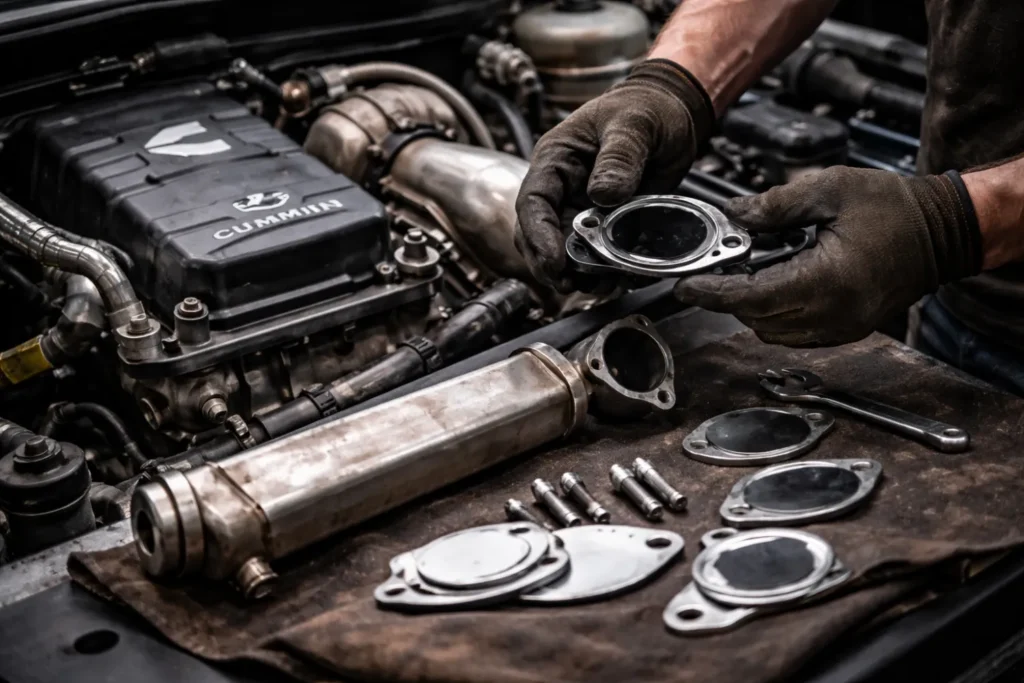
Owners commonly report:
- Carbon buildup inside the intake
- Sluggish throttle response
- EGR cooler leaks leading to coolant loss
- Elevated exhaust gas temperatures under load
- Random fault codes or limp mode events
None of these are catastrophic on day one. But together, they shorten component life and erode confidence in the truck especially when it’s far from pavement.
That’s why the 5.0 EGR delete kit is often viewed less as a performance mod and more as a reliability safeguard for off-road use.
What Is a 5.0 EGR Delete Kit?
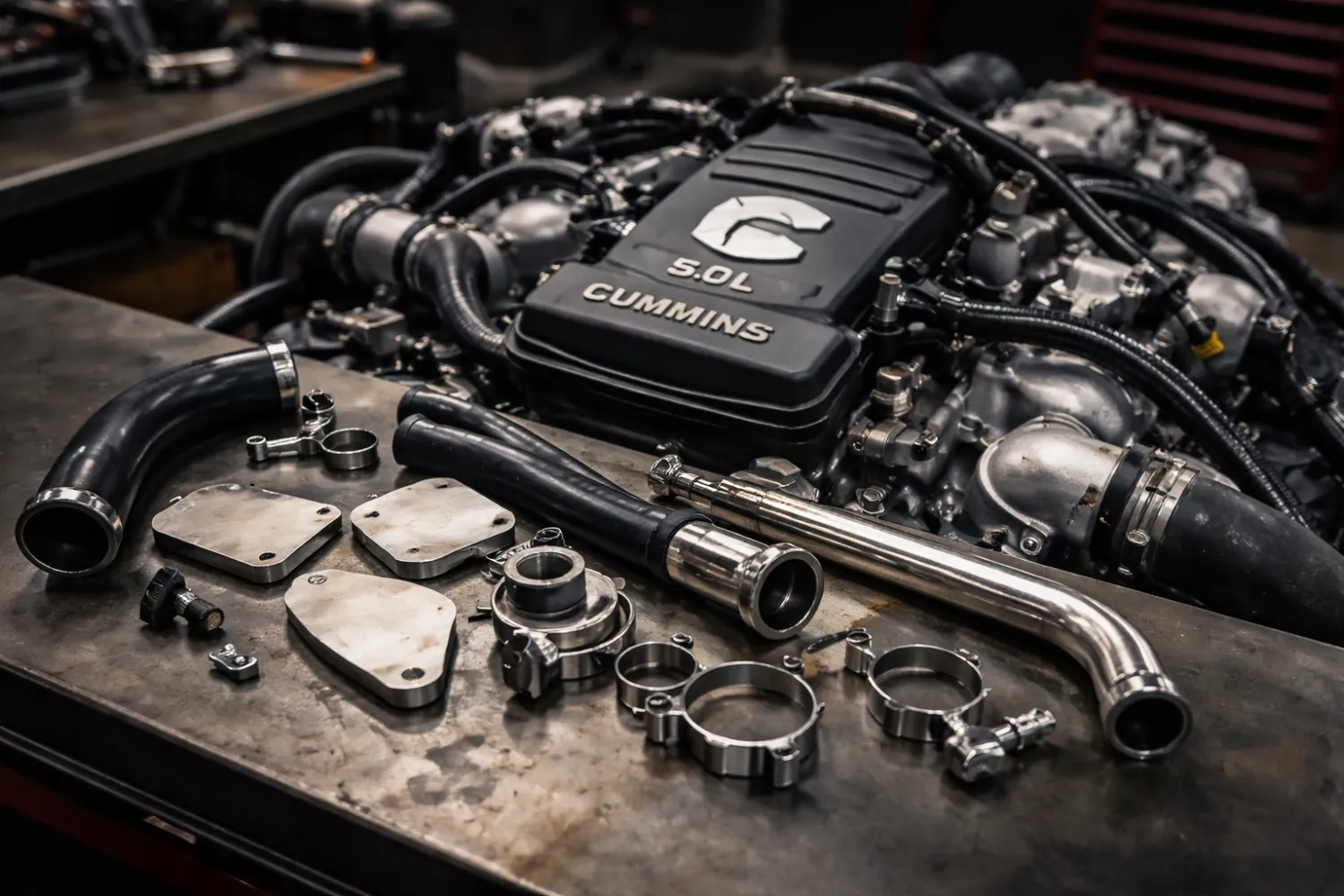
A 5.0 EGR delete kit removes the EGR system entirely and replaces it with simpler, more direct hardware. No exhaust gas recirculation. No EGR cooler. No hot, sooty exhaust feeding back into the intake stream.
Most kits include:
- Precision-machined block-off plates
- Coolant reroute or bypass components
- Modified intake or piping hardware
Once installed, the engine breathes only fresh air. Combustion stabilizes. Intake temperatures drop. And the engine begins operating closer to its natural design limits rather than its emissions-constrained ones.
Performance Benefits You Can Feel Behind the Wheel
A 5.0 EGR delete kit won’t turn your Titan XD into a race truck overnight. What it does instead is restore consistency.
Drivers often notice:
- Sharper throttle response
- Smoother power delivery under load
- Reduced hesitation during acceleration
- More stable EGTs while towing
When paired with proper tuning, the engine feels calmer and more predictable. It stops fighting itself. That alone makes long drives and heavy pulls noticeably less stressful.
Lower EGTs and Cleaner Combustion
Heat management is one of the biggest wins.
By removing exhaust recirculation, intake air stays cooler and oxygen-rich. Combustion becomes cleaner. Exhaust gas temperatures drop especially during sustained load where the stock EGR system struggles most.
Lower EGTs reduce thermal stress on:
- Pistons
- Valves
- Turbocharger components
Over time, that reduction in heat directly translates to longer service life.
Reliability Gains That Matter Long-Term
This is where the 5.0 EGR delete kit earns its reputation.
Without soot circulating through the intake, carbon buildup slows dramatically. Coolant stays in the cooling system instead of leaking through a stressed EGR cooler. Sensors stop reporting contradictory data caused by clogged passages and overheating components.
Long-term benefits often include:
- Cleaner intake runners
- More stable coolant temperatures
- Fewer unexpected limp modes
- More predictable towing performance
For off-road trucks, reliability is performance.
Tuning: The Critical Piece That Makes It Work
Installing a 5.0 EGR delete kit without tuning is not optional it’s a mistake.
The factory ECU expects EGR flow. Removing it without recalibration triggers fault codes, drivability issues, or reduced engine protection.
Proper tuning:
- Disables EGR logic safely
- Adjusts fueling for clean airflow
- Optimizes boost control
- Preserves engine safety strategies
Cheap or poorly written tunes often cause more damage than the EGR system ever did. Quality tuning is what turns a delete into a reliable upgrade instead of an expensive experiment.
Installation Overview: What Owners Should Expect
A 5.0 EGR delete kit installation isn’t overly complex, but it demands care.
Expect:
- Moderate mechanical skill
- Several hours of labor
- Careful coolant handling
- Thorough post-install checks
Common mistakes include improper coolant routing, loose block-off plates, or skipped sensor connections. Attention to detail separates a smooth install from months of troubleshooting.
For owners who don’t enjoy wrenching, professional installation is often the smarter move.
Legal and Emissions Considerations (Off-Road Use Only)
It’s important to be clear and responsible.
Under the Clean Air Act, removing or disabling factory emissions equipment on vehicles intended for public-road use is prohibited. The U.S. Environmental Protection Agency clearly outlines emissions requirements and enforcement related to vehicle modifications and transportation-related air pollution.
That’s why 5.0 EGR delete kits are marketed strictly for off-road, competition, or non-public-road applications. Owners are responsible for understanding local regulations and operating their vehicles accordingly.
Who Should Run a 5.0 EGR Delete Kit and Who Shouldn’t
This upgrade isn’t universal.
Good candidates:
- Off-road builds
- Tow rigs not subject to emissions testing
- Owners prioritizing long-term durability
Situations where it may not make sense:
- Street-driven vehicles requiring emissions compliance
- Owners unwilling to tune
- Trucks still under emissions-related warranty
Honest assessment upfront prevents frustration later.
Supporting Mods That Pair Well With an EGR Delete
A 5.0 EGR delete kit works best as part of a balanced setup.
Common supporting upgrades include:
- High-flow intake systems
- Exhaust improvements
- Intercooler upgrades
- EGT and boost monitoring
Together, these mods help manage heat, airflow, and reliability as a system not as isolated parts.
Maintenance After the Delete
Life after an EGR delete is simpler, but not careless.
Owners should continue to:
- Monitor coolant levels
- Watch EGTs under load
- Use high-quality oil and fuel
- Keep tuning current
The difference is that maintenance becomes proactive instead of reactive.
Cost Breakdown: What to Budget
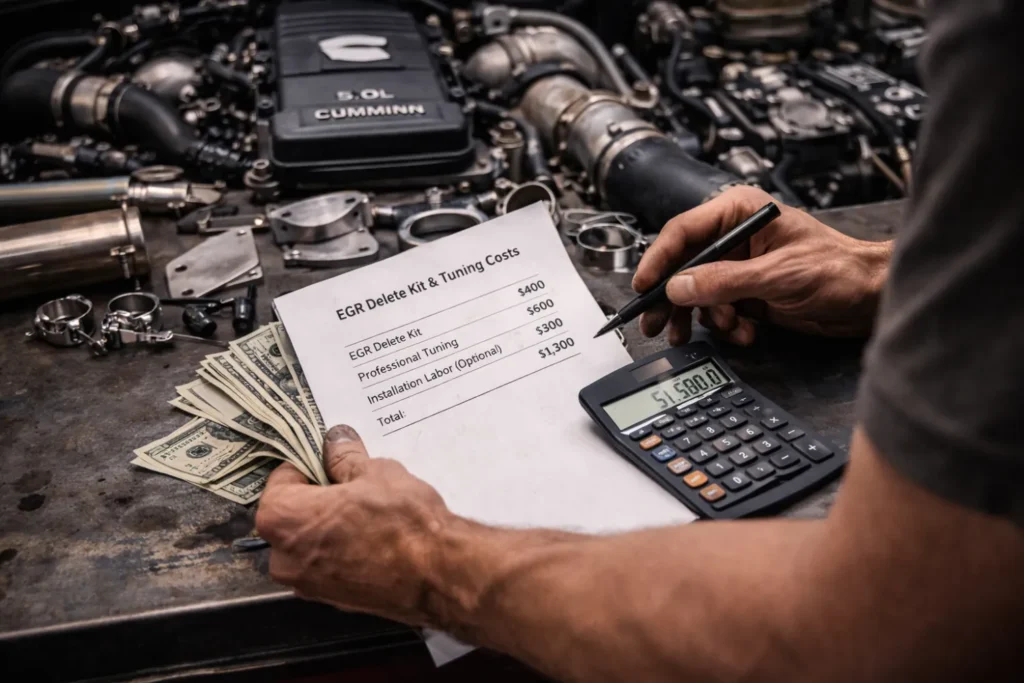
Costs vary, but most owners should plan for:
- The EGR delete kit itself
- Professional-grade tuning
- Installation labor if outsourced
Cheap kits often lead to leaks, fitment issues, or early failures. Quality components reduce headaches and long-term costs.
Final Thoughts: Is a 5.0 EGR Delete Kit Worth It?
For off-road 5.0 Cummins owners focused on reliability, the answer is often yes.
A 5.0 EGR delete kit removes one of the engine’s most failure-prone systems. It lowers heat, cleans up airflow, and reduces long-term stress on critical components. Paired with proper tuning, it helps the truck perform the way it should consistently and confidently.
This isn’t about shortcuts.
It’s about building smarter.
And that mindset is exactly what Explosive Diesels is built on.
FAQs
A 5.0 EGR delete kit removes the factory exhaust gas recirculation system and replaces it with block-off and coolant bypass components for off-road use.
It doesn’t directly add large horsepower numbers, but it improves airflow, throttle response, and power consistency under load.
Yes, proper tuning is mandatory to disable EGR logic and ensure safe fueling and engine operation.
Yes, removing hot exhaust recirculation typically lowers EGTs, especially during towing or sustained off-road driving.
Many off-road owners see improved long-term reliability due to reduced soot buildup, lower heat, and fewer EGR-related failures.
EGR deletes are intended for off-road or competition use only and may not be legal for daily street driving depending on local regulations.
Installation requires moderate mechanical skill and careful coolant handling, but many experienced DIY owners complete it in a single day.
Some owners report slight efficiency improvements due to cleaner combustion, though results vary by driving style and tuning quality.
High-flow intakes, exhaust upgrades, intercooler improvements, and EGT monitoring pair well with an EGR delete.
For off-road 5.0 Cummins owners focused on reliability and heat control, it’s often considered a worthwhile upgrade when paired with quality tuning.