

When off-roaders talk about waking up a 6.7L Power Stroke, the phrase 2019 F250 delete pipe gets thrown around fast and for good reason. Nothing changes the character of Ford’s heavy-duty diesel quite like swapping the restrictive factory exhaust components for a freer-flowing, race-use pipe designed strictly for off-road terrain. The difference is immediate. The truck feels lighter on its feet. Throttle response sharpens. Exhaust temperature stability improves under heavy load. And suddenly the rig feels more prepared for the rugged, unpredictable environments where Explosive Diesels readers spend their weekends.
But here’s the truth: off-road upgrades aren’t just about bolt-ons. They’re about understanding why the part exists, how it interacts with the truck, and what conditions it’s meant to handle. To even grasp the fundamentals, it helps to understand concepts like thermodynamics (a field that explains heat, energy, and engine behavior under load).
This guide walks you through everything that matters about running a 2019 F250 delete pipe on the trail benefits, risks, supporting mods, real-world performance insights, and what separates a quality pipe from a headache waiting to happen.
Let’s dive in!
I. What a Delete Pipe Does on the 2019 F250
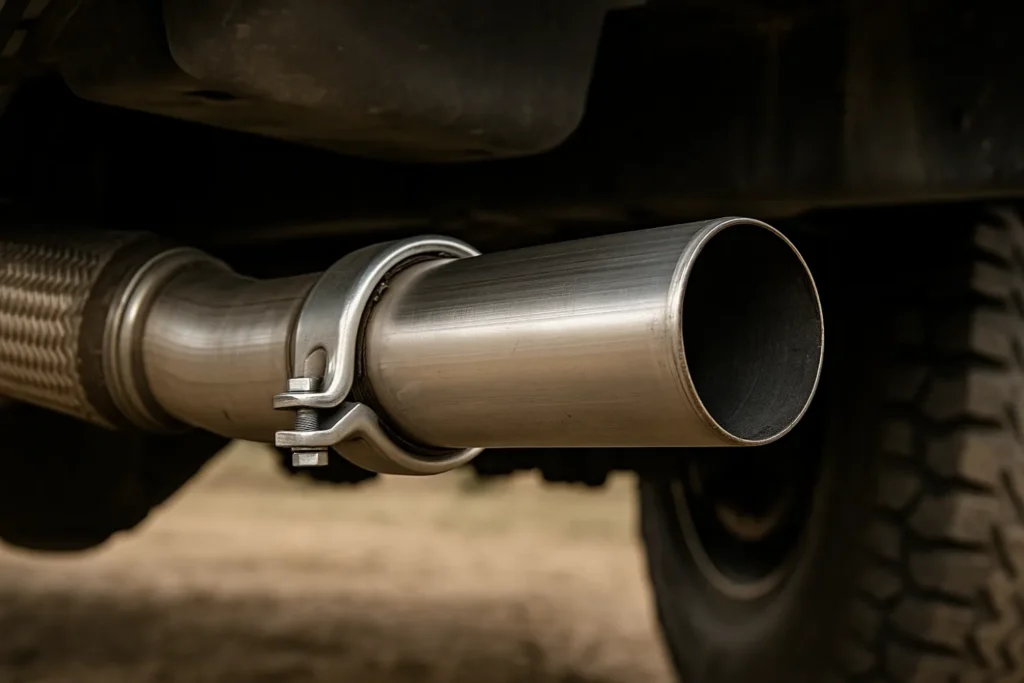
At its core, a 2019 F250 delete pipe is a race-use exhaust replacement component designed to remove restrictions so the exhaust stream can move freely in harsh off-road conditions. On the stock system, the exhaust passes through multiple emissions-related assemblies that regulate particulate matter, a form of combustion byproduct defined in U.S. environmental terminology.
These systems are essential for on-road compliance but can generate additional heat and backpressure during high-load, low-speed off-road scenarios where airflow is already challenged. A delete pipe changes that dynamic. It replaces these components with a straight-through or minimally curved design that prioritizes flow, cooling, and consistency under rugged use. The goal isn’t just power. It’s predictability.
II. Stock vs. Off-Road Exhaust Setups
The 2019 Power Stroke’s factory system is engineered for on-road environments with clearly defined emissions requirements. Off-road conditions, however, create unique thermal and durability challenges that the stock system isn’t optimized for.
Stock vs. Off-Road Delete Pipe Overview
| Feature | Stock Exhaust System | Off-Road Delete Pipe Setup |
|---|---|---|
| Backpressure | Higher | Significantly reduced |
| Exhaust Temps | Elevated | Lower & more stable |
| Responsiveness | Mild | Sharper, quicker |
| Complexity | Multiple components | Simple, open pathway |
| Durability | Not ideal for deep dust | Rugged off-road friendly |
| Sound | Quiet | Louder, more turbo whistle |
III. Benefits of Running a Delete Pipe (Off-Road Only)
1. Improved Exhaust Flow
Less restriction = smoother exhaust evacuation.
2. Lower Exhaust Gas Temperatures
Better for towing, crawling, and sandy terrain.
3. Faster Throttle Response
You feel the engine respond more cleanly in tight technical sections.
4. Greater Gains with Off-Road Tuning
A delete pipe frees the system — tuning controls how the system behaves.
5. Stronger Reliability in Harsh Environments
Dust and mud challenge the stock components far more than an open-flow setup.
IV. Tuning Requirements for Off-Road Setups
A 2019 F250 delete pipe must be paired with proper race-use tuning.
No calibration = no predictability.
Tuning ensures correct:
- Airflow interpretation
- Turbo vane control
- Fueling stability
- Shift strategy
- Idle behavior
V. Risks & Considerations
A. Mechanical Considerations
- Turbo overspeed risk if poorly tuned
- More cab sound
- Vibration issues if alignment is off
B. Reliability Considerations
Use monitoring tools:
- EGT gauge
- Boost gauge
- Transmission temp monitor
C. Compliance Reminder
Delete pipes are not legal for on-road use.
They are strictly for closed-course, off-road, race environments.
VI. What Makes a High-Quality Delete Pipe?

When evaluating a 2019 F250 delete pipe, inspect:
Material
- 304/409 stainless: Best durability
- Aluminized steel: Budget-friendly
Weld Quality
Strong welds prevent cracks under vibration.
Fitment Accuracy
Critical for long-wheelbase trucks.
Heat Coatings
Ceramic coatings help maintain thermal balance on long climbs.
VII. High-Level Installation Overview (Educational Only)
We’re not providing instructional steps — just expectations.
Most off-roaders use:
- A lift
- Penetrating oil
- Exhaust sockets
- Proper PPE
Professionals are often preferred for alignment precision and noise-prevention.
VIII. Supporting Mods That Pair Well With a Delete Pipe
Great additions:
- Upgraded intercooler
- High-flow, off-road-capable intake
- Digital monitoring systems
- Transmission tuning
- Robust fuel filtration
These ensure the truck stays safe and consistent under load.
IX. Sound Characteristics
A delete pipe changes the truck’s entire personality:
- Deeper tone
- More turbo whistle
- More aggressive acceleration noise
Cab volume varies based on pipe diameter and material.
X. Maintenance for Off-Road Setups
Smart owners check:
- Clamp torque
- Pipe alignment
- Heat fatigue
- Air filter condition
- EGT logs under towing
Consistency equals longevity.
XI. Real-World Testing Insights From Explosive Diesels
Across dozens of rigs and terrains, we’ve observed:
- Cooler operating temperatures
- More stable towing
- Sharper throttle response
- Reduced lag
- Better mid-range power
Drivers also consistently report that the truck becomes more predictable in rocky, sandy, or slow-crawl environments.
XII. Troubleshooting Common Issues
Most issues fall into four categories:
1. CEL After Installation
Usually tuning-related.
2. Excess Drone
Pipe diameter or thickness choice.
3. High EGTs
Tune may require adjustment.
4. Vibration
Almost always a hanger or misalignment issue.
XIII. Cost Breakdown
Delete Pipe
- $250–$750+
Off-Road Race Tuning
- $500–$1,200
Installation
- $200–$450
Supporting Mods
- Intercooler: $700–$1,500
- Gauges/monitors: $150–$800
- Intake: $250–$500
XIV. Conclusion
A 2019 F250 delete pipe is one of the most impactful off-road upgrades for the 6.7L Power Stroke platform. It reshapes the truck’s performance, cooling behavior, responsiveness, and driving confidence in rugged terrain. With proper tuning, monitoring, and supporting mods, the transformation is substantial.
But the key to success is knowledge understanding thermodynamics, understanding particulate matter, understanding airflow, heat, and the full off-road system as a whole.
When everything aligns, the truck becomes a weapon on the trail.
Explosive Diesels readers expect nothing less.
FAQs
A delete pipe reduces exhaust restriction and stabilizes temperatures under heavy off-road load. It is strictly for race-use or closed-course environments.
Yes proper off-road tuning is mandatory to ensure correct airflow modeling, fueling, and drivability.
Most off-road setups see noticeably sharper throttle response due to reduced backpressure and improved turbo efficiency.
No, it is not legal for on-road use in the U.S. and is intended exclusively for off-road, race-only applications.
Yes, many drivers experience lower EGTs during towing, climbing, and slow technical terrain.
It typically creates a deeper exhaust tone with more turbo whistle, especially under acceleration.
304 or 409 stainless steel offers the best durability and corrosion resistance for rough environments.
Upgraded intercoolers, digital gauges, and improved fuel filtration help maintain long-term reliability.
Yes misalignment or loose clamps are common causes of drone, rattling, and vibration.
It may affect factory warranty coverage, especially for powertrain and emissions-related components.