
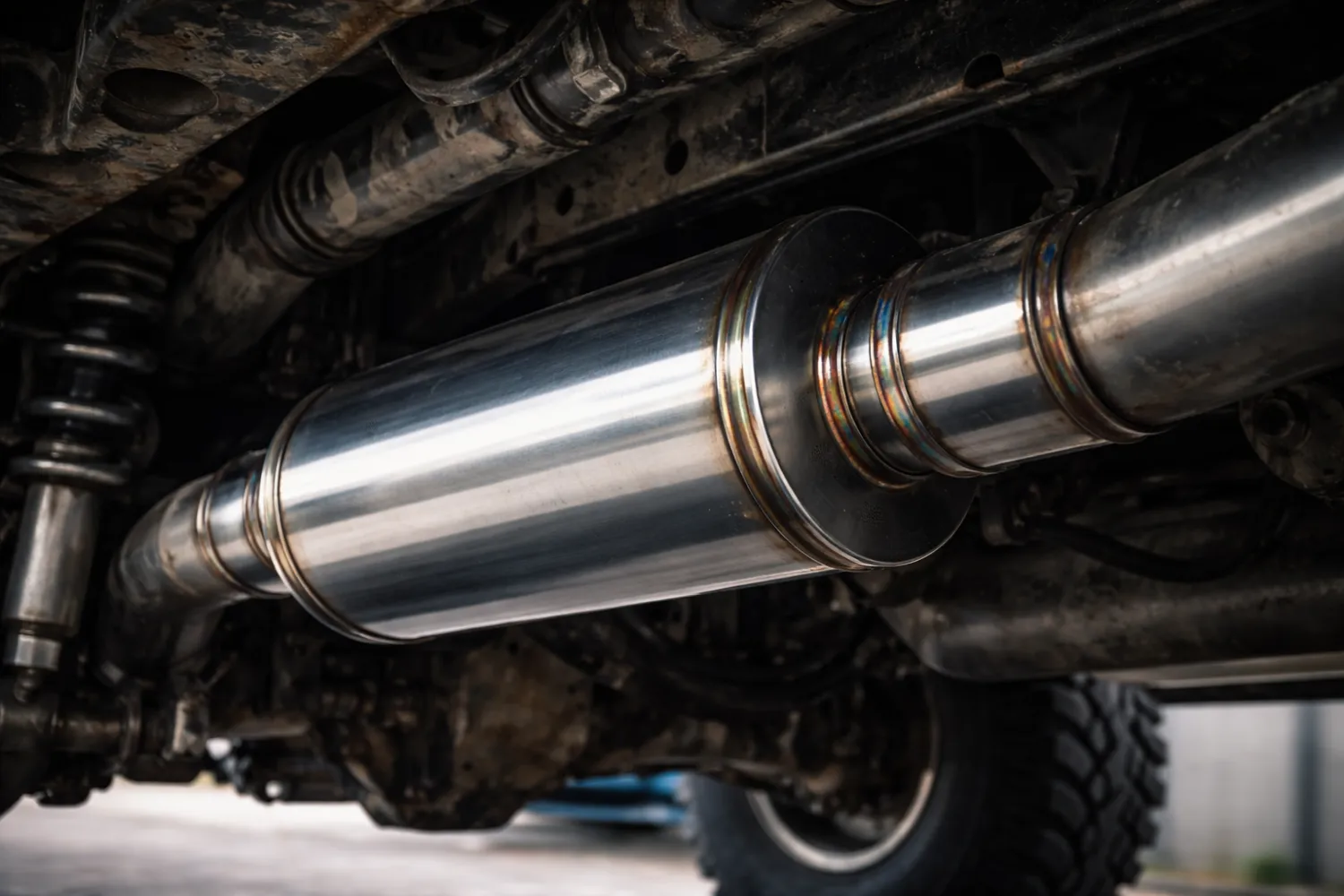
Exhaust systems don’t get nearly enough credit. In off-road diesel performance, they’re often treated as an afterthought. Big mistake. The truth is, straight through muffler design plays a major role in how efficiently your engine breathes, how your turbo responds, and how your truck sounds under load. Get it right, and everything works together. Get it wrong, and you’re choking power you already paid for.
I’ve seen it firsthand. Trucks with solid tuning, upgraded turbos, and quality piping that still feel lazy because the muffler became the bottleneck. That’s why straight through muffler design has become the go-to choice for serious diesel builds. It isn’t hype. It’s physics, airflow, and real-world performance rolled into one simple component.
Let’s break it down the right way.
Why Muffler Design Matters in Off-Road Diesel Performance
Diesel engines move air differently than gas engines. They push massive volumes of exhaust, especially under load. Add a turbo, higher fueling rates, and sustained throttle, and exhaust flow becomes critical. Every restriction after the turbine wheel creates resistance. Resistance slows flow. Slower flow means higher exhaust gas temperatures and delayed turbo response.
That’s where muffler design stops being cosmetic and starts being mechanical.
A restrictive muffler increases exhaust backpressure. Increased backpressure forces exhaust gases to linger longer than they should. That heat stays trapped in the system, stressing components and reducing efficiency. Exhaust backpressure is widely recognized as a performance-limiting factor in internal combustion engines, particularly in forced-induction applications where pressure balance is critical.
A properly engineered straight through muffler design avoids this problem by allowing exhaust gases to exit in the most direct path possible.
What Is a Straight Through Muffler Design?

At its core, straight through muffler design means exactly what it implies. Exhaust enters one end and exits the other without being redirected, trapped, or slowed by internal chambers.
Internally, these mufflers consist of:
- A perforated straight-through core
- Sound-absorbing packing material surrounding the core
- A sealed outer shell to contain heat and noise
There are no baffles. No internal walls. No directional changes. Exhaust gases flow straight through while sound energy is absorbed rather than reflected.
That distinction matters more than most people realize.
How Straight Through Mufflers Work Internally
Exhaust gases move in pulses. Sound waves ride on those pulses. Traditional mufflers attempt to cancel sound by bouncing those waves off internal walls. That creates turbulence. Turbulence creates resistance.
A straight through muffler design works differently. Exhaust gases move directly through the perforated core. As sound waves pass through the perforations, they are absorbed by the surrounding packing material. The gas itself continues forward with minimal disruption. The result is less restriction, lower pressure, and more consistent exhaust velocity.
Straight Through vs Chambered Mufflers
This comparison explains why straight through designs dominate diesel performance builds.
| Feature | Straight Through Muffler | Chambered Muffler |
| Exhaust flow | Near-linear | Redirected and restrictive |
| Backpressure | Very low | Moderate to high |
| Sound control | Absorption-based | Reflection-based |
| Heat retention | Lower | Higher |
| Turbo response | Faster | Slower |
| Diesel suitability | Excellent | Limited |
Chambered mufflers may work fine on small gas engines. On diesels, especially modified ones, they become a bottleneck.
Performance Benefits of Straight Through Muffler Design
The benefits of straight through muffler design aren’t theoretical. They show up in real-world driving.
Key advantages include:
- Reduced exhaust backpressure
- Faster turbo spool
- Lower exhaust gas temperatures
- Improved throttle response
- Better support for future power upgrades
Lower backpressure allows exhaust gases to exit the turbine more efficiently, helping the turbo maintain optimal operating speed without unnecessary resistance. This is especially important in high-load conditions like towing or long uphill pulls.
Sound Characteristics: What to Expect
Straight through does not mean uncontrolled.
A properly sized straight through muffler design delivers:
- A deeper, smoother idle tone
- Clean exhaust note under acceleration
- Strong sound under wide-open throttle
- Less rasp than short or restrictive mufflers
Muffler length plays a major role here. Longer bodies typically reduce drone and soften the tone. Shorter bodies are louder and more aggressive.
Why Straight Through Mufflers Are Popular in Diesel Trucks
Diesel engines produce massive exhaust volume. That alone explains why straight through designs are so effective.
They’re commonly used on:
- 5.9L and 6.7L Cummins platforms
- Duramax engines from LB7 to L5P
- Power Stroke trucks running upgraded airflow components
Once fueling and airflow increase, restrictive mufflers simply can’t keep up.
Materials Used in Straight Through Muffler Construction
Material quality affects durability, sound stability, and lifespan.
Common options include:
- T409 stainless steel – corrosion resistant and cost-effective
- T304 stainless steel – premium durability, ideal for harsh environments
- Aluminized steel – affordable but shorter lifespan
Packing materials also matter:
- Fiberglass (common and affordable)
- Basalt or ceramic blends (longer lasting)
- Stainless wool (high heat tolerance)
A well-built straight through muffler design balances these materials correctly to avoid burnout or sound degradation over time.
Straight Through Mufflers and Turbo Efficiency
Turbochargers rely on pressure differential. Restriction on either side reduces efficiency. When exhaust pressure builds after the turbine, the turbo must work harder to push gases out. That increases heat and reduces responsiveness.
Title Page Separator Site title
By lowering downstream pressure, straight through muffler design helps the turbo operate closer to its ideal efficiency range. This is particularly beneficial for variable geometry turbochargers, which depend on precise exhaust pressure control.
Exhaust Diameter and Muffler Design
Mufflers must match the system.
General guidelines:
- 4-inch exhaust systems need true 4-inch straight-through cores
- 5-inch systems require full 5-inch cores
- Undersized cores create hidden restrictions
A large pipe paired with a small internal core defeats the entire purpose.
Straight Through Mufflers in Deleted vs Non-Deleted Trucks
On emissions-intact trucks, components like diesel particulate filters and catalytic systems remain the primary exhaust restrictions. These systems are designed to reduce pollutants, not maximize flow, and they intentionally increase exhaust resistance as part of emissions control strategy.
The U.S. Environmental Protection Agency outlines how exhaust aftertreatment systems affect exhaust flow and pressure as part of emissions compliance (U.S. EPA – Emission Standards Reference Guide).
Once these systems are removed for off-road use, the benefits of a straight through muffler design become significantly more noticeable, especially in turbo response and EGT control.
Drone Prevention and Sound Control Strategies
Drone isn’t caused by straight through mufflers alone. It’s caused by resonance.
Effective strategies include:
- Choosing longer muffler bodies
- Adding a resonator upstream
- Proper muffler placement
- Avoiding abrupt diameter changes
A well-planned system can be aggressive under load and calm at cruising speed.
Installation Considerations
Installation quality matters.
Key points:
- Ensure suspension and frame clearance
- Use quality hangers to prevent vibration
- Weld when possible for long-term reliability
- Manage heat near sensitive components
Poor installation can ruin even the best muffler.
Straight Through Mufflers for Towing and Daily Driving
Straight through designs aren’t just for race trucks.
For towing:
- Lower sustained EGTs
- Reduced turbo strain
- More consistent power delivery
For daily driving:
- Predictable sound
- Smooth throttle response
- Long-term durability
The key is selecting the right size and length.
Common Myths About Straight Through Mufflers

- “They’re too loud.”
Only if poorly sized. - “You lose low-end torque.”
Diesels benefit from reduced backpressure. - “They’re only for gas engines.”
Diesels benefit even more.
Choosing the Right Straight Through Muffler
Consider:
- Exhaust diameter
- Desired sound level
- Vehicle use
- Material quality
- Muffler length
The best straight through muffler design is the one matched to your build goals.
When a Straight Through Muffler Is Not the Best Choice
They may not suit:
- Noise-restricted environments
- Emissions-intact comfort-focused builds
- Vehicles with no performance goals
Know your priorities.
Real-World Performance Use Cases
Straight through mufflers are common on:
- Off-road trail rigs
- High-horsepower street diesels
- Tow rigs with fueling upgrades
- Competition builds
Final Thoughts: Why Straight Through Muffler Design Belongs in Performance Builds
Exhaust flow is about efficiency. Straight through muffler design removes unnecessary resistance and lets your engine operate the way it should. Lower heat. Faster response. Cleaner sound.
For off-road diesel performance, it’s not a trend. It’s the standard.
FAQs
A straight through muffler design allows exhaust gases to flow directly through a perforated core while sound is absorbed by packing material, minimizing restriction.
It can support horsepower gains by reducing exhaust backpressure, especially on modified or deleted diesel trucks.
Not if properly sized; muffler length and packing density play a major role in controlling overall sound levels.
Yes, turbocharged diesels benefit greatly from reduced downstream pressure, which improves turbo efficiency and response.
Drone depends on system tuning and placement, not the design alone, and can be controlled with proper muffler length or a resonator.
Legality depends on local noise and emissions laws, and many are intended for off-road or competition use only.
The muffler’s internal core should match the exhaust diameter, commonly 4-inch or 5-inch on diesel trucks.
Yes, improved exhaust flow helps heat exit the system more efficiently, often resulting in lower EGTs under load.
Lifespan depends on materials and packing quality, with stainless steel units lasting significantly longer in harsh conditions.
Yes, when properly sized it helps manage heat and maintains consistent exhaust flow during sustained towing