If you’re chasing real, measurable performance from your off-road diesel, you’ve probably heard the phrase diesel delete kit more than once. Some people whisper it. Some swear by it. Others warn you to stay far, far away. The truth sits somewhere in the middle — and it’s time to unpack the entire topic with clarity, precision, and zero nonsense. I’ll walk you through what delete kits actually do, how they change your engine’s behavior, and why they’re used only for off-road and competition builds. You’ll walk away with a grounded understanding instead of internet folklore.
Let’s get into it.
Introduction
Diesel trucks are built to work, and off-road rigs are pushed even harder. Mud, sand, rock, heat, cold — your engine sees everything. That’s why diesel owners explore modifications that unlock smoother airflow, more predictable torque curves, and fewer bottlenecks created by heat and regen cycles. One of the most talked-about upgrades for off-road use is the diesel delete kit.
This upgrade has a reputation. Some say it’s the cheat code for torque and longevity. Others say it’s the fastest way to get in trouble. Both statements can be true, depending on where and how the kit is used. So we’re taking a mature, balanced, off-road-only look at what delete kits offer, what they risk, and when they make sense.
What Is a Diesel Delete Kit?
A diesel delete kit is a collection of parts designed to remove or bypass factory emissions components that restrict airflow or create higher exhaust temperatures. That includes the EGR (Exhaust Gas Recirculation), the DPF (Diesel Particulate Filter), and on many modern trucks, the SCR/DEF system.
A. Definition
Let’s keep it simple:
- EGR Delete: Stops exhaust gases from recirculating into the intake.
- DPF Delete: Removes the soot-catching filter from the exhaust path.
- SCR/DEF Delete: Eliminates DEF injection, sensors, and related modules.
These components exist for emissions compliance — which is why a diesel delete kit must never be used on a street-driven vehicle. For competition, farm use, private land, or off-road applications, they can dramatically change how the engine behaves.
B. What’s Included in a Typical Kit?
Most kits include:
- ECU tuner or programmer
- Stainless delete pipe or straight-pipe exhaust
- Block-off plates for the EGR valve and cooler
- Sensor simulators or plug-in modules
- Hardware, clamps, and basic installation tools
Not every kit includes everything, and higher-end setups usually rely on a professional tuner rather than a plug-and-play module.
C. Differences Between EGR, DPF, and Full Deletes
| Delete Type | What It Removes | Primary Benefit | Best For |
| EGR Delete | EGR valve & cooler | Reduces soot and intake contamination | Longevity & reduced carbon buildup |
| DPF Delete | Diesel particulate filter | Improves airflow, eliminates regens | High-load off-road use |
| SCR/DEF Delete | DEF tank & injectors | Simplifies system & reduces maintenance | Extreme off-road use |
| Full Delete Kit | All of the above | Maximum airflow & lowest exhaust temps | Race and competition builds |
A full delete kit provides the most dramatic change in breathing, but also carries the highest consequences if misused on public roads.
Why People Install Diesel Delete Kits (For Off-Road Use Only)
Let’s be transparent: delete kits are popular for a reason. Actually, several reasons.
A. Increased Horsepower and Torque
A diesel engine wants to breathe freely. When you remove the restrictive components that introduce soot, backpressure, or regen-related heat spikes, the engine operates closer to its natural curve. A good tune paired with a diesel delete kit can produce:
- Sharper throttle response
- More low-end torque
- Faster turbo spool
- A more linear powerband under load
In off-road environments where traction changes constantly, predictable torque makes a massive difference.
B. Better Fuel Economy
DPF regens eat fuel. EGR systems contaminate air charge. DEF systems rely on additional fluid injection.
When the systems are removed from an off-road-only truck:
- Fuel efficiency improves
- Exhaust flow remains cooler
- Engine timing becomes more stable
The gain varies by platform, but many off-road owners see noticeably steadier consumption.
C. Improved Engine Longevity Off-Road
When you’re off-road, you demand a lot from the engine. You hit long pulls. Steep climbs. Deep mud. Loose sand. Heat builds fast.
Deleted setups (again — for off-road builds only) tend to:
- Reduce carbon buildup
- Prevent EGR cooler failures
- Lower exhaust gas temperatures
- Maintain cleaner oil
- Reduce turbo strain
An engine that breathes easily typically lasts longer under heavy loads.
D. More Predictable Power Delivery
Nothing kills momentum off-road like a regen cycle. A regen at the wrong moment can break rhythm or even cause thermal issues.
Remove the DPF (off-road only), and:
- There are no regen cycles
- Exhaust temperature stays consistent
- Power delivery becomes stable
Predictability = control. And control is everything when the terrain gets ugly.
Legal Considerations: Why Deletes Are Strictly Off-Road Only
Diesel emissions systems are mandated by federal law. Removing or tampering with them on anything driven on public roads is illegal. Not “gray area” illegal — outright illegal with steep federal fines.
That’s why this article repeats it: a diesel delete kit is only appropriate for competition, farm, off-road, or non-highway diesel use.
A. The EPA Position
It’s clear and non-negotiable:
- No removal
- No bypass
- No modification
- No tuning around emissions systems
…if the vehicle touches a public road.
B. Why Explosive Diesels Covers It Anyway
Because many readers operate:
- Side-by-sides
- Off-road diesel rigs
- Farm equipment
- Competition trucks
- Private-land-only builds
In those cases, delete kits have valid, performance-based utility — and it’s fair to educate people responsibly.
C. State-Level Impacts
Some states enforce emissions testing more aggressively than others. Deleted trucks can’t pass these tests without reinstalling factory components, which is both expensive and time-consuming.
How Diesel Delete Kits Work
Let’s break the systems down.
A. The Role of Each Emissions Component
1. EGR (Exhaust Gas Recirculation)
Designed to reduce NOx by recirculating exhaust gases back into the intake manifold.
Drawback: introduces soot and heat into the intake charge.
2. DPF (Diesel Particulate Filter)
A ceramic filter that catches unburned soot.
Drawback: clogs over time, forces regen cycles, increases backpressure.
3. SCR/DEF System
Injects urea (DEF fluid) into the exhaust stream to reduce NOx.
Drawback: additional complexity, sensors, and maintenance.
B. What Happens When These Systems Are Removed (Off-Road Only)
You eliminate:
- Soot recirculation
- Clogged filters
- DEF requirements
- Regen cycles
With a tune, the ECU no longer attempts regens, checks blocked sensors, or expects DEF consumption. Exhaust flows freely. Turbo efficiency improves. Combustion stabilizes.
C. How Tuners Manage Sensors and Error Codes
A diesel engine constantly monitors:
- DPF pressure
- EGR position
- DEF tank levels
- NOx sensor outputs
- Regen timers
A tuner recalibrates all of this, often performing:
- DTC disable
- Sensor simulation
- Timing adjustments
- Turbo mapping
- Fuel curve restructuring
The result? A smoother, cooler-running engine under off-road load.
Pros of Diesel Delete Kits for Off-Road Use
Here are the primary advantages when installed properly and used legally.
A. Performance Gains
A well-tuned delete kit delivers immediate performance changes:
- Faster turbo spool
- Cleaner torque delivery
- Reduced lag
- Sharper low-RPM response
And that matters when climbing, towing, or navigating low-speed technical terrain.
B. Fuel Efficiency Improvements
Fewer regens + cleaner combustion = less wasted fuel.
C. Reduced Maintenance on Emissions Systems
Delete kits prevent:
- DPF replacements
- DEF injector issues
- EGR cooler failures
- Stuck EGR valves
- Excess soot contamination
D. More Build Flexibility
With emissions components removed (off-road only), you can pair your truck with:
- Bigger turbos
- Higher-flow intakes
- Custom exhaust systems
- Aggressive race tunes
- Upgraded injectors
Your engine becomes a more responsive platform.
Cons & Risks of Running a Deleted Diesel
Balanced viewpoint time.
A. Legal Consequences
We’ve said it before but it’s worth reinforcing: A diesel delete kit cannot be used on any vehicle that operates on public roads.
B. Warranty Voids
Manufacturers will not honor powertrain warranties on:
- Deleted trucks
- Tuned engines
- Modified emissions controls
Even off-road trucks purchased new may lose warranty coverage if the VIN shows tampering.
C. Potential Mechanical Issues
Bad tuning is dangerous. Really dangerous.
Poorly executed delete kits can create:
- Excessive black smoke
- Overboosting
- High EGTs
- Turbo overspeed
- Rough idle
- Poor fuel injection timing
- Knock or premature wear
Deleting doesn’t magically fix everything. It shifts responsibility to the installer and tuner.
D. Resale Challenges
A deleted truck often narrows your buyer pool dramatically.
Most buyers either:
- Don’t want a deleted engine
- Don’t want the legal risk
- Don’t want to reinstall emissions components
Reinstallation costs can exceed $4,000–$10,000+.
Choosing the Right Diesel Delete Kit
Not all delete kits are equal.
A. What to Look For
A high-quality kit should offer:
- Stainless exhaust components
- Reliable tuning software
- Clear installation hardware
- Brand support
- Sensor-safe operation
- Stable idle and predictable powerband
B. Match the Kit to Your Platform
Your diesel isn’t generic. Neither should your tune be.
Common engines:
- Powerstroke (6.0L, 6.4L, 6.7L, and 3.0L)
- Duramax (LBZ through L5P)
- Cummins (5.9L, 6.7L)
- VM Motori 3.0L platforms
Each has quirks. For example:
- Powerstroke 6.4L engines often see the biggest temp reduction post-delete.
- Duramax LML platforms depend heavily on quality sensor calibration.
- Cummins 6.7L engines respond extremely well to exhaust flow improvements.
C. Supporting Mods
Deleting alone isn’t a full build. Consider:
- EGT gauge or multi-channel monitor
- Upgraded intercooler boots
- Better cooling system
- Oil catch can
- Coolant bypass/filter system
- High-flow intake
- Larger downpipe
These keep the engine happy long-term.
Installation: DIY vs. Professional
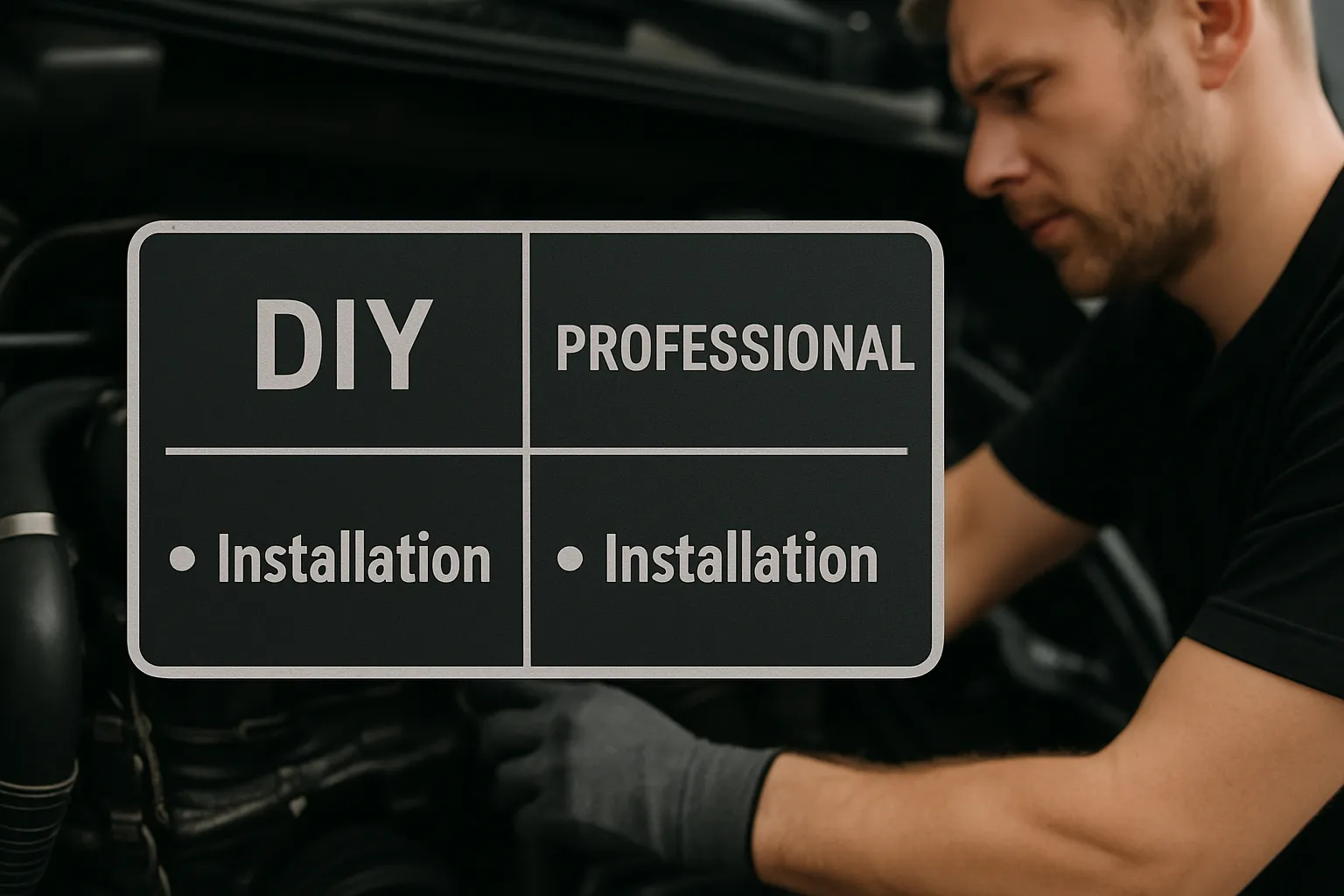
A. What the Install Involves
A diesel delete typically includes:
- Removing DPF from the exhaust track
- Pulling the EGR cooler and blocking ports
- Disconnecting/plugging sensor harnesses
- Installing delete pipes
- Flashing ECU with off-road tune
- Testing for leaks, idle quality, and boost behavior
B. Tools Required
- Socket set and extensions
- Torque wrench
- Jack stands or lift
- Scan tool
- Laptop for custom tune (optional)
- Penetrating oil and spare clamps
C. Why Many Choose a Professional
Honestly? Because mistakes here are expensive.
Benefits of a pro:
- Cleaner tuning
- Better control of exhaust temps
- Guaranteed fitment
- Time savings
- Lower risk of CELs or limp modes
A professional off-road diesel shop usually offers warranty on workmanship, which is invaluable.
Cost Breakdown
Let’s talk numbers. Costs vary depending on platform and brand.
A. Typical Delete Kit Costs
| Component | Price Range |
| EGR Delete Kit | $150–$500 |
| DPF Delete Pipe | $300–$1,200 |
| Tuner/Programmer | $500–$1,800 |
| Full Delete Kit | $1,500–$3,000+ |
| Labor (if installed professionally) | $500–$1,200 |
A full professional off-road build can range between $2,000 and $4,500 depending on quality and engine size.
B. Ongoing Costs
After deletion, you may need:
- More frequent oil changes
- Monitoring equipment
- Higher-quality diesel fuel
- Occasional retuning for supporting mods
Real-World Off-Road Scenarios Where Delete Kits Shine
Here’s where performance changes become extremely obvious.
A. Mud, Water, and Deep Terrain
DPF-equipped trucks hate repeated heat cycles followed by sudden cooling. Muddy terrain triggers both constantly.
A deleted setup avoids:
- Forced regens
- Sudden heat spikes
- Limp mode from clogged filters
B. Heavy Towing on Trails
Pulling a fully loaded trailer through rough terrain requires stable torque. The torque stability of a deleted engine allows steadier throttle input and better temperature control.
C. Competitive Diesel Motorsports
Sled pulls. Hill climbs. Drag events.
Most competition trucks run:
- Full delete kits
- Big turbos
- Aggressive race tunes
Emissions systems simply aren’t designed for the loads produced in motorsport.
Alternatives to Deleting (If You Need to Stay Emissions Legal)
Not everyone wants or needs a full delete kit. If your truck still sees public roads, these options offer real performance increases.
A. Emissions-Compliant Tunes
Mild to moderate power increases without tampering with emissions equipment.
B. Upgraded Turbos
More efficient airflow without requiring deletes.
C. High-Flow Intakes
Improves throttle response and reduces turbo strain.
D. Performance Exhaust
Emissions-compliant systems still improve sound and flow.
E. Preventive Maintenance
Especially important:
- Cleaning EGR valves
- Regular DPF checks
- Allowing full regen cycles
These steps help maximize longevity while remaining legal.
Final Verdict: Are Diesel Delete Kits Worth It for Off-Road Use?
Here’s the honest answer.
If your diesel truck is:
- Strictly off-road
- A competition build
- A private-land workhorse
- A farm vehicle
- A race application
Then yes — a diesel delete kit can be one of the most noticeable upgrades you’ll ever make.
You get:
- More torque
- Lower exhaust temps
- Better reliability
- More predictable power
- Fewer mechanical headaches from emissions systems
But if your truck ever touches a public road, it’s absolutely not worth the legal, financial, or mechanical risk.
Conclusion
Delete kits are powerful tools. They transform how a diesel engine behaves under off-road load, making them a popular choice for competition trucks and private-land rigs. They’re also serious modifications that require respect, high-quality tuning, and responsible use. At Explosive Diesels, our goal is to help you get the best possible performance from your diesel — responsibly, safely, and with the technical accuracy your build deserves.
A diesel delete kit isn’t for everyone, but for the right off-road diesel, it can completely change how the engine performs. If you’re building something wild — something meant to push the limits — now you understand exactly what’s possible.
FAQs
A diesel delete kit removes or bypasses factory emissions components like the DPF, EGR, and SCR systems to improve off-road performance. It requires tuning to operate correctly.
No. Delete kits are illegal on any vehicle operated on public roads and are intended only for off-road, competition, farm, or private-land use.
Many off-road builds see noticeable torque and horsepower increases, but actual gains depend on tuning quality and engine platform.
Yes, most off-road users experience better fuel efficiency due to reduced regens and improved airflow.
Yes. Any emissions-related modification typically voids factory powertrain warranties.
Poor tuning can cause overboosting, high EGTs, shortened engine life, or performance instability.
No. A deleted vehicle will fail emissions inspections and may require costly reinstalls to become compliant again.
EGT gauges, upgraded cooling, high-flow intakes, and intercooler improvements help maintain reliability.
Most off-road users spend between $1,500 and $4,500 depending on parts, tuning, and installation.
For trucks that never touch public roads, delete kits can offer major performance and reliability gains when tuned properly.