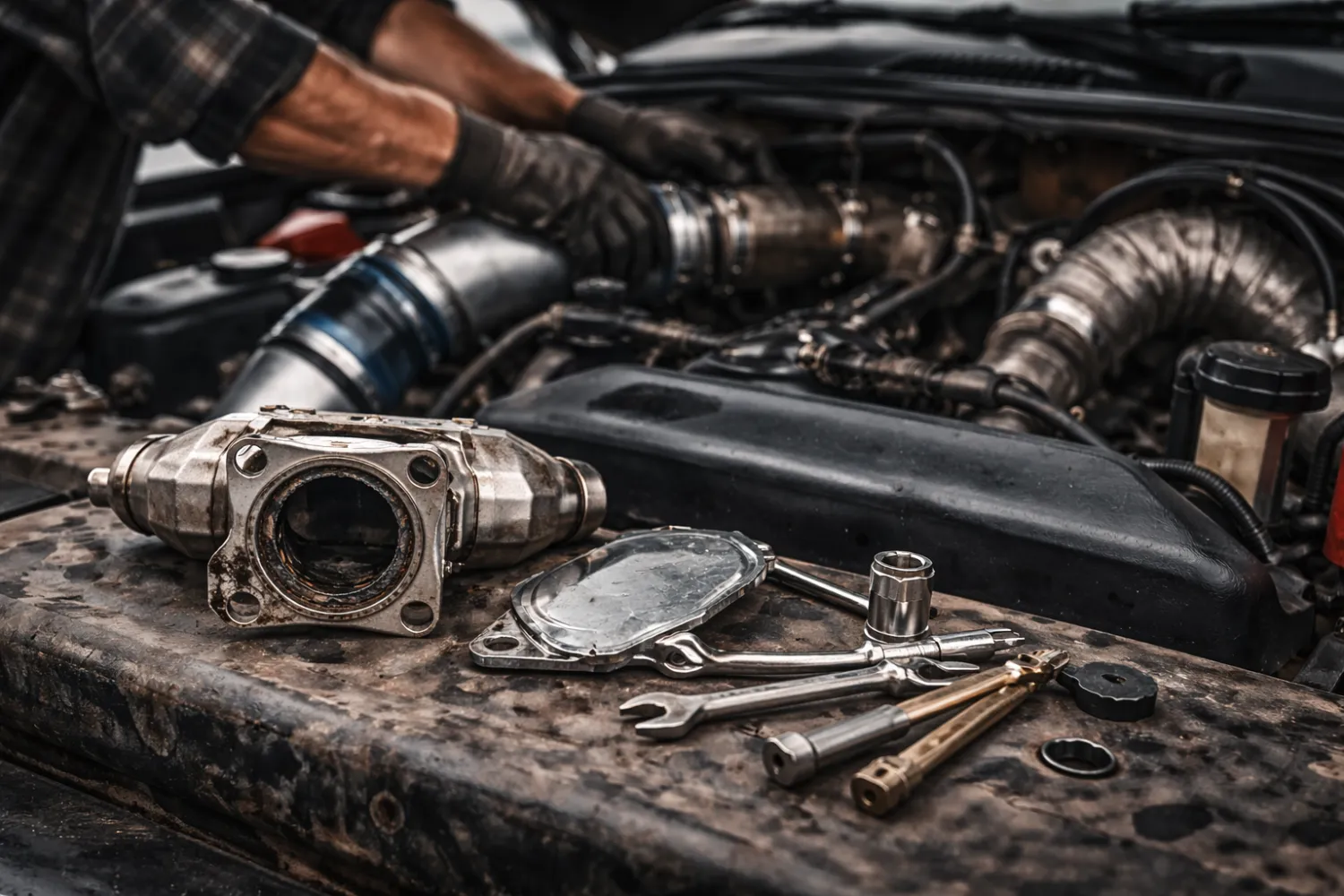
If you own a 2013 Duramax, you already know it’s a powerhouse with a reputation for strength and frustration. The LML 6.6L Duramax can tow hard, pull long grades, and rack up miles. But there’s a weak link baked right into the emissions system. That’s why so many off-road owners end up researching an EGR delete kit for 2013 Duramax sooner or later. Not because it’s trendy. Not because it’s cheap. But because the factory EGR system becomes a reliability bottleneck that holds the truck back.
I’ve seen it again and again. Trucks that run great one day, then start stacking check engine lights, running hot, or feeling lazy under load. Dig deeper, and the EGR system is usually part of the problem. This article breaks down exactly why that happens, what an EGR delete kit actually does on the 2013 Duramax, and how to decide if it’s the right move for your off-road build.
No fluff. No scare tactics. Just real-world guidance.
Why the 2013 Duramax EGR System Creates Problems
The 2013 Duramax falls under the LML generation, which ran from 2011 to 2016. This platform introduced higher injection pressures, more aggressive emissions strategies, and tighter control logic. On paper, it worked. In the real world? Things got complicated.
The EGR system’s job is to route a portion of exhaust gas back into the intake to reduce combustion temperatures and control nitrogen oxide emissions. According to the U.S. Environmental Protection Agency, EGR systems are designed specifically to lower NOx output by reducing peak combustion temperatures during certain operating conditions.
That sounds harmless. The problem is what comes along for the ride.
Hot exhaust gases carry soot, moisture, and carbon. Over time, that mixture coats intake runners, EGR valves, and sensors. On the LML, the system runs especially hot, which accelerates buildup and wear. The result is restriction, heat stress, and inconsistent airflow.
And when airflow isn’t clean or consistent, everything downstream suffers.
How the EGR System Works on the LML Duramax
On the 2013 Duramax, the EGR system is tightly integrated with the engine’s fueling and airflow strategy. It includes:
- An electronically controlled EGR valve
- A high-flow EGR cooler
- Multiple pipes routing exhaust gas back into the intake
- Sensors monitoring temperature, pressure, and flow
Exhaust gas recirculation itself isn’t new. The concept has been around for decades and is widely documented as a method to reduce emissions in internal combustion engines.
During light throttle or cruising, the system opens and recirculates exhaust gas. During higher load, it reduces EGR flow. In theory, it’s seamless. In practice, soot buildup, heat cycling, and coolant exposure take a toll. The EGR cooler is especially vulnerable. When it fails, it can leak coolant internally, creating problems that look unrelated at first glance.
Common EGR Failures on the 2013 Duramax
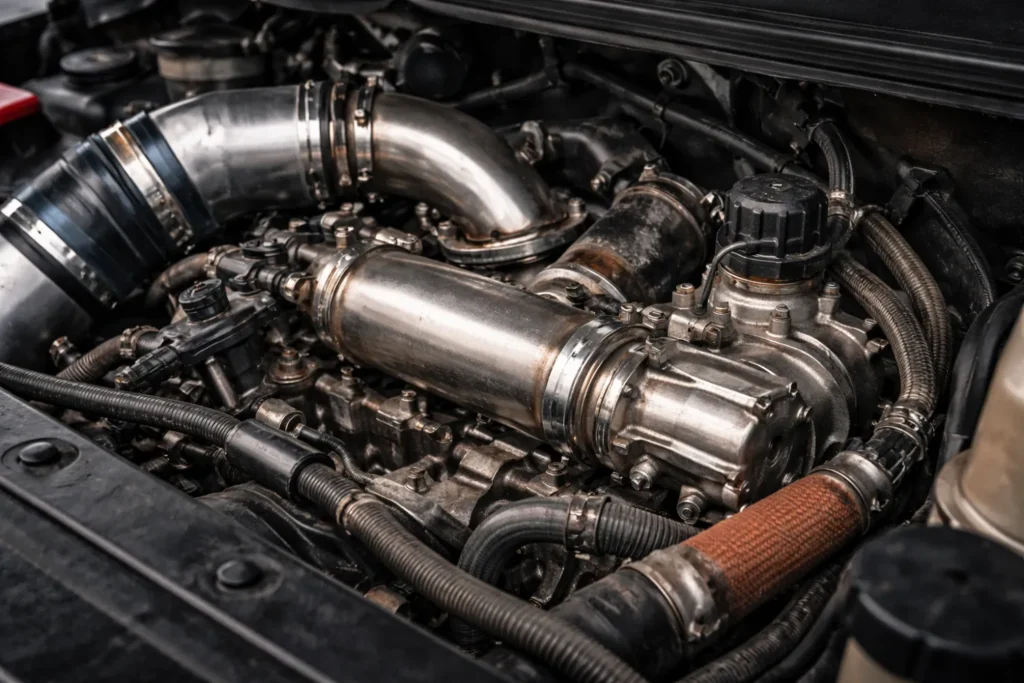
Ask almost any LML owner what went wrong first, and you’ll hear similar stories.
Here’s what tends to show up:
- Persistent check engine lights
- Reduced throttle response
- Elevated exhaust gas temperatures
- Coolant loss with no external leak
- Reduced fuel efficiency
- Limp mode under load
The scary part? These symptoms often overlap with turbo or injector issues. That leads to misdiagnosis and expensive repairs that don’t fix the root cause. The EGR system doesn’t usually fail all at once. It degrades slowly. And during that time, it drags the rest of the engine with it.
What an EGR Delete Kit for 2013 Duramax Actually Does
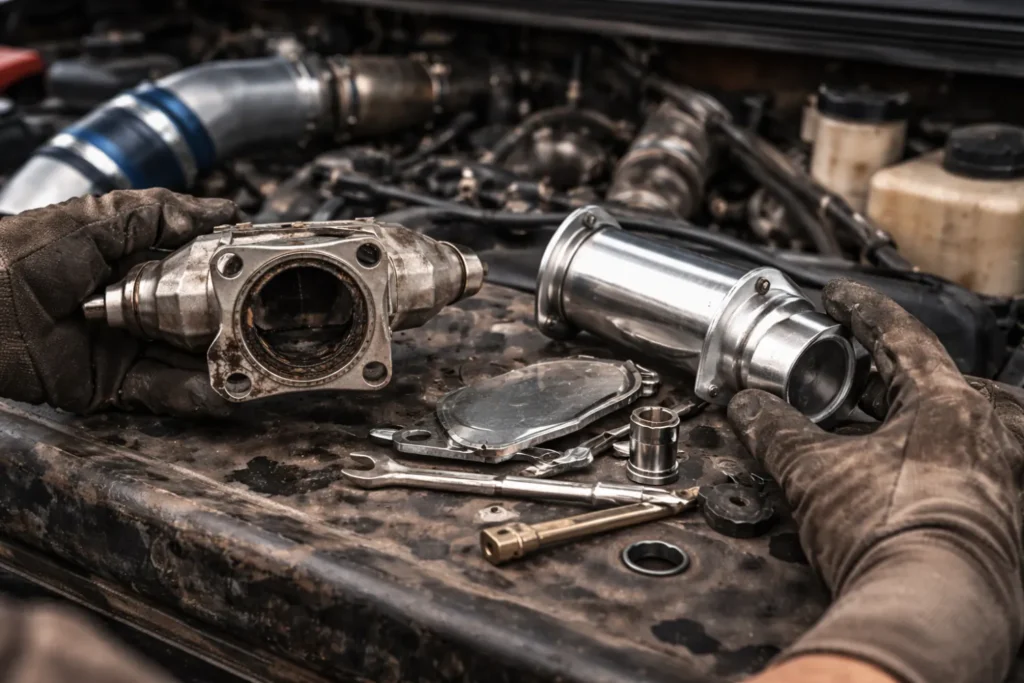
An EGR delete kit for 2013 Duramax removes the EGR system’s ability to recirculate exhaust gases back into the intake. Instead of hot, dirty exhaust being rerouted, the intake airflow stays clean and consistent. A proper EGR delete is not just a block-off plate. It’s a system-level change that eliminates restriction points and simplifies airflow.
Most full kits include:
- A replacement EGR delete pipe or race pipe
- Coolant reroute hoses and fittings
- Block-off plates for exhaust ports
- Gaskets, clamps, and hardware
The goal is simple. Remove the EGR hardware cleanly and permanently, without leaving dead-end pipes or leak-prone connections behind.
Partial Block-Off vs Full EGR Delete: Why It Matters
Some owners consider partial block-off plates as a cheaper alternative. On older platforms, that sometimes worked. On the 2013 Duramax, it’s rarely a good idea.
Partial solutions leave the EGR cooler and piping in place. That means:
- Heat is still trapped in the system
- Coolant still flows through failure-prone components
- Carbon buildup continues
A full EGR delete kit removes the failure points entirely. For the LML platform, that difference matters more than most people realize.
Performance Gains You Can Actually Feel
Let’s be clear. An EGR delete won’t magically turn a stock 2013 Duramax into a race truck. But the gains are noticeable, especially when towing or driving under sustained load.
Here’s what most off-road owners report:
- Sharper throttle response
- More consistent boost pressure
- Lower exhaust gas temperatures
- Smoother power delivery
The engine simply breathes better. And when airflow improves, combustion efficiency follows. It’s not about peak horsepower. It’s about usable power, especially in real-world conditions.
Reliability Improvements Are the Real Win
Performance is nice. Reliability is why most people install an EGR delete kit for 2013 Duramax.
By removing the EGR system, you reduce:
- Soot entering the intake
- Heat cycling stress on coolant components
- Risk of internal coolant leaks
- Sensor contamination
Over time, that translates into fewer surprise failures and more predictable operation. I’ve seen trucks with EGR deletes run cleaner internally after tens of thousands of miles compared to stock trucks at half that mileage. That’s not theory. That’s teardown reality.
EGR Delete vs EGR Cleaning: The Honest Comparison
Some owners try cleaning the EGR system instead of deleting it. That can buy time. But it rarely solves the problem long term.
| Option | Short-Term Cost | Long-Term Result |
| EGR Cleaning | Lower | Recurrent buildup |
| EGR Replacement | High | Same failure risk |
| EGR Delete Kit | Moderate | Permanent solution |
Cleaning doesn’t change the system design. Deleting it does.
Why Tuning Is Mandatory After an EGR Delete
You cannot install an EGR delete kit on a 2013 Duramax without proper tuning. Period.
The engine control module expects EGR flow. When it doesn’t see it, it throws codes, reduces power, or enters limp mode. Tuning recalibrates the system to operate correctly without EGR input.
Proper tuning addresses:
- Diagnostic trouble codes
- Fueling strategy adjustments
- Boost and airflow calibration
- Throttle response refinement
This isn’t optional. It’s part of doing the job right.
Supporting Mods That Add Real Value
An EGR delete works best when paired with a few smart supporting upgrades.
- High-quality cold air intake
- Turbo inlet upgrade
- Intercooler piping improvements
- Off-road exhaust system
Each mod reduces restriction. Together, they let the engine operate with less effort and less heat.
Installation Overview: What to Expect
Installing an EGR delete kit on a 2013 Duramax is not beginner-level work, but it’s manageable with patience.
- Install time: 4–8 hours
- Skill level: intermediate
- Most common mistakes: rushed coolant routing and loose clamps
Take your time. Clean installs last longer.
Legal and Off-Road Use Considerations
An EGR delete kit for 2013 Duramax is intended for off-road or competition use only. Federal emissions laws prohibit removing emissions equipment on vehicles operated on public roads.
Know your local regulations before purchasing.
Final Thoughts: Why This Mod Comes First
If I had to choose one foundational modification for an off-road 2013 Duramax, it would be an EGR delete kit for 2013 Duramax.
Cleaner air.
Lower heat.
Fewer failures.
That’s not hype. That’s mechanical reality.At Explosive Diesels, that’s the kind of performance upgrade that actually matters.
FAQs
An EGR delete kit removes the exhaust gas recirculation system so exhaust gases no longer re-enter the intake, keeping airflow cleaner and more consistent.
It isn’t required, but removing EGR restrictions often improves throttle response, stabilizes EGTs, and enhances overall drivability in off-road applications.
Yes, deleting the EGR system reduces soot buildup, heat stress, and coolant-related failures that commonly affect the 2013 Duramax.
Yes, tuning is mandatory to prevent diagnostic trouble codes and ensure proper fueling and airflow after the EGR system is removed.
While possible, EGR deletes are most effective when paired with proper tuning and supporting airflow modifications.
Most installations take between 4 and 8 hours, depending on experience and whether the work is done at home or by a shop.
Yes, removing exhaust gas recirculation often results in lower and more stable EGTs, especially during towing or sustained load.
No, EGR delete kits are intended for off-road or competition use only and are not legal for use on public roads under federal emissions regulations.
Cold air intakes, turbo inlet upgrades, intercooler piping, and off-road exhaust systems complement an EGR delete by improving airflow efficiency.
For off-road trucks focused on longevity and reliability, an EGR delete is often one of the most impactful foundational upgrades.