
For Explosive Diesels Where Power Meets Purpose.
If you’ve spent any time pushing an LML Duramax off the pavement, you’ve probably wondered whether an LML EGR delete kit would make a difference. Spoiler: it absolutely can. And in all the places that matter off-road cooler EGTs, smoother throttle response, reduced soot, and fewer of those maddening EGR-related failures that always show up at the worst possible time. I’ve seen these trucks come alive with the right setup. But before we dive too deep into gains and upgrades, let’s establish one thing clearly: everything discussed in this article applies only to off-road, race, or competition vehicles not on-road or registered trucks.
Once that’s out of the way, we can talk about why so many LML owners install an EGR delete, what actually improves, and how to build a setup that handles brutal off-road conditions while staying cool, efficient, and ridiculously reliable.
Let’s get into it.
1. Why the LML’s Stock EGR System Holds the Engine Back Off-Road
The factory EGR system was designed to meet emissions regulations by recirculating a measured portion of exhaust gases back into the intake. This reduces combustion temperatures and helps control nitrogen oxide (NOx) emissions during on-road use. For a full overview of how emissions systems function, the EPA’s Emissions Control Systems Guide explains the purpose and behavior of components like EGR valves and coolers.
The idea works extremely well for compliance. But for off-road performance? It comes with several drawbacks.
Hot exhaust gases carry fine soot particles. When rerouted into the intake, they stick to runners, coat sensors, and elevate temperatures from the inside out. The LML platform 2011 through 2016 suffers particularly heavy soot buildup because of its EGR cooler and intake geometry.
Here’s what that causes off-road:
- Higher intake temperatures
- Higher EGTs
- Turbo inefficiency
- Clogged intake runners
- More carbon buildup
- EGR-related fault codes and limp modes
For a deeper engineering perspective, SAE International provides technical papers on the physics of EGR systems, soot formation, and combustion behavior. You can explore their research library here.
When you read through these resources, the conclusion becomes obvious: EGR works for on-road emissions requirements, but it becomes a thermal and reliability liability when you’re hammering a Duramax through mud, sand, rock, or rough terrain.
That’s exactly where an LML EGR delete kit comes into play for off-roaders.
2. What an LML EGR Delete Kit Actually Does
Let’s simplify this: an LML EGR delete kit removes the active EGR system from the engine’s airflow path and prevents exhaust gas from being recirculated.
This means the engine receives only clean, oxygen-rich air. No exhaust gases. No internal soot deposits. No elevated intake temperatures.
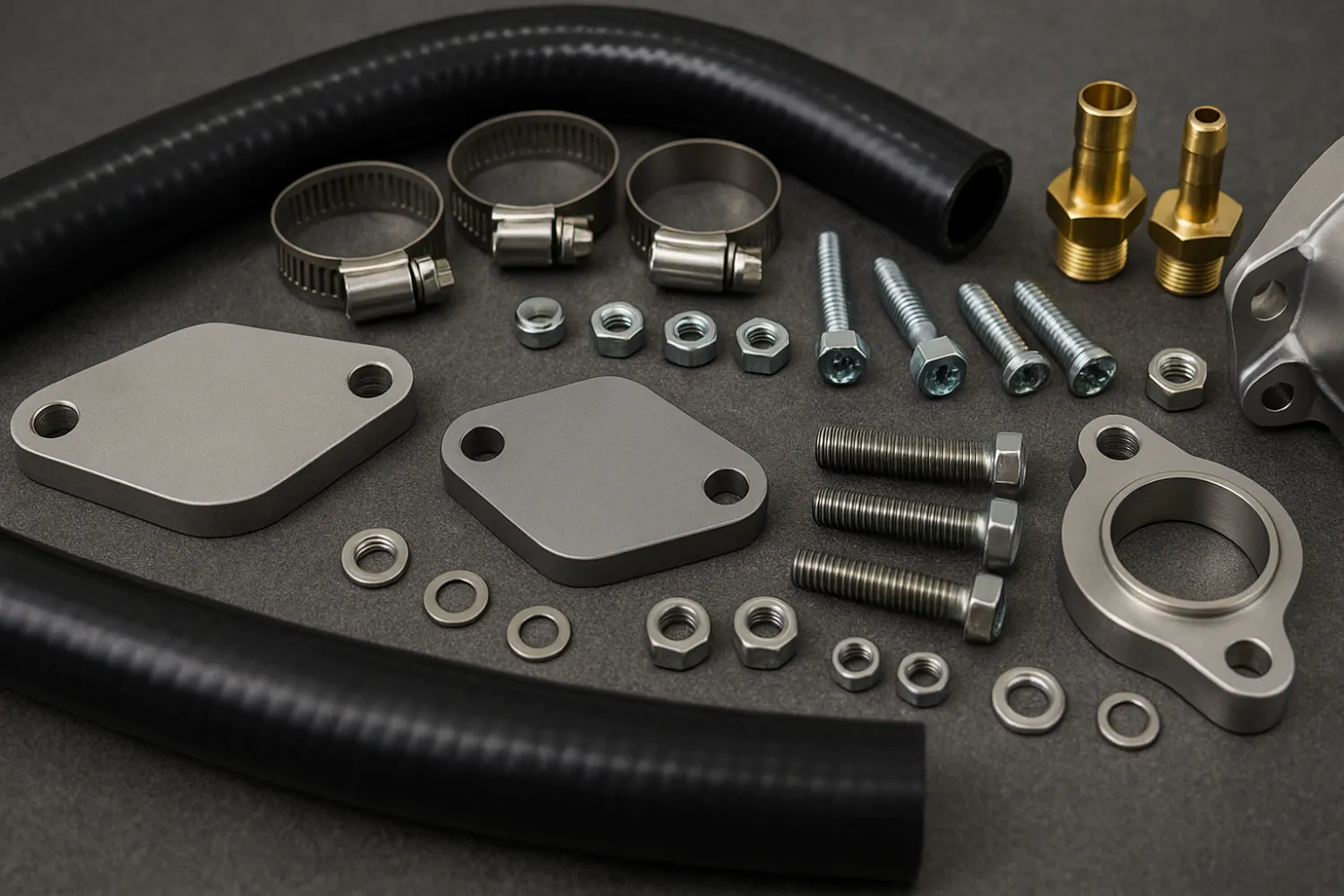
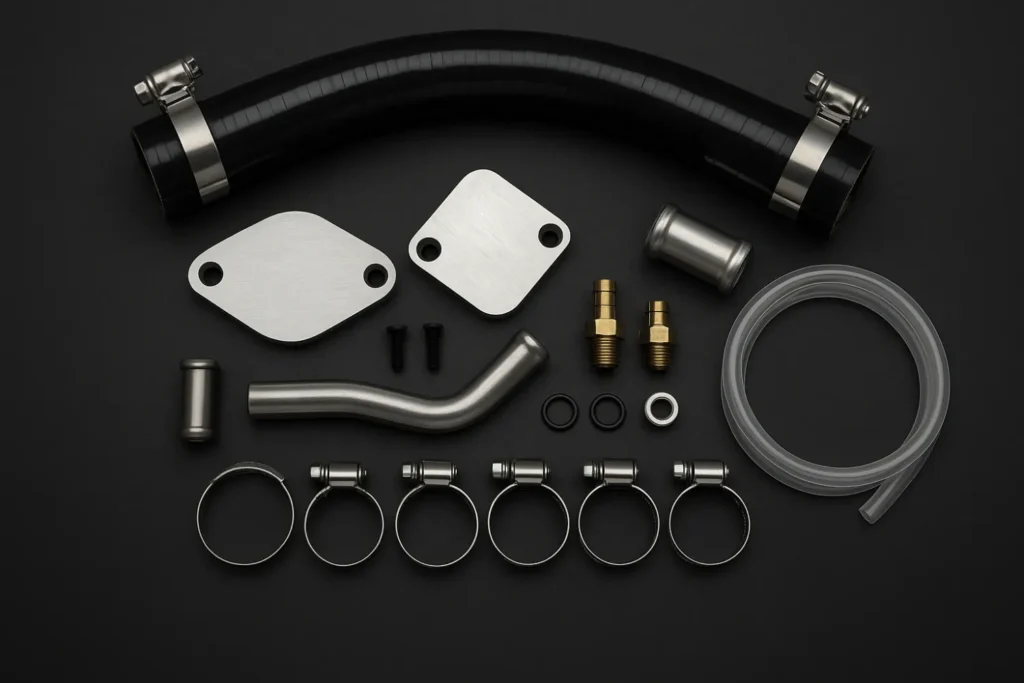
A typical kit includes:
| Component | Purpose |
|---|---|
| Block-off plates | Seal former EGR flow paths |
| Coolant reroute fittings | Maintain coolant circulation without the EGR cooler |
| Silicone hoses | Heat-resistant replacements for coolant redirection |
| CNC-machined fittings | Ensure clean, leak-free connections |
| Hardware & clamps | Secure everything in place |
| Optional off-road tuning | Required to disable EGR-related codes |
It’s a simple mechanical change with dramatic effects on airflow stability and engine cleanliness.
3. Off-Road Performance Gains You Can Actually Feel
Let’s move past theory and talk about what happens the moment you run the truck with an LML EGR delete kit installed.
Lower EGTs
Cooler incoming air = cooler combustion temperatures. That matters when you’re working the engine hard especially while towing, crawling, or climbing.
Better Throttle Response
Without hot exhaust choking the intake, the engine breathes freely. Throttle becomes smoother, more immediate, and noticeably more predictable.
Reduced Soot Contamination
Soot buildup slows down everything. Delete the EGR system and soot accumulation drops sharply.
Longer Turbo Life
Heat and soot kill turbochargers. Remove both and the turbo lives a much happier life.
More Stable Power Delivery
The LML becomes less prone to heat soak and more consistent under long-duration off-road stress.
These aren’t hypothetical gains—they’re real, seat-of-the-pants improvements.
4. Reliability Gains That Matter Off-Road
Many LML owners think they want an EGR delete for performance. What they really want is reliability.
After installing an LML EGR delete kit, most off-roaders see the following issues disappear:
- Sticking EGR valves
- Cracked EGR coolers
- EGR-related limp modes
- MAP sensor soot clogging
- Severe intake contamination
- Overheating due to recirculated exhaust
The factory EGR system introduces several potential failure points that don’t handle off-road abuse well. Removing them results in a truck that stays stable, cool, and predictable.
5. Fuel Economy Improvements in Real Off-Road Use
You won’t gain 5 MPG. But 1–3 MPG? Absolutely possible.
Cleaner combustion reduces pumping losses. Cooler intake air burns more efficiently. And without EGR-induced airflow disruptions, the engine operates more smoothly.
In rough terrain or long-distance trail work, those small improvements stack up fast.
6. Supporting Upgrades That Pair with an LML EGR Delete Kit
An EGR delete works as a standalone off-road mod—but certain upgrades enhance the overall system.
Off-Road Tuning (Required in Many Cases)
A proper tune:
- Clears EGR codes
- Optimizes fuel tables
- Improves turbo response
- Stabilizes low-RPM operation
Skipping tuning leads to persistent check-engine lights and inconsistent performance.
Intake Cleaning
Every LML over ~80k miles has soot buildup. Clean it out before installing the kit.
PCV Reroute
Prevents oil vapor from coating the intake.
Intercooler Boots
More boost + more airflow = more strain on old boots.
Lift Pump
Not required, but excellent for fueling stability under heavy load.
Here’s a comparison:
| Upgrade | Benefit | Priority |
|---|---|---|
| Off-road tune | Proper operation | High |
| Intake cleaning | Restores airflow | Medium |
| PCV reroute | Cleaner intake | Medium |
| Intercooler boots | Prevent boost leaks | Medium |
| Lift pump | Fuel pressure stability | Low–Medium |
7. Installation Overview
This isn’t a particularly dangerous job, but the LML’s firewall layout and coolant routing make it detailed. Here’s a high-level view:
Typical Steps
- Remove intake components
- Remove EGR valve
- Remove EGR cooler
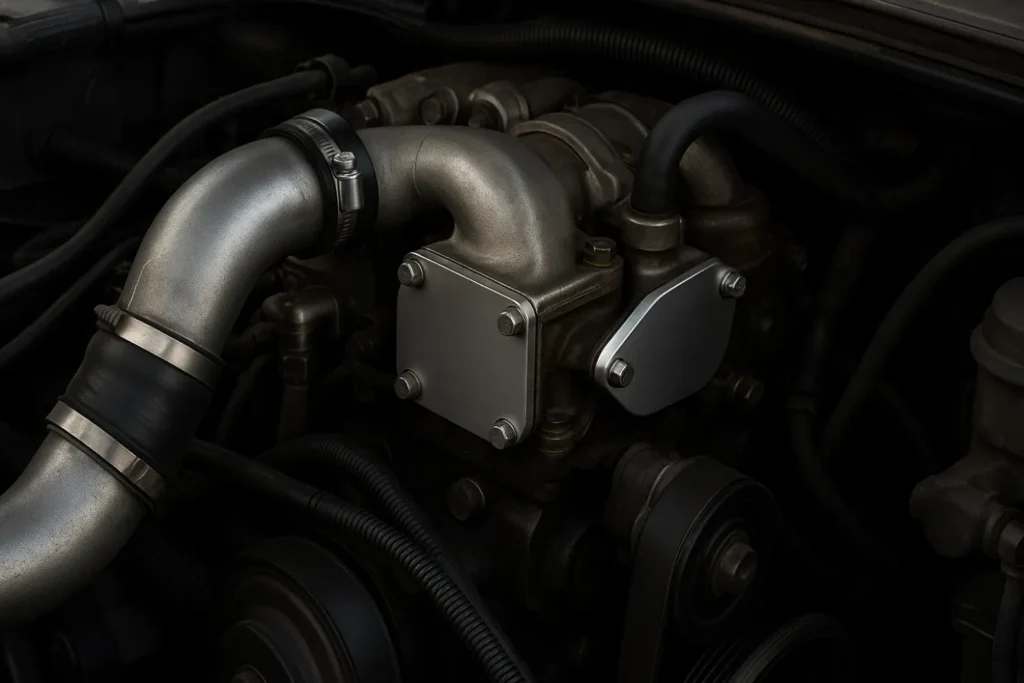
- Install block-off plates
- Install coolant reroute fittings
- Reassemble
- Load off-road tune
Time Requirements
| Installer | Time |
|---|---|
| DIY | 4–8 hours |
| Professional | 2–4 hours |
Common Issues
- Coolant leaks
- Air pockets in cooling system
- Misaligned plates
- Loose clamps
- Reused gaskets
Triple-check your work before firing the engine.
8. DIY vs. Professional Installation
DIY Works If…
- You’re mechanically confident
- You have time and proper tools
- You don’t mind tight engine bay access
Professional Install Is Best If…
- You want zero troubleshooting
- You’re pairing other upgrades
- You’re pressed for time
A good diesel shop will also inspect the turbo, MAP sensor, coolant system, and intake—things that dramatically affect performance.
9. Legal & Compliance Notes (Important)
We keep this simple and responsible:
- EGR deletes are NOT legal for on-road or registered vehicles.
- They are only permitted for off-road, competition, race, agricultural, or unregistered vehicles.
- Federal emissions laws strictly regulate tampering with emissions systems on public roads.
Still curious about why? The EPA’s emissions guide provides clarity on the purpose and legal framework of emissions systems.
Use an LML EGR delete kit responsibly and only where permitted.
10. Choosing the Right LML EGR Delete Kit
Not all kits are equal. Here’s what you want:
High-Quality Kit Features
- 304 or 316 stainless plates
- CNC-machined fittings
- Strong T-bolt clamps
- High-temp silicone hoses
- Clear instructions
Avoid Kits With:
- Thin aluminum plates
- No coolant reroute
- Weak clamps
- No brand transparency
Good parts = good results.
11. Troubleshooting After Installation
Watch for the following:
Coolant Leaks
Usually caused by misaligned fittings or loose clamps.
High Temps
Often due to air pockets in the system.
Check Engine Lights
Tune-related or sensor-related.
Whistling / Boost Loss
Boost leak from a hose or clamp.
Most issues appear early—catch them quickly and they’re easy to fix.
12. Long-Term Maintenance
An EGR-deleted (off-road only) LML is easier to maintain:
- Oil stays cleaner
- Turbo runs cooler
- Intake stays dramatically cleaner
- Fewer sensors clog with soot
- Coolant system is simpler
Just monitor coolant, boost behavior, and turbo health regularly.
13. Final Thoughts
If your LML Duramax is an off-road machine not a street truck an LML EGR delete kit is one of the most impactful upgrades you can make. The improvement in airflow, temps, throttle response, and long-term reliability is enormous.
But do it responsibly.
Do it legally.
Do it with quality parts and proper tuning.
The LML platform has incredible potential. Unlock it the right way and it will reward you for years.
FAQs
It removes the EGR system from the airflow path so the engine only receives clean, cool intake air. This reduces soot buildup and improves off-road performance.
Yes, most off-road setups see better throttle response, cooler temps, and smoother power delivery because the engine is no longer recirculating exhaust.
In most cases, yes an off-road tune is needed to clear codes and optimize fuel and turbo behavior.
Absolutely. Removing recirculated exhaust lowers intake temperatures and reduces EGTs during heavy off-road loads.
Many off-road users see a 1–3 MPG improvement because the engine burns cleaner and more efficiently.
It helps eliminate sticking EGR valves, intake clogging, soot buildup, cooler leaks, and EGR-related limp modes.
No it is only legal for off-road, race, or competition vehicles and cannot be used on public highways.
DIY installers typically need 4–8 hours, while a professional diesel shop can complete it in 2–4 hours.
It’s recommended if your truck has high mileage because soot buildup can restrict airflow even after the delete.
Coolant leaks, overheating, boost loss, or check-engine lights usually indicate improper routing, loose clamps, or missing tuning.