The 3.0 Duramax is a fascinating platform. It’s small. Efficient. Surprisingly capable for its displacement. And when pushed into real off-road conditions dust, heat, load, altitude it becomes very clear why so many owners look into a 3.0 Duramax EGR delete kit. This engine shines when airflow is predictable and combustion temps stay stable. The problem? The factory EGR system doesn’t always play nicely in those environments.
Today’s guide breaks down what actually happens when you remove the EGR system for off-road use, why so many trail runners swear by the upgrade, and what you should realistically expect from the kit. We’ll cover the gains, the downsides, the tuning, the maintenance, and everything in between.
Let’s dig in!
I. Why the 3.0 Duramax Platform Responds So Well to an EGR Delete
The LM2 and LZ0 variants of the 3.0 Duramax are known for refined combustion and quiet operation. They’re efficient and torque-rich without feeling heavy. But their biggest strength tight, clean combustion also becomes their biggest vulnerability in dirty, dusty, real-world off-road driving. Why? Because the 3.0 Duramax uses an aggressive EGR strategy to meet emissions targets. That means a lot of recirculated exhaust gas, a lot of soot cycling through the intake, and a lot of stress on sensors and valves when the truck is pushed beyond polite highway commuting.
Off-road drivers noticed something early: airflow consistency matters more on this engine than raw peak numbers. And nothing disrupts airflow consistency like soot buildup or an EGR valve that decides to stick half-open in the middle of a steep climb. This is exactly why so many owners consider a 3.0 Duramax EGR delete kit—not for outrageous horsepower numbers, but for smoother, cleaner, more predictable performance when the terrain gets rough.
II. What the EGR System Does (And Why It Causes Issues Off-Road)
Let’s keep this simple. The EGR system’s job is to reduce NOx emissions by reintroducing a small amount of exhaust back into the engine during specific load conditions.
In theory, it’s brilliant.
In practice especially off-road it’s messy.
Common 3.0 Duramax EGR-related issues:
- Soot buildup in the intake
- Contaminated sensors that feed incorrect data to the ECM
- Reduced throttle responsiveness under load
- Higher combustion temperatures when the EGR valve begins to stick
- Inconsistent turbo response
The intake runners on the 3.0 Duramax are relatively narrow. It doesn’t take much soot to make them act like arteries in need of a cholesterol cleanse.
And once soot becomes part of the game, everything downstream suffers. Airflow drops. Charge temps rise. Sensors get confused. Off-road performance becomes unpredictable. That unpredictability is what the 3.0 Duramax EGR delete kit eliminates.
III. What the 3.0 Duramax EGR Delete Kit Includes
Every kit looks a little different depending on the manufacturer, but most include a similar set of components designed to fully bypass the EGR system.
Typical Kit Components
| Component | Purpose |
|---|---|
| Block-off plates | Physically stop exhaust from entering the intake |
| Coolant reroute fittings | Replace the coolant pathways that fed the EGR cooler |
| Hardware kit | Bolts, clamps, plugs, and seals |
| Harness or resistor solution | Prevents the ECM from seeing unplugged EGR components (tune required) |
| Optional upgraded coolant lines | More durable under hard use |
Some kits also recommend or pair well with:
- A catch-can
- High-flow intake
- Upgraded charge pipes
These aren’t mandatory, but they help the engine stay cleaner after the delete is completed.
IV. Key Benefits of the 3.0 Duramax EGR Delete Kit (Off-Road Use Only)
This is where the kit shines. Not in big dyno numbers, but in consistency, repeatability, and reliability under punishment.
1. Lower Intake Temps
When you stop introducing hot exhaust into the intake, the entire combustion cycle cools slightly. Cooler air = denser air. Denser air = stronger burn. It’s simple physics, but it makes a meaningful difference off-road.
2. Reduced Soot Buildup
This is huge. Without EGR, soot no longer cakes the intake manifold, the MAP sensor, or the turbo inlet. The engine can breathe the way it was designed to breathe.
3. Faster, Cleaner Throttle Response
No more lag caused by a misbehaving EGR valve. When you press the pedal, the truck moves—especially in the mid-range.
4. Fewer EGR-Related Limp Modes
If you’ve climbed a trail only to suddenly lose power at the worst time, you know how serious this is. Eliminating EGR eliminates dozens of factory fault conditions.
5. Better Oil Quality Over Time
Soot affects the crankcase too. Once the EGR system is gone, you get noticeably cleaner oil between changes.
V. Performance Changes You Can Expect
Let’s set realistic expectations. The 3.0 Duramax EGR delete kit does not turn the truck into a monster. That’s not the point. The point is smoother, more predictable performance.
Realistic Gains
| Change | What You’ll Feel |
|---|---|
| Slight horsepower increase | Only with tuning, but noticeable in daily off-road use |
| Better mid-range torque | Pulls more confidently up hills |
| Sharper turbo spool | Especially at lower RPM |
| More stable temps under load | Excellent for desert or mountain use |
The biggest difference isn’t peak power it’s the way the truck delivers its power. You’ll feel it in the first mile.
VI. What the EGR Delete Kit Will Not Do
Let’s cut through the hype.
A 3.0 Duramax EGR delete kit will NOT:
- Turn a 3.0 into a 6.6L
- Add 100+ HP on its own
- Replace a proper tune
- Increase towing capacity
- Fix unrelated issues like a failing turbo
Think of this mod as a foundation. It improves the system so other upgrades can perform at their best.
VII. Installation Overview: What to Expect
Installing the delete kit is a moderate job, not terribly complex but somewhat tight. The 3.0 Duramax is packaged efficiently, which means access is limited.
Requirements:
- Basic hand tools
- Coolant drain pan
- Torque wrench
- 3–4 hours of clean, uninterrupted time
General Process
- Remove the intake piping and engine cover
- Access the EGR cooler and valve
- Drain coolant and disconnect lines
- Install block-off plates
- Install coolant reroute fittings
- Reassemble and check for leaks
- Flash your tune
If you’re already mechanically inclined, the job is straightforward. If not, paying a shop may be wise—incorrect coolant routing can lead to headaches later.
VIII. Tuning Requirements After an EGR Delete
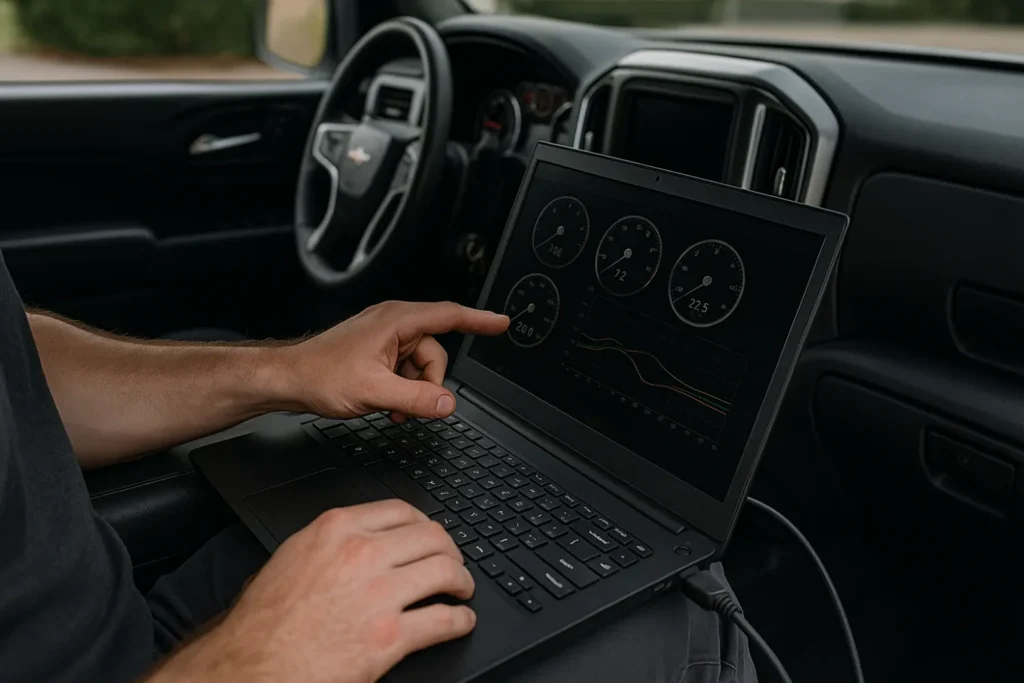
This part is not optional. The engine will not run properly without a tune.
Why tuning matters:
- Removes check-engine lights
- Adjusts airflow models
- Disables EGR-related diagnostics
- Smooths throttle transitions
- Ensures safe turbo behavior
Off-road tuning is the single most important companion upgrade to a 3.0 Duramax EGR delete kit. Without it, the truck won’t understand the changes you made.
IX. Problems the Delete Kit Prevents
Here’s where the mod pays for itself.
Common off-road issues prevented:
- Limp mode triggered by clogged EGR valve
- High EGTs during long climbs
- Bogging during sudden throttle demands
- Intermittent surging caused by EGR valve flutter
- MAP sensor contamination
- Turbo vane sticking from soot
When airflow stabilizes, every part of the engine behaves better. It’s a chain reaction.
X. Risks, Downsides, and Considerations
Every modification comes with trade-offs.
Potential downsides include:
- Installation complexity for beginners
- Need for a tune (added cost)
- Potential for coolant leaks if improperly routed
- Warranty impact
- Higher upfront cost when adding supporting mods
None of these are deal-breakers, but they’re worth acknowledging before you begin.
XI. Maintenance Expectations After Deleting the EGR
Deleting the EGR system removes one major source of soot, but diesels still need disciplined maintenance.
What to monitor:
- Oil quality — expect less soot, but don’t stretch intervals
- Boost leaks — check every 6 months, especially if off-roading often
- Coolant system pressure — verify fittings remain tight
- Intake system — stays much cleaner, but inspect annually
- Sensors — MAP and MAF behave better but still need attention
Supporting upgrades also help extend engine life, particularly catch-cans and high-flow intakes.
XII. Cost Breakdown: Realistic Expectations
Below is a rough cost range for building out a proper off-road EGR delete setup.
| Item | Estimated Cost |
|---|---|
| 3.0 Duramax EGR delete kit | $150–$450 |
| Off-road tune | $300–$900 |
| Optional add-ons | $150–$500 |
| Professional installation | $300–$600 |
Long-term savings
- Fewer sensor replacements
- Less risk of limp mode
- Cleaner intake system
- Longer oil life
Many drivers report that the kit pays for itself in reduced maintenance alone.
XIII. Who Should Consider This Upgrade
A 3.0 Duramax EGR delete kit makes sense if you:
- Drive off-road regularly
- Tow in steep or dusty environments
- Want more consistent throttle response
- Care about long-term engine cleanliness
- Prefer predictable airflow over emissions complexity
This mod is about improving reliability under real-world stress.
XIV. Who Should Not Consider It
Not every driver benefits.
You should avoid this upgrade if:
- You expect huge horsepower gains
- You rarely push the truck off-road
- You’re not willing to maintain the engine
- You want to keep your emissions system fully intact for on-road compliance
Know your goals before you modify.
XV. Final Thoughts: Is the 3.0 Duramax EGR Delete Kit Worth It?
If you value reliability, stability, and clean, predictable airflow when driving off-road, the answer is yes. The difference is instant. The engine feels freer. Throttle response sharpens. Temps stabilize. And the truck becomes noticeably more confident under strain. No, it won’t turn your 3.0 into a fire-breathing beast. But that’s not the point. The point is control. Consistency. Longevity. When airflow becomes stable, the entire powertrain feels more aligned and more capable.
For off-road drivers who push the limits of their trucks, the 3.0 Duramax EGR delete kit is one of the most effective reliability mods available today. And honestly? Once you experience the difference, it’s almost impossible to imagine going back.
FAQs
It removes the exhaust gas recirculation system so the engine only breathes fresh air, improving airflow consistency for off-road use.
You may feel a small gain, but the real improvement is smoother throttle response and better mid-range torque when paired with proper tuning.
Yes tuning is required to prevent check-engine lights and ensure the engine runs correctly without EGR components.
Absolutely; removing the EGR significantly reduces soot entering the intake manifold and sensors.
Typically yes, because you’re removing hot exhaust gases that would otherwise re-enter the intake.
Most installations take three to four hours depending on skill level and workspace access.
Yes, because many limp-mode events are triggered by sticky EGR valves or soot-contaminated sensors.
Expect less soot but still follow regular oil changes, inspect boost lines, and periodically check sensors.
It won’t increase towing capacity, but it can make the truck feel more stable and responsive under load.
It’s not required, but it helps keep the intake even cleaner by reducing oil vapor contamination.