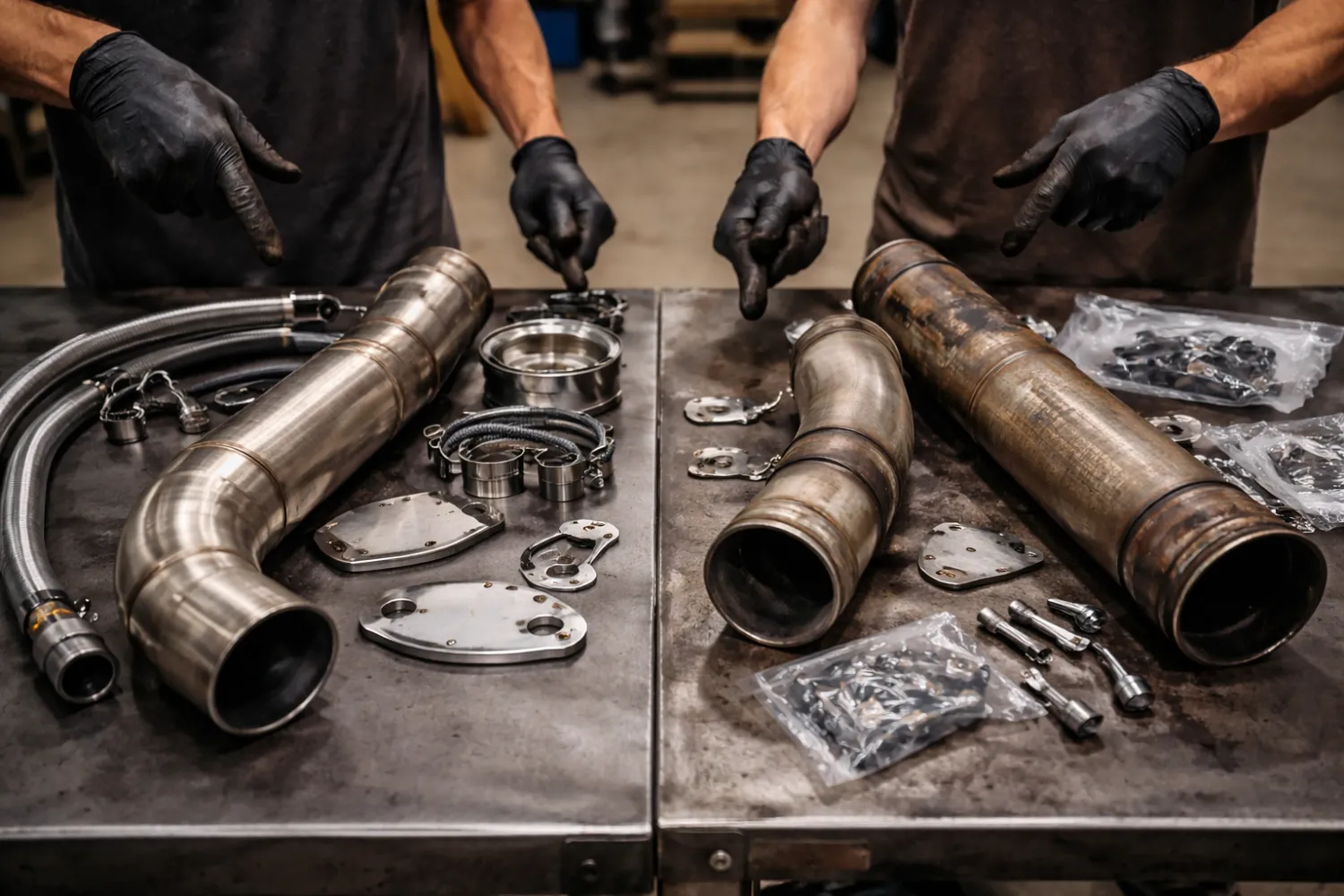
If you’ve spent any time around modern diesel trucks, you already know the frustration. Power that feels held back. Regeneration cycles that show up at the worst possible time. Sensors that fail, limp modes that kill momentum, and heat where it doesn’t belong. That’s exactly why the explosive diesel delete kit exists and why serious off-road builders rely on it.
This isn’t about noise for noise’s sake. It’s about airflow, reliability, and control. When emissions systems were added to modern diesels, performance took a back seat. Delete kits bring that balance back for trucks that live off public roads. And when done right, the difference is immediate. I’ve watched trucks change overnight. Throttle response sharpens. Exhaust temperatures settle. The engine finally breathes the way it was meant to. That’s what this article is about what an explosive diesel delete kit actually does, who it’s for, and how to decide if it belongs on your build.
Why Diesel Delete Kits Took Over the Off-Road Scene
Diesel engines thrive on simplicity. Air in. Fuel in. Power out. Modern emissions systems interrupt that rhythm at every stage. EGR systems reroute hot exhaust back into the intake. DPFs trap soot and rely on regeneration cycles that demand heat and uninterrupted driving. DEF systems add layers of sensors, heaters, and electronics that can shut a truck down without warning. Each system serves a purpose on public roads but off-road, they often become liabilities.
That’s why the explosive diesel delete kit has become a staple in the off-road diesel world. It removes restrictions, lowers heat, and simplifies the engine so tuning can focus on performance instead of damage control. Short sentence. Big difference.
What Is an Explosive Diesel Delete Kit?
An explosive diesel delete kit is a purpose-built off-road solution designed to remove factory emissions components while maintaining proper fitment, airflow, and reliability.
A complete kit typically addresses:
- EGR removal
- DPF replacement piping
- Sensor and hardware solutions
- Engine-specific fitment concerns
What separates Explosive Diesels from generic kits is focus. These aren’t universal parts thrown together. They’re engineered for specific engines, real-world off-road use, and long-term durability.
And to be clear these kits are intended strictly for off-road or race-use vehicles.
Emissions Systems Explained (And Why They Cause Problems)
To understand why delete kits matter, you have to understand what they remove.
EGR: Heat Where It Doesn’t Belong
The Exhaust Gas Recirculation system routes hot exhaust gases back into the intake to reduce nitrogen oxide emissions. While effective for emissions control, it introduces heat, soot, and moisture into the intake tract.
Over time, EGR systems contribute to:
- Carbon buildup in the intake manifold
- Sticking EGR valves
- Coolant leaks from EGR coolers
- Higher intake air temperatures
Removing the EGR system with an explosive diesel delete kit eliminates those issues at the source.
DPF: Restriction by Design
The Diesel Particulate Filter traps soot and burns it off during regeneration cycles. Those cycles require elevated exhaust temperatures and consistent driving conditions something off-road trucks rarely experience.
When DPFs clog, drivers encounter:
- Frequent regeneration cycles
- Reduced fuel economy
- Elevated exhaust gas temperatures
- Power loss and limp mode
For a technical overview of how DPF systems function and why they add backpressure, Wikipedia provides a clear explanation here:
Replacing the DPF with free-flowing delete piping restores exhaust efficiency and stabilizes engine temperatures.
DEF and SCR Systems: Complexity Without Off-Road Value
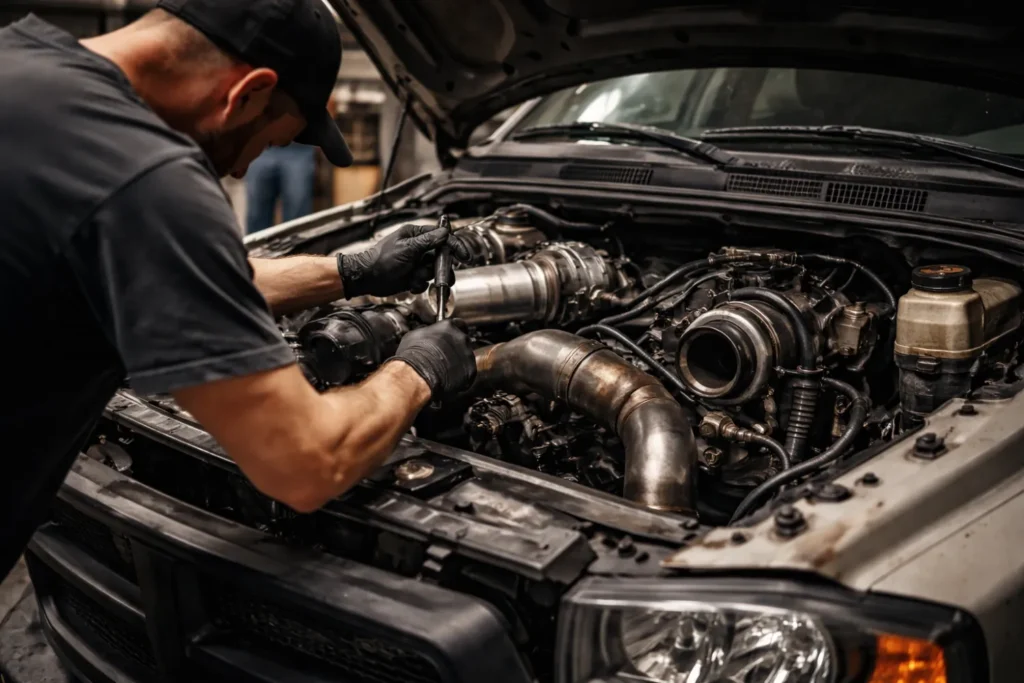
DEF systems rely on heaters, injectors, sensors, and control modules. Any failure can disable the truck. For off-road builds, this complexity offers little benefit.
An explosive diesel delete kit removes these failure points and simplifies the system entirely.
Where Emissions Rules Come From (And Why Off-Road Builds Are Different)
Diesel emissions systems exist largely because of regulations enforced under the Clean Air Act. These rules apply to vehicles operated on public roads but off-road and competition vehicles are treated differently when used on private land or closed courses.
The U.S. Environmental Protection Agency (EPA) outlines enforcement actions and regulatory guidance for on-road vehicles under the Clean Air Act, which you can review directly here:
This distinction is exactly why an explosive diesel delete kit is designed and sold for off-road use only. These kits support vehicles that operate outside public highway systems, allowing builders to prioritize performance and reliability without conflicting with on-road emissions requirements.
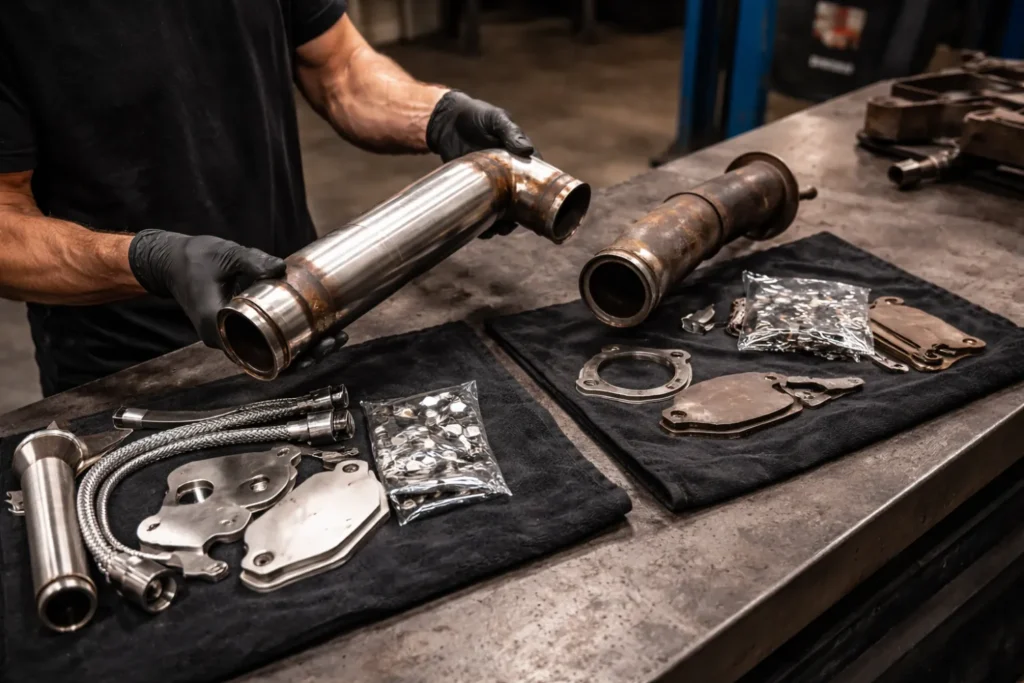
What’s Included in an Explosive Diesel Delete Kit
A quality delete kit isn’t just about removing parts it’s about replacing them correctly.
Core Components
EGR Delete Hardware
- CNC-machined block-off plates
- Coolant reroute components
- Engine-specific mounting hardware
DPF Delete Pipes
- Straight or race-style piping
- Mandrel-bent for smooth exhaust flow
- Typically constructed from T304 stainless steel
Sensor and Hardware Solutions
- Proper block-offs or sensor accommodations
- Clean routing to prevent leaks
- Designed to integrate with off-road tuning platforms
Fitment matters. Cheap kits skip this step. Explosive Diesels doesn’t.
Supported Engines and Platforms
Explosive Diesels focuses on the engines that dominate the off-road world:
- 6.7L Cummins
- 5.9L Cummins
- 6.6L Duramax (LML and off-road L5P builds)
- 6.7L Powerstroke
- EcoDiesel (off-road applications only)
Each engine has unique packaging challenges. An explosive diesel delete kit is designed around those realities not forced into place.
Performance Gains: What You Actually Feel
Delete kits don’t create power on their own. Airflow does. And when airflow improves, everything else follows.
Horsepower and Torque
With proper tuning, most off-road builds see:
- Stronger mid-range torque
- More consistent power delivery
- Better response under load
Throttle Response and Driveability
This is where the change becomes obvious. Turbo lag drops. Pedal response sharpens. The truck feels lighter even when it’s not.
Lower Exhaust Gas Temperatures
Lower EGTs mean less thermal stress and more consistent performance, especially during off-road towing or sustained high-load use.
Reliability: The Real Reason People Delete
Power gets attention. Reliability keeps trucks running.
Installing an explosive diesel delete kit removes:
- Failure-prone sensors
- Regeneration-related heat cycles
- Carbon buildup in the intake
- Coolant leaks from EGR systems
The engine becomes simpler, cleaner, and more predictable.
That’s not marketing. That’s mechanics.
Supporting Mods That Pair Well With a Delete Kit
A delete kit works best as part of a system:
- Cold air intake
- Intercooler upgrades
- Turbo enhancements
- Lift pumps
- Transmission tuning
You don’t need everything at once but planning matters.
Why Proper Tuning Is Non-Negotiable
A delete kit must be paired with off-road tuning. Factory calibrations expect emissions systems to exist.
Proper tuning:
- Disables emissions logic
- Optimizes fueling and boost
- Improves throttle mapping
- Protects the engine under load
Good tuning builds usable power not dyno bragging rights.
Installation Overview
Most installs take several hours and require attention to detail. Rushed installs lead to leaks. Leaks ruin experiences.
DIY or professional do it right.
Off-Road Use Only
Explosive diesel delete kits are intended only for off-road or competition vehicles. They are not designed for use on public highways.
If emissions compliance is required, a delete kit is not the right solution.
Explosive Diesels vs Generic Kits
Generic kits often suffer from poor fitment and thin materials. Explosive Diesels focuses on:
- Engine-specific design
- Durable construction
- Clean routing
- Long-term reliability
Cheap parts always cost more later.
Cost Breakdown
| Item | Typical Consideration |
| Delete kit | Engine-dependent |
| Tuning | Required |
| Supporting mods | Optional |
| Installation | Varies |
Plan the build not just the purchase.
Who Should and Shouldn’t Run One
Good candidates
- Off-road trucks
- Race builds
- Farm or private land vehicles
Not ideal
- Daily drivers
- On-road vehicles
- Owners unwilling to tune properly
Common Myths
- Deletes ruin engines — bad tuning does
- All kits are the same — they aren’t
- Deletes are just for sound — airflow comes first
- Tuning isn’t required — it absolutely is
Maintenance After a Delete
Maintenance becomes simpler:
- Regular oil changes
- Monitor EGTs and boost
- Inspect exhaust connections
- Stick to service intervals
Fewer systems. Fewer surprises.
Final Thoughts
An explosive diesel delete kit isn’t about shortcuts. It’s about building a truck that performs reliably in off-road conditions without unnecessary restrictions.
When installed correctly, paired with proper tuning, and supported by quality components, the engine finally operates on its own terms cooler, cleaner, and stronger. That’s why serious off-road builders trust Explosive Diesels.
FAQs
An explosive diesel delete kit removes factory emissions components from a diesel engine to improve airflow, reliability, and off-road performance.
These kits are intended strictly for off-road or race-use vehicles and are not legal for use on public roads.
Yes, proper off-road tuning is required to disable emissions logic and ensure safe engine operation.
A delete kit improves airflow, which allows tuning to safely unlock additional horsepower and torque.
Yes, removing EGR, DPF, and DEF components eliminates common failure points that cause limp mode and overheating.
Most installations take several hours, depending on the engine platform and whether the work is done DIY or professionally.
Yes, deleting restrictive emissions components typically lowers exhaust gas temperatures and stabilizes engine heat.
Experienced DIY owners can install a delete kit, but careful attention to fitment and tuning is essential.
These kits commonly support Cummins, Duramax, Powerstroke, and EcoDiesel engines used in off-road applications.
Exhaust tone may change, but the primary benefit of a delete kit is improved airflow and performance not sound alone.