
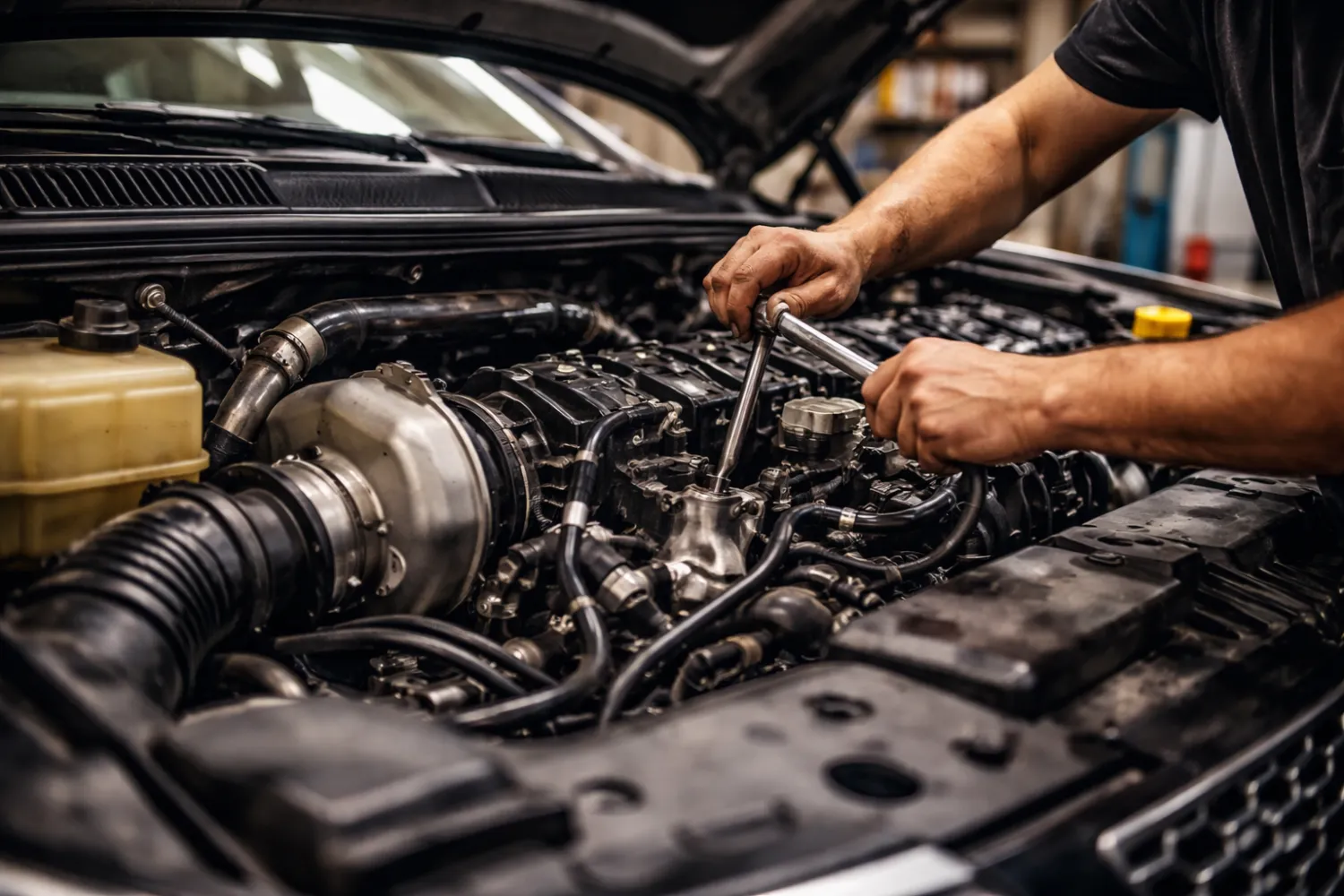
The 3.0 Powerstroke EGR delete is one of those topics that keeps surfacing in serious off-road diesel conversations. Not because it promises outrageous horsepower gains or flashy dyno results. It doesn’t. It keeps coming up because owners want engines that run cleaner internally, respond more predictably, and hold up over the long haul when emissions equipment starts doing more harm than good in off-road conditions.
I’ve spent enough time around modern diesel platforms to say this confidently: the 3.0 Powerstroke is not an old-school diesel. It’s efficient, tightly calibrated, and heavily dependent on emissions systems to function as designed. That means any change especially a 3.0 Powerstroke EGR delete has to be deliberate. Rushed decisions get expensive fast.
This article isn’t here to hype you up. It’s here to give you clarity.
Why the 3.0 Powerstroke Raises EGR Questions
Ford built the 3.0L Powerstroke with a clear mission. Low emissions. Smooth operation. Excellent fuel economy. That mission required a complex emissions strategy, and the EGR system plays a central role in it.
The problem is that emissions systems are designed around regulatory goals, not long-term off-road durability. As trucks rack up miles especially with short trips, light loads, or frequent off-road use owners begin to notice drivability quirks and reliability concerns tied directly to EGR operation.
That’s usually when the question surfaces: Is an EGR delete worth it for my use case?
Understanding the 3.0 Powerstroke Platform
The 3.0 Powerstroke is engineered very differently than older Powerstroke engines.
It uses advanced combustion control, tightly managed airflow, and emissions equipment that works as a complete system. Unlike older platforms that tolerated wide mechanical changes, the 3.0 reacts immediately to airflow and temperature deviations.
That’s why deleting EGR without understanding the broader system is risky. Every change affects fueling, exhaust temperatures, turbo behavior, and regeneration strategies.
This engine rewards thoughtful modifications and punishes shortcuts.
What the EGR System Does on the 3.0 Powerstroke
Exhaust Gas Recirculation does exactly what its name suggests. It routes a portion of exhaust gas back into the intake stream. That lowers combustion temperatures and reduces nitrogen oxide emissions.
From a regulatory standpoint, this matters. Nitrogen oxides are a primary target of diesel emissions regulations due to their impact on air quality. The U.S. Environmental Protection Agency explains that modern diesel engines rely on emissions controls like EGR as part of an integrated system to manage combustion temperatures and pollutant formation, rather than as standalone components. Changes to one system inevitably affect the rest, which is why modifications like an EGR delete must always be paired with proper off-road calibration and monitoring.
Mechanically, however, EGR introduces heat and soot back into the intake. That’s the tradeoff.
Common EGR-Related Issues Owners Experience
EGR-related problems on the 3.0 Powerstroke tend to develop slowly. That’s what makes them frustrating.
Owners commonly report:
- Carbon buildup inside the intake tract
- Reduced throttle response
- Inconsistent low-speed drivability
- Elevated exhaust gas temperatures
- Increased regeneration frequency
This isn’t unique to Ford. According to general diesel engine design documentation, exhaust gas recirculation inherently increases particulate exposure inside the intake because exhaust gases carry soot and unburned particles. Over time, these deposits restrict airflow and reduce combustion efficiency, especially on engines that rely heavily on emissions-driven airflow strategies.
(Source: Wikipedia – Exhaust Gas Recirculation)
Short trips and light-duty use accelerate these issues. Off-road operation adds even more variability to exhaust flow and temperatures.
What a 3.0 Powerstroke EGR Delete Actually Means

A 3.0 Powerstroke EGR delete is not just a block-off plate.
It’s a coordinated modification that includes:
- Physically disabling or removing EGR flow
- Updating engine calibration to account for airflow changes
- Preventing fault codes and limp modes
- Rebalancing fueling and temperature management
Removing hardware without tuning is not a solution. It’s a problem waiting to happen.
Performance Changes You Can Expect
Let’s keep expectations grounded.
A 3.0 Powerstroke EGR delete does not unlock massive horsepower gains. What it does unlock is consistency.
Most owners notice:
- Sharper throttle response
- Smoother acceleration
- More predictable torque delivery
- Reduced hesitation at low RPM
The engine breathes cleaner air. Combustion becomes more stable. Turbo response improves slightly. Power delivery feels smoother, not aggressive.
That’s the point.
Reliability: The Real Motivation Behind EGR Deletes
If there’s one reason owners pursue a 3.0 Powerstroke EGR delete, it’s reliability.
By eliminating EGR flow, you:
- Keep soot out of the intake
- Reduce long-term carbon accumulation
- Lower stress on intake valves and sensors
- Improve overall airflow consistency
Cleaner air leads to cleaner combustion. Cleaner combustion reduces downstream strain. Over time, that matters more than peak output numbers.
Fuel Economy: What Changes and What Doesn’t
Fuel economy improvements after an EGR delete are modest but real when paired with proper tuning.
Typical results include:
- Slight MPG gains during steady cruising
- More consistent fuel usage off-road
- Fewer efficiency losses during regeneration cycles
What you shouldn’t expect is dramatic fuel savings without changes in driving style or calibration.
Why Proper Tuning Is Non-Negotiable
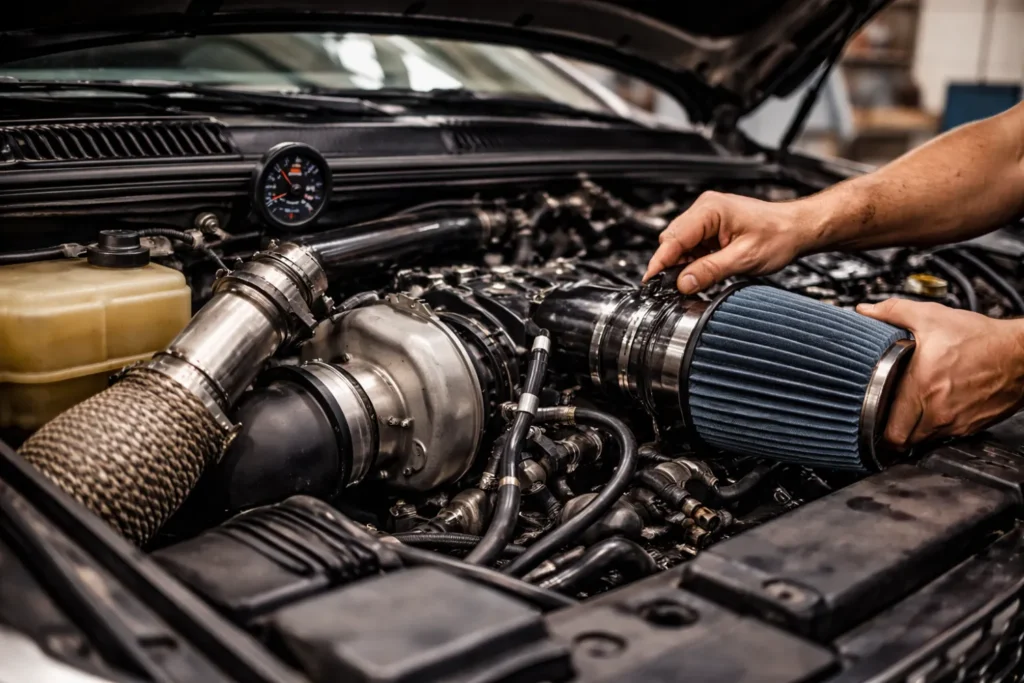
Factory engine calibration assumes active EGR flow. Once that flow is removed, airflow calculations, temperature modeling, and fueling targets all change.
Good off-road tuning:
- Keeps exhaust gas temperatures in check
- Preserves turbo longevity
- Maintains smooth torque delivery
- Avoids excessive timing advance
Aggressive tuning shortens engine life. The 3.0 Powerstroke rewards restraint.
Supporting Mods That Actually Matter
You don’t need a massive parts list.
Helpful upgrades include:
- A quality intake for stable airflow
- A freer-flowing exhaust to reduce backpressure
- Monitoring tools for EGT and boost
Unnecessary upgrades:
- Oversized injectors
- Extreme turbo swaps
- Race-only components on mixed-use rigs
Balance always beats excess.
Installation: What to Expect
Installing a 3.0 Powerstroke EGR delete involves moderate mechanical complexity and software work.
Expect:
- Tight engine bay access
- Careful removal procedures
- ECU flashing requirements
Many owners opt for professional installation to avoid costly mistakes.
Legal and Off-Road Use Disclaimer
EGR deletes are for off-road use only. They are not legal for street-driven vehicles. Regulations vary, but the principle is consistent.
At Explosive Diesels, responsible off-road ownership comes first. Know your local laws before making changes.
Who Should Consider a 3.0 Powerstroke EGR Delete
This modification makes sense if:
- Your truck is primarily off-road
- You plan to keep it long-term
- Reliability matters more than peak power
- You’re committed to proper tuning
Who Should Not Delete the EGR
Avoid an EGR delete if:
- Your truck is a daily street vehicle
- Warranty coverage is critical
- You want plug-and-play simplicity
- You expect dramatic power gains
Maintenance After an EGR Delete
Maintenance doesn’t disappear. It shifts.
Post-delete priorities:
- Regular oil changes
- Monitoring EGTs and boost
- Staying current with tuning updates
A cleaner engine still needs attention.
Cost Breakdown
| Expense | General Range |
| EGR delete hardware | Moderate |
| Custom tuning | Moderate |
| Installation labor | Variable |
| Monitoring tools | Optional |
Cheap setups often cost more later.
Final Thoughts
A 3.0 Powerstroke EGR delete isn’t about chasing numbers. It’s about aligning the engine with how it’s actually used off-road.
When done correctly, it improves drivability, reduces internal contamination, and supports long-term reliability. When rushed, it creates problems. At Explosive Diesels, we believe smart performance always beats forced performance.
FAQs
It eliminates exhaust gas recirculation, keeping soot out of the intake and improving combustion consistency for off-road use.
Yes, when paired with proper off-road tuning and responsible driving, it can support long-term reliability.
Power gains are modest; most benefits come from smoother throttle response and improved drivability.
Yes, factory calibration assumes active EGR flow, so tuning is required to maintain safe operation.
Some owners see small improvements due to cleaner combustion and fewer regeneration cycles.
Yes, removing EGR flow prevents exhaust soot from contaminating the intake system.
When tuned correctly, turbo response can improve slightly due to more consistent airflow.
No, EGR deletes are intended for off-road use only and are not street legal.
Installation involves moderate mechanical work and ECU flashing, making experience or professional help important.
Off-road owners focused on reliability, clean engine operation, and long-term ownership are the best candidates.