
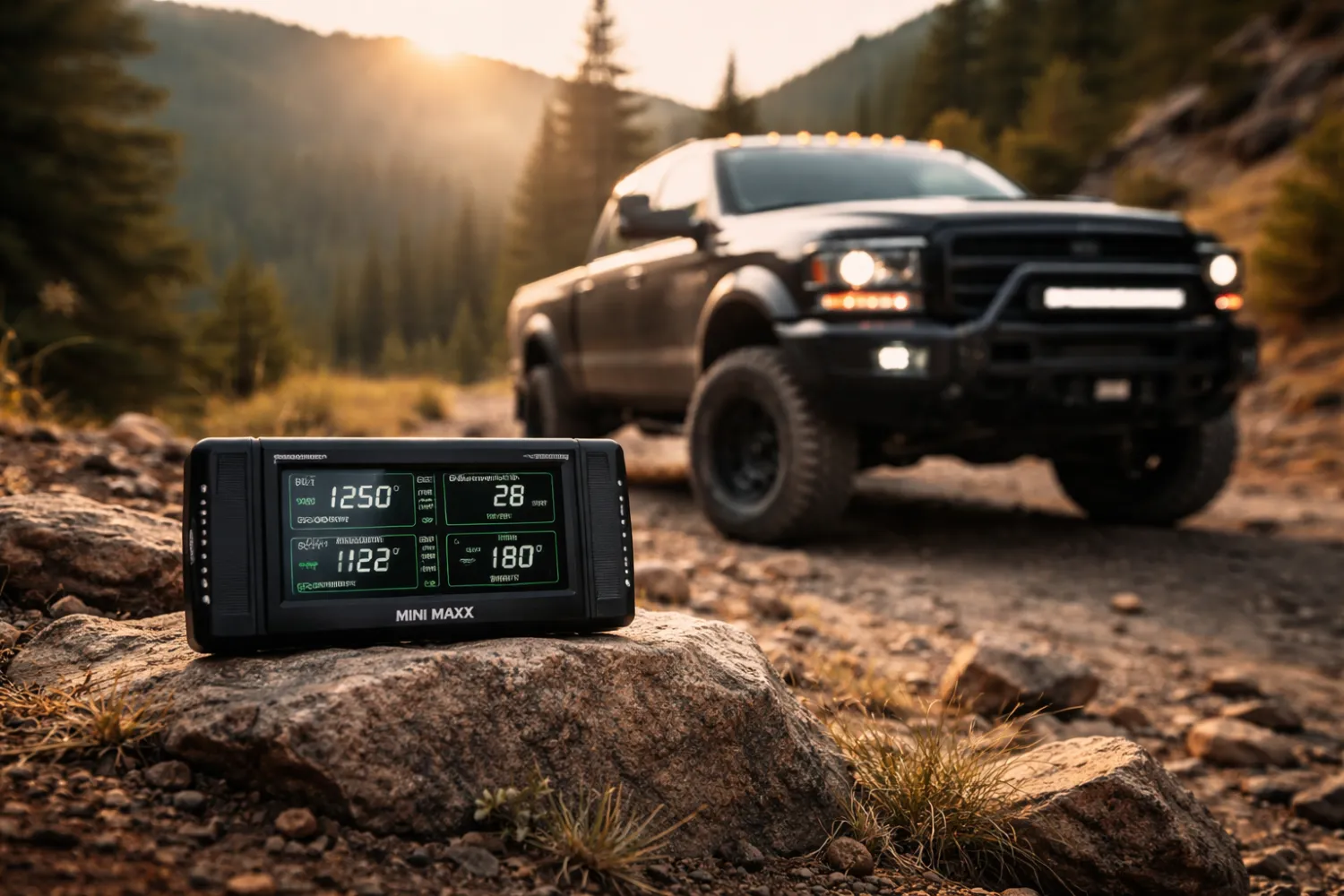
The Mini Maxx has a way of sticking around.
Even as newer tuning platforms dominate conversations, this tuner still comes up whenever off-road diesel owners talk about raw power, simple control, and real-time visibility into what their engine is doing. I’ve seen it firsthand. You’ll hear the same thing at off-road events, dyno days, and late-night shop conversations. The Mini Maxx isn’t trendy. It’s familiar. And for certain builds, it still makes sense.
This article breaks down what the Mini Maxx actually is, why it became popular, how off-road owners use it today, and what you should realistically expect if you’re considering it for a race or off-road-only vehicle. No fluff. No hype. Just practical, experience-driven insight.
What Is the Mini Maxx?
At its core, the Mini Maxx is a handheld diesel tuning and monitoring device designed to adjust engine parameters and display live data in real time. It was built during a period when diesel tuning emphasized direct control, visible feedback, and simplicity. Unlike modern cloud-based platforms, the Mini Maxx operates as a self-contained unit. It plugs in, communicates directly with the truck’s systems, and gives the driver immediate access to power levels, monitoring screens, and basic diagnostics.
What made it stand out wasn’t just tuning.
It was the combination of tuning and visibility in one compact device. For off-road vehicles, that mattered. You weren’t guessing what your engine was doing. You could see it.
Why the Mini Maxx Became So Popular
Some products explode in popularity because of marketing.
The Mini Maxx became popular because it worked.
It arrived at a time when diesel owners wanted three things:
- Noticeable power gains
- On-screen engine data
- Easy control without a laptop
The Mini Maxx delivered all three. The touchscreen interface was simple. The power adjustments were immediate. And the monitoring tools gave drivers confidence when pushing their trucks harder than stock. That combination helped the Mini Maxx earn a reputation as a “do-it-all” device for off-road builds.
Diesel Platforms Commonly Associated With Mini Maxx

While support varied by generation and engine, the Mini Maxx became closely associated with several popular diesel platforms in off-road applications.
You’ll most often hear it discussed alongside:
- Cummins-powered Ram trucks
- Power Stroke platforms
- Duramax diesel builds
These engines respond strongly to tuning, especially when paired with supporting modifications. That responsiveness helped cement the Mini Maxx as a go-to option for owners who wanted noticeable gains without complicated setups.
Core Features That Defined the Mini Maxx
The Mini Maxx wasn’t overloaded with features.
That was part of the appeal.
Key Capabilities
- Touchscreen interface with customizable layouts
- Multiple power levels selectable by the driver
- Live monitoring of critical engine data
- Basic diagnostics and code reading
Instead of burying information in menus, the Mini Maxx put essential data front and center. That design still resonates with off-road drivers who care more about function than polish.
Mini Maxx Power Levels Explained
Power levels are where most conversations start.
And where expectations need to stay realistic.
The Mini Maxx typically offers multiple tuning levels that scale power output progressively. Each step increases fueling and adjusts timing to deliver stronger acceleration and torque.
Typical Power Level Use Cases
- Lower levels: Light off-road driving, conservative setups
- Mid-range levels: Aggressive trail use and performance builds
- Higher levels: Competition or race-only environments
Here’s the important part:
More power always demands more attention. Power levels aren’t just about speed. They change how heat, stress, and airflow move through your engine.
Real-World Performance Gains
When tuned properly, the Mini Maxx changes how a diesel feels immediately.
Throttle response sharpens.
Torque arrives sooner.
The truck feels lighter on its feet.
In off-road scenarios, that translates to:
- Better control on climbs
- Faster recovery between throttle inputs
- Improved response when power matters most
The Mini Maxx doesn’t just add horsepower. It reshapes how power is delivered. That’s what drivers notice first.
Supporting Mods Matter More Than the Tuner
This is where many builds succeed or fail.
The Mini Maxx is not a magic box.
It works best when paired with the right supporting modifications.
Common Supporting Mods
- Free-flowing exhaust systems to reduce backpressure
- Upgraded intake systems for improved airflow
- Proper engine monitoring beyond the tuner itself
- Cooling upgrades for sustained off-road use
Ignoring supporting mods while increasing power is one of the fastest ways to create reliability problems. Smart builds grow evenly.
Installation: What to Expect
Installation is often described as “simple,” but that depends on your expectations.
The Mini Maxx typically involves:
- Connecting the main harness
- Mounting the display securely
- Routing wiring cleanly away from heat and moving parts
Take your time here.
Clean installs last longer and cause fewer headaches later.
Poor wiring decisions show up eventually. Usually at the worst possible moment.
Monitoring: Where the Mini Maxx Really Shines

This is where the Mini Maxx still earns respect. Real-time monitoring gives drivers immediate feedback on how their engine responds to changes in load, terrain, and throttle input.
Key Parameters to Watch
- Exhaust gas temperatures (EGT)
- Boost pressure
- Coolant temperature
- Transmission temperature
Exhaust gas temperature is especially critical because it reflects how much heat is being generated during combustion. Sustained high EGTs accelerate wear on pistons, valves, and turbochargers, which is why understanding how exhaust gas temperature works is essential for any tuned diesel setup. For a deeper technical explanation of EGT behavior and why it matters, Wikipedia provides a clear overview of exhaust gas temperature and its role in engine performance and durability.
Monitoring isn’t optional when you increase power. It’s how you protect your investment.
I always tell off-road owners the same thing:
If you’re not watching your numbers, you’re guessing.
Understanding Safe Operating Ranges
Power is only useful when it’s controlled.
High EGTs stress components.
Excessive boost strains turbos.
Rising transmission temps shorten service life.
The Mini Maxx gives you the data.
You still have to act on it.
Backing out of the throttle early often saves thousands later.
Reliability Considerations With Mini Maxx Tuning
Every tuning conversation eventually comes back to reliability.
The Mini Maxx itself doesn’t break engines.
Poor decisions do.
Reliability depends on:
- Power level selection
- Supporting modifications
- Driving habits
- Maintenance discipline
Conservative tuning paired with consistent monitoring usually delivers the best long-term results for off-road vehicles.
Mini Maxx vs Modern Tuning Platforms
Technology moves forward. No surprise there.
Modern tuners often offer:
- Wireless updates
- App-based control
- Cloud tuning libraries
So why does the Mini Maxx still come up?
Because it’s direct.
Simple.
Predictable.
Some off-road owners prefer hardware they can see and control without relying on apps, accounts, or updates.
There’s value in that simplicity.
Legal and Off-Road Use Disclaimer
This matters.
The Mini Maxx is commonly discussed in off-road and race-only contexts. In the United States, emissions systems on diesel vehicles are regulated under federal law, and modifications that alter or remove emissions equipment are restricted for vehicles operated on public roads. These requirements fall under the Clean Air Act, which governs emissions compliance and enforcement nationwide.
The U.S. Environmental Protection Agency outlines these regulations and their intent clearly in its Clean Air Act overview, which explains how emissions controls are regulated and why enforcement exists. Explosive Diesels focuses on off-road performance education, not on-road compliance advice. It’s the responsibility of each vehicle owner to understand how and where their vehicle can legally be operated.
Common Mini Maxx Myths
Let’s clear a few things up.
Myth: Higher power levels always destroy engines
Reality: Poor monitoring and abuse do
Myth: You don’t need extra gauges
Reality: Redundancy protects engines
Myth: All Mini Maxx tunes feel the same
Reality: Power delivery varies by setup
Good information beats assumptions every time.
Who Should Consider the Mini Maxx Today?
The Mini Maxx still makes sense for:
- Dedicated off-road builds
- Race trucks
- Older diesel platforms
- Owners who value simple, direct control
It may not be ideal for:
- Daily drivers
- Emissions-controlled street vehicles
- Owners seeking constant tune updates
Choosing the right tool matters.
Best Practices for Off-Road Mini Maxx Use
If you’re running a Mini Maxx in an off-road environment, follow these habits:
- Start with conservative power levels
- Monitor temperatures constantly
- Upgrade supporting components early
- Maintain shorter service intervals
These practices don’t reduce performance.
They protect it.
Final Thoughts: Why the Mini Maxx Still Gets Respect
The Mini Maxx isn’t perfect.
It isn’t modern.
And it isn’t for everyone.
But in the off-road diesel world, tools earn respect through results. The Mini Maxx earned its reputation by delivering power, visibility, and control when drivers needed it most.
That’s why it still gets mentioned.
That’s why it still shows up on serious builds.
And that’s why it remains part of the diesel performance conversation.
At Explosive Diesels, we believe informed decisions create better builds. Whether you choose the Mini Maxx or another platform, understanding how tuning affects your engine is what truly unlocks performance.
FAQs
The Mini Maxx is a diesel tuning and monitoring device used to adjust power levels and display real-time engine data for off-road and race-only vehicles.
Yes, the Mini Maxx remains relevant for certain off-road builds because of its simple interface, direct control, and built-in monitoring capabilities.
Power gains vary by engine and setup, but users typically notice stronger throttle response and increased torque rather than a single horsepower number.
The Mini Maxx is generally discussed for off-road or race-only applications and is not intended for emissions-controlled street vehicles.
Yes, the Mini Maxx provides live monitoring for key parameters like exhaust gas temperature, boost, coolant temperature, and transmission temperature.
Supporting modifications such as improved exhaust flow and proper cooling help manage heat and stress when running higher power levels.
Installation is straightforward for experienced enthusiasts, but careful wiring and proper mounting are essential for long-term reliability.
High power levels increase stress, but damage usually results from poor monitoring, aggressive driving, or lack of supporting upgrades.
Newer tuners offer app-based features and updates, while the Mini Maxx appeals to users who prefer direct, self-contained control.
The Mini Maxx is best suited for dedicated off-road builds, race trucks, and owners who value simplicity and real-time engine feedback.