

If you own a 2017 Ram 2500, chances are you didn’t buy it to leave it stock forever. You bought it because the 6.7L Cummins platform is built to work, tow, haul, and respond to smart performance upgrades. One of the most impactful upgrades you can make especially for an off-road build is a 2017 Ram 2500 turbo back exhaust.
This isn’t a cosmetic mod. It’s not about noise alone. A turbo back exhaust directly affects airflow, heat management, throttle response, and long-term reliability. When done correctly and paired with proper tuning, it can completely change how your truck feels under load. That’s why this modification continues to be a cornerstone upgrade within the off-road diesel community.
Performance discussions often get buried under explanations so long-winded they become sesquipedalian in nature, where excessive wording overshadows the core idea. For clarity, sesquipedalian refers to the overuse of long or complex words, a habit that adds length but little value. You can read more about that term here:
At Explosive Diesels, we keep things practical. Airflow matters. Heat matters. Reliability matters.
Why the 2017 Ram 2500 Is a Prime Candidate for a Turbo Back Exhaust
The 2017 Ram 2500 with the 6.7L Cummins is already a strong performer from the factory. Torque comes on early. The drivetrain is proven. The truck feels confident even under load. But the factory exhaust system tells a different story once you look past the rear bumper.
From the turbo outlet back, the stock exhaust exists to satisfy emissions compliance first and performance second. That design choice creates restrictions that add heat and slow response. Over time, those compromises show up as higher exhaust gas temperatures, turbo lag, and unnecessary strain.
A 2017 Ram 2500 turbo back exhaust removes those limitations for off-road use and lets the engine operate closer to its true mechanical potential.
Understanding the Stock Exhaust System on the 2017 Ram 2500
Before replacing anything, it helps to understand what you’re starting with. The factory exhaust system includes multiple components that all contribute to restriction.
Key elements include:
- A narrow factory downpipe
- Diesel Particulate Filter (DPF)
- Selective Catalytic Reduction (SCR) system
- DEF injector
- Large factory muffler and tailpipe
Each part serves a regulatory function, but together they create a long, restrictive exhaust path. That restriction increases backpressure, which forces the turbocharger to work harder to push exhaust gases out of the engine.
More effort equals more heat. And heat is the enemy of long-term diesel reliability.
What Is a Turbo Back Exhaust and Why It Matters
A turbo back exhaust replaces everything from the turbocharger outlet to the tailpipe. That starting point is critical. Many exhaust upgrades begin farther downstream, which limits their impact.
Here’s how common exhaust options compare:
| Exhaust Type | Starting Point | Real Performance Gain |
| Axle-back | Rear axle | Very low |
| Cat-back | After emissions | Mostly sound |
| Downpipe-back | Turbo outlet | Moderate |
| Turbo back | Turbo outlet | Maximum |
A 2017 Ram 2500 turbo back exhaust improves flow immediately after the turbo, reducing resistance at the most critical point in the system.
Performance Benefits of a 2017 Ram 2500 Turbo Back Exhaust
This upgrade delivers benefits you can feel and measure.
Reduced Backpressure
Exhaust gases exit the system more freely, reducing resistance against the turbocharger.
Faster Turbo Spool
Throttle response improves because the turbo reaches target boost sooner.
Lower Exhaust Gas Temperatures
Lower EGTs are especially valuable for towing and sustained load conditions.
Improved Power Delivery
Horsepower and torque gains vary by tuning and supporting mods, but drivability improves across the board.
Better Long-Term Reliability
Lower heat and stress reduce wear on turbochargers, manifolds, and exhaust valves.
Sound Characteristics: What to Expect
Sound is often the most noticeable change, but it’s not just about volume.
At idle, the truck takes on a deeper, more authoritative tone. Under acceleration, turbo whistle becomes more pronounced, and the exhaust note sharpens. On the highway, sound levels depend heavily on pipe diameter and whether a muffler is used.
Straight-pipe turbo back systems deliver the loudest, rawest sound. Muffled systems strike a balance between aggression and comfort.
Materials and Construction: Why Quality Matters
Not all turbo back exhaust systems are built equally.
Common Material Options
| Material | Strengths | Tradeoffs |
| T304 stainless steel | Corrosion resistance, longevity | Higher upfront cost |
| Aluminized steel | Lower price | Shorter lifespan |
For off-road use, stainless steel is often the better long-term choice due to exposure to moisture, mud, and heat cycles.
Mandrel-bent piping is also critical. It maintains consistent diameter through bends, preserving exhaust velocity and flow.
Pipe Diameter Options for the 2017 Ram 2500
Pipe size affects both performance and sound.
4-Inch Turbo Back Exhaust
- Excellent balance of flow and velocity
- Strong towing performance
- Manageable sound levels
- Ideal for most builds
5-Inch Turbo Back Exhaust
- Maximum flow capacity
- Deeper, louder tone
- Best for high-horsepower applications
For most owners, a 4-inch 2017 Ram 2500 turbo back exhaust provides more than enough airflow without unnecessary noise.
Turbo Back Exhaust and Tuning: What You Need to Know
Tuning is mandatory. There’s no shortcut here.
Removing emissions components without proper tuning will result in check engine lights, limp mode, or poor drivability. Correct tuning recalibrates fuel delivery, boost control, and sensor behavior to match the new exhaust flow.
When done correctly, tuning unlocks the full benefit of the turbo back system while maintaining safe engine operation.
Installation Overview
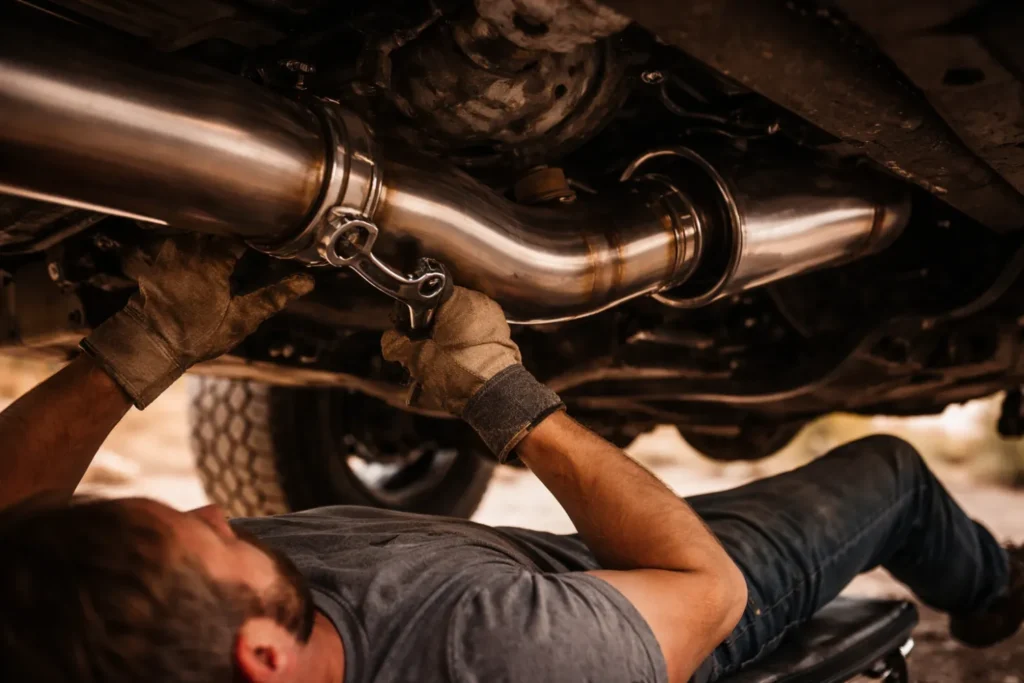
Installing a turbo back exhaust typically takes four to six hours for experienced installers. Rusted fasteners, seized clamps, or tight clearances can extend that time.
DIY installation is possible with proper tools and experience, but professional installation ensures correct alignment, leak-free connections, and proper hanger placement.
Emissions, Legal, and Off-Road Use Disclaimer
Turbo back exhaust systems are designed for off-road use only.
In the United States, emissions equipment is regulated under the Clean Air Act, which gives authority to the Environmental Protection Agency to enforce air quality standards. The EPA outlines these requirements clearly, explaining why emissions removal is restricted for on-road vehicles. More information can be found directly from the agency here:
Understanding these regulations is part of responsible ownership. Explosive Diesels focuses on off-road performance education and application.
Common Problems Solved by a Turbo Back Exhaust
Many owners turn to a turbo back exhaust after repeated frustrations, including:
- Chronic DPF clogging
- High EGTs when towing
- Turbo lag
- Limp mode activation
- Costly emissions-related repairs
For off-road builds, removing these failure points often improves consistency and reliability.
Choosing the Right Turbo Back Exhaust for Your Build
Before purchasing, consider:
- Desired sound level
- Towing frequency
- Budget versus longevity
- Tuning compatibility
Quick Selection Checklist
- Mandrel-bent piping
- High-quality welds and flanges
- Proper hanger alignment
- Proven tuning support
Maintenance and Longevity
Maintenance is minimal but important:
- Recheck clamps after heat cycles
- Inspect hangers periodically
- Listen for leaks
- Retorque if necessary
A quality stainless 2017 Ram 2500 turbo back exhaust can last the life of the truck.
Frequently Asked Questions

Can I run a 2017 Ram 2500 turbo back exhaust without tuning?
No. Proper tuning is required.
Will it increase horsepower?
Yes, especially when paired with correct tuning.
Is 5-inch always better than 4-inch?
Only for high-horsepower builds.
Will it hurt my turbo?
No. Reduced backpressure helps turbo longevity.
Does it cause drone?
Drone depends on system design and muffler choice.
Final Thoughts
A 2017 Ram 2500 turbo back exhaust is one of the most effective off-road upgrades available. It improves airflow, reduces heat, sharpens throttle response, and removes common failure points found in factory emissions systems.
It isn’t for every truck. But for off-road diesel owners who value performance and reliability, it’s a modification that delivers exactly what it promises. That’s the kind of upgrade Explosive Diesels stands behind. Performance that works.
FAQs
It is an exhaust system that replaces everything from the turbocharger outlet to the tailpipe to improve airflow and reduce backpressure.
Yes, turbo back exhaust systems are intended for off-road use because they remove factory emissions components.
Yes, when paired with proper tuning, it can provide noticeable horsepower and torque gains.
Yes, reduced backpressure allows heat to exit the system more efficiently, lowering EGTs under load.
Yes, tuning is required to prevent check engine lights and ensure safe engine operation.
A 4-inch system works well for most builds, while 5-inch systems suit higher-horsepower setups.
Sound depends on pipe size and muffler choice, but many systems offer aggressive tone without excessive drone.
DIY installation is possible with proper tools and experience, though professional installation ensures correct fitment.
Yes, improved airflow and lower EGTs can make towing smoother and more consistent.
A high-quality stainless steel system can last the life of the truck with minimal maintenance.