
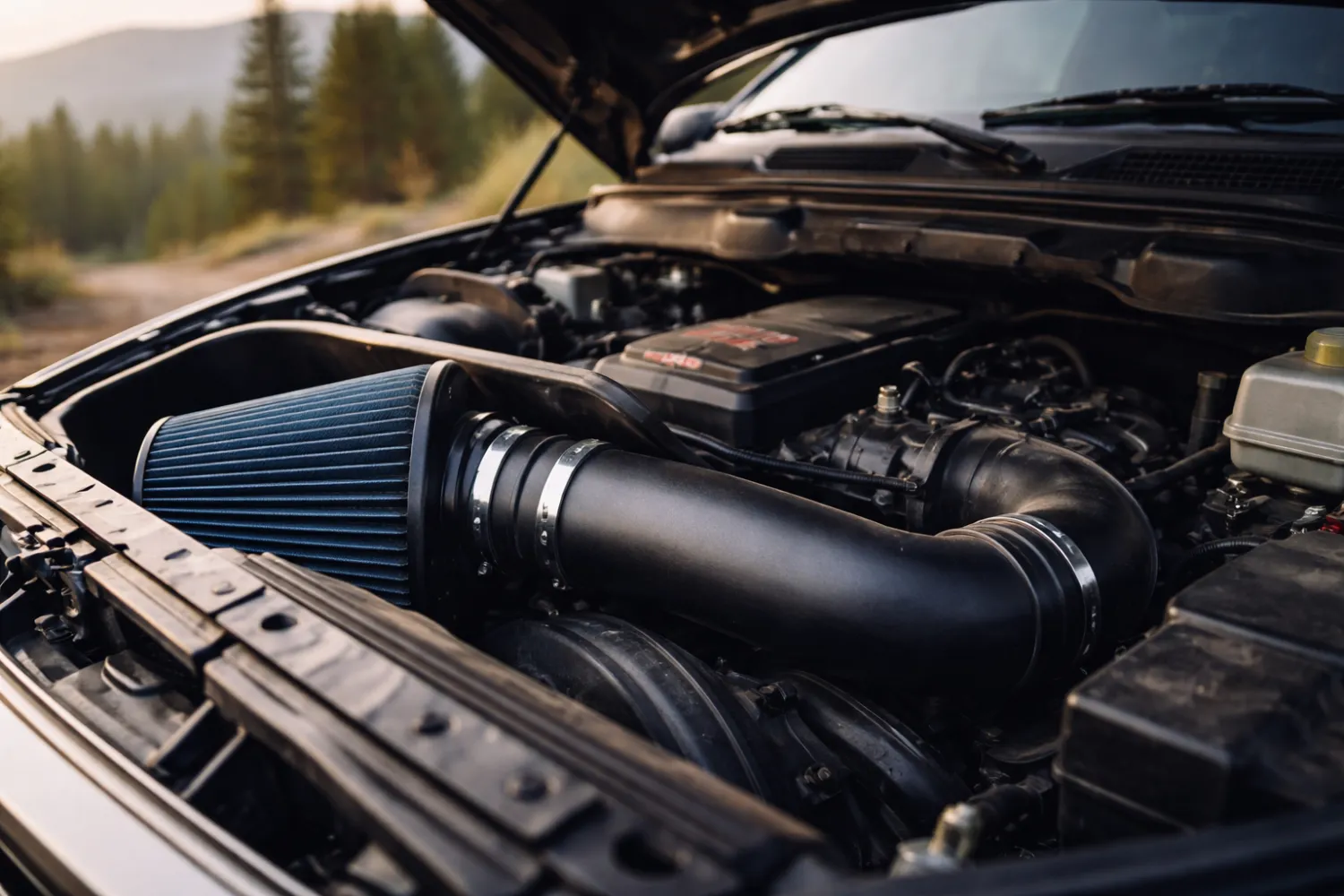
The 2006 Cummins cold air intake is one of those upgrades that seems simple on the surface, yet quietly affects almost every part of how your 5.9L truck behaves. Power delivery. Turbo response. Exhaust gas temperatures. Even how the truck sounds when you roll into the throttle. I’ve spent enough time around third-gen Cummins trucks to say this with confidence: airflow is not a secondary concern. It’s a foundation.
And on a 2006 5.9 Cummins, it matters even more.
This engine earned its reputation the old-fashioned way by working hard and surviving abuse. No modern emissions equipment choking it down. No overly complex electronics fighting airflow decisions. Just air, fuel, compression, and boost. When airflow improves, everything downstream improves with it. That’s why a cold air intake isn’t just about sound. It’s a mechanical efficiency upgrade, especially for off-road and work-driven trucks.
Let’s break it down properly.
Why the 2006 Cummins Still Deserves Smart Airflow Upgrades
The 2006 model year sits in a rare sweet spot. It’s the final full year of the pre-emissions 5.9L Cummins. Common rail injection. Proven turbo configurations. A platform that responds honestly to airflow and fueling changes.
But even great engines have compromises.
The factory intake system was engineered for mass production, noise control, and emissions compliance not maximum airflow under sustained load. It works fine when the truck is stock and lightly driven. Start towing heavy. Add tuning. Spend time off-road. That’s when the limitations become obvious.
A 2006 Cummins cold air intake directly addresses that bottleneck by improving how efficiently air reaches the turbo. Cleaner air. Cooler air. Less restriction. And that matters more than most people realize.
Understanding the Factory Intake System on a 2006 Cummins

Before replacing anything, you need to understand what’s there.
The factory airbox uses a panel filter inside a sealed plastic housing with relatively narrow inlet paths. Air must change direction multiple times before it ever reaches the turbocharger. That design keeps intake noise low and filtration consistent but it also creates restriction.
Here’s what typically happens under real load:
- Intake air follows sharp bends
- Filter surface area becomes a limiting factor
- Restriction increases as RPM and boost climb
- Intake air temperature rises faster
That restriction forces the turbo to work harder to pull air through the system. More work equals more heat. More heat leads to higher exhaust gas temperatures. Over time, that limits how long you can safely stay in the throttle.
You don’t feel it during light driving. You absolutely feel it when the truck is earning its keep. What a Cold Air Intake Actually Does on a 5.9 Cummins
A cold air intake performs three fundamental jobs:
- It reduces airflow restriction
- It improves air delivery consistency
- It helps lower intake air temperature
That’s it. No gimmicks.
Diesel engines are extremely sensitive to airflow because combustion efficiency depends on how effectively oxygen mixes with injected fuel under compression. That relationship is core to how diesel engines function and is explained in detail in Wikipedia’s technical overview of diesel engine operation:
https://en.wikipedia.org/wiki/Diesel_engine
On a practical level, better airflow allows the turbo to reach target boost faster and hold it with less effort. That’s why drivers often notice quicker spool and smoother power delivery after installing a 2006 Cummins cold air intake. And yes, you’ll hear more turbo sound. That’s not added noise. That’s reduced restriction.
Real-World Benefits of a 2006 Cummins Cold Air Intake
Let’s talk about results without exaggeration.
Horsepower and Torque
A cold air intake alone won’t turn a stock truck into a race build. That’s not the goal. What it does is remove an airflow bottleneck.
Typical real-world outcomes include:
| Area | Result |
| Peak Power | Small but measurable increase |
| Power Delivery | Smoother under load |
| Turbo Response | Faster spool |
| Driveability | More consistent |
Where the gains become more meaningful is when airflow upgrades support tuning changes.
Exhaust Gas Temperatures
Reduced intake restriction helps manage EGTs during sustained load. Many owners notice slightly lower peak EGTs during towing or long uphill pulls once airflow improves.
Fuel Economy
Efficiency improvements are modest but possible in steady-state driving. Aggressive driving will erase those gains quickly. Airflow helps but your right foot still decides the outcome.
Cold Air Intake vs Stock Airbox vs Modified Stock Airbox
Some owners modify the factory airbox instead of replacing it entirely. That approach has its place.
Modified Stock Airbox
- Lower upfront cost
- Retains OEM filtration characteristics
- Mild airflow improvement
Aftermarket Cold Air Intake
- Larger filter surface area
- Better airflow under load
- Improved heat isolation
- Easier serviceability
For lightly used trucks, airbox mods can work. For tuned, off-road, or hard-working trucks, a full 2006 Cummins cold air intake is usually the better long-term solution.
Key Features to Look for in a 2006 Cummins Cold Air Intake
Quality matters. A lot.
Intake Tube Design
Smooth bends and consistent diameter reduce turbulence and help the turbo breathe efficiently.
Filter Type
- Dry filters work well in dusty environments and require less maintenance
- Oiled filters flow well but demand careful cleaning and oiling
Heat Management
A proper heat shield or sealed design prevents engine bay heat from negating airflow gains.
Build Quality
Loose couplers, thin materials, and poor fitment create problems quickly especially off-road.
Best Cold Air Intake Options for the 2006 Cummins (Off-Road Use)

Strong off-road intake designs share common traits:
- Large conical filters with high surface area
- Semi-sealed or sealed airboxes
- Durable tubing materials
- Proven filtration performance
Avoid low-cost intakes that prioritize sound over filtration. Dust ingestion is a silent engine killer.
Installation: What to Expect
Installing a 2006 Cummins cold air intake is straightforward and typically requires basic hand tools.
Installation Overview
- Remove factory airbox and intake tube
- Install new intake tube and couplers
- Secure filter and heat shield
- Verify all clamps and clearances
Always inspect for leaks after installation. Unmetered air before the turbo can cause drivability issues.
Cold Air Intake and Tuning: Why They Work Better Together
Fuel and air must stay balanced.
Tuning adds fuel. Fuel demands oxygen. Without sufficient airflow, added fuel becomes heat and smoke. With improved airflow, combustion efficiency improves.
That’s why airflow upgrades support tuning so effectively. A 2006 Cummins cold air intake helps create that balance rather than forcing the turbo to compensate.
Turbo Health and Long-Term Reliability
Improved airflow isn’t just about performance. It’s about longevity.
Turbochargers compress incoming air before it enters the engine. Reducing restriction upstream helps the compressor operate more efficiently and with less thermal stress. This airflow-to-efficiency relationship is outlined in Wikipedia’s technical explanation of turbochargers.
In practical terms, that means:
- Reduced turbo workload
- Lower sustained heat
- Improved long-term reliability
Cleaner airflow also protects compressor blades and bearings over time.
Common Myths About Cold Air Intakes on Diesels
Let’s clear a few misconceptions.
- “Diesels don’t benefit from intakes.”
They do when airflow becomes a restriction. - “Stock airboxes are always better.”
They’re adequate, not optimized. - “Oiled filters destroy engines.”
Improper maintenance destroys engines. Not filters.
Context matters. Quality matters.
Maintenance and Longevity
Cold air intakes still require attention.
Maintenance Best Practices
- Inspect filters regularly
- Clean according to manufacturer guidelines
- Recheck clamps after off-road use
- Monitor for excessive dust buildup
Well-maintained systems last the life of the truck.
Legal and Off-Road Use Disclaimer
Many aftermarket intake systems are intended for off-road or competition use. Always verify local regulations before installation. Explosive Diesels focuses on off-road performance education and responsible modification.
Is a 2006 Cummins Cold Air Intake Worth It?
If your truck is stock and lightly used, it may not be urgent.
If you tow, tune, travel off-road, or plan future upgrades, it makes sense.
The 2006 Cummins cold air intake isn’t hype. It’s airflow efficiency. And airflow supports everything else you do to this engine.
Final Thoughts: Build With Purpose
Every modification should earn its place. A cold air intake does because it supports power, tuning, turbo health, and long-term reliability.
On a 2006 Cummins, airflow isn’t optional. It’s foundational. And when you let that engine breathe properly, it reminds you why it became legendary in the first place.
FAQs
Yes, it reduces airflow restriction, improves turbo response, and supports smoother power delivery, especially under load or when tuned.
It can help slightly by improving airflow efficiency, which reduces turbo strain during sustained towing or climbing.
It offers modest gains on a stock truck but becomes far more valuable if you tow, drive off-road, or plan to add tuning.
Yes, most setups allow more audible turbo spool and whistle because airflow restriction is reduced.
Minor improvements are possible during steady driving, but driving habits have a much bigger impact than the intake itself.
Yes, as long as they are properly cleaned and lightly oiled to avoid excess oil entering the intake tract.
Cleaning intervals depend on driving conditions, but off-road or dusty use typically requires more frequent inspections and cleaning.
Absolutely, improved airflow helps support added fuel and promotes cleaner, more efficient combustion.
No, most cold air intakes install in under an hour using basic hand tools.
Some are off-road or competition-only, so you should always check local and state regulations before installing one.