
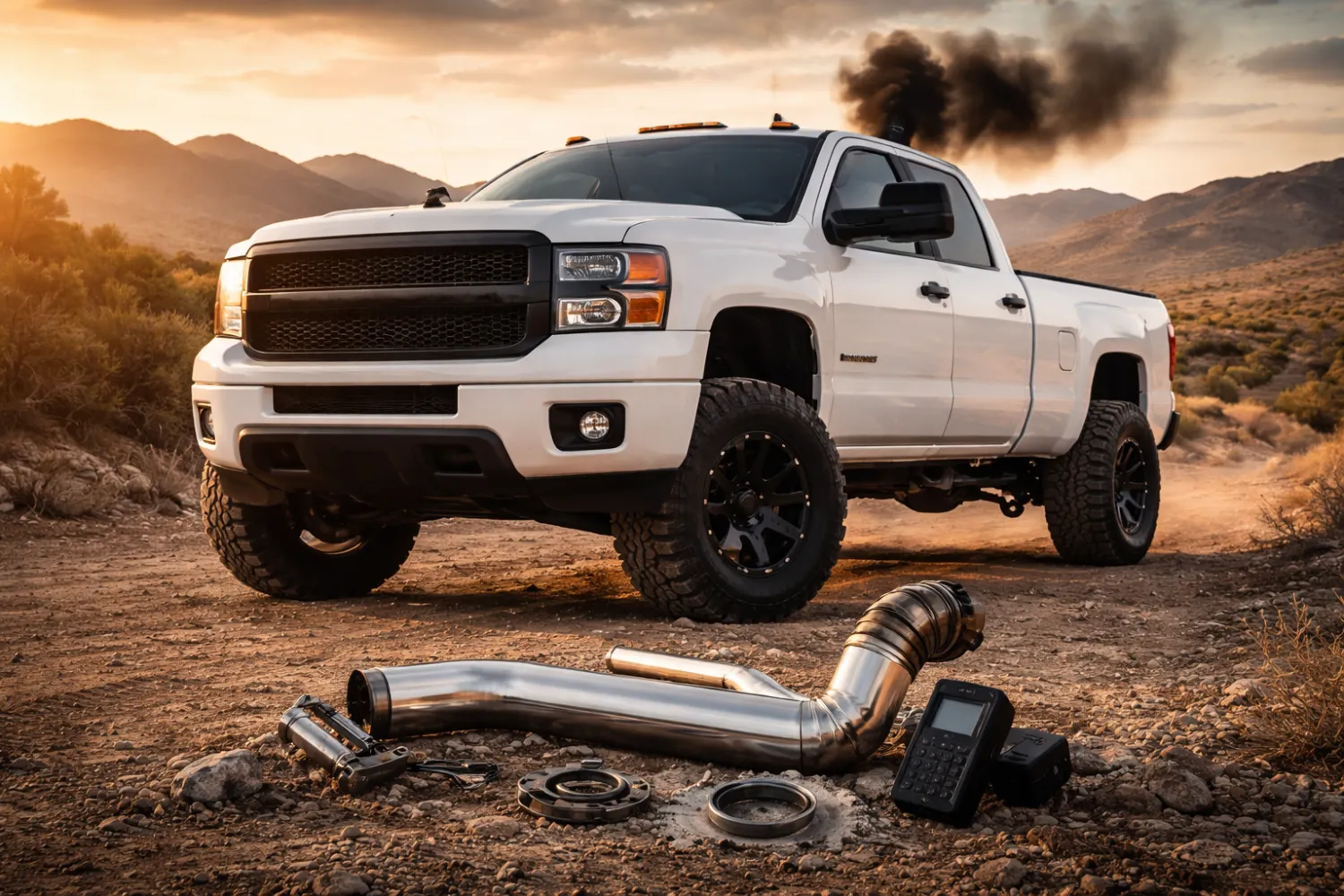
If you own a 2013 LML Duramax, you already know this truck has serious potential. Strong torque. Solid driveline components. A reputation for getting work done. But you probably also know where things start to unravel the emissions system. For many off-road owners, installing a 2013 Duramax DPF delete kit becomes the turning point between constant frustration and a truck that finally runs clean, cool, and consistently.
I’ve watched it happen time and time again. Regen cycles kicking in at the worst moments. Exhaust temperatures climbing while towing. Limp-mode events that make no sense. The LML Duramax is capable, but the factory DPF system often becomes the bottleneck. This guide breaks down what a DPF delete really changes, how it affects performance and reliability, and how to approach it the right way without hype or shortcuts.
Let’s dig in.
Why the 2013 Duramax Still Gets Deleted
The 2013 model year sits right in the heart of the LML Duramax era. On paper, it brought cleaner emissions and increased power. In real-world use, especially off-road or under sustained load, the emissions hardware often becomes the limiting factor.
Diesel particulate filters were engineered to meet emissions standards, not to optimize long-term durability under heavy use. Over time, soot accumulation forces more frequent regeneration cycles. Those regens raise exhaust gas temperatures, increase fuel consumption, and add unnecessary heat stress throughout the exhaust system.
That’s why the 2013 Duramax DPF delete kit remains so popular in off-road and competition applications. Not because owners want noise or attention but because they want predictable performance and fewer mechanical headaches.
Understanding the 2013 LML Duramax Emissions System
Before removing anything, it’s important to understand how the system works.
From the factory, the 2013 Duramax uses a complex emissions setup that includes:
- Diesel Particulate Filter (DPF)
- Diesel Oxidation Catalyst (DOC)
- Selective Catalytic Reduction (SCR) using DEF
- Exhaust Gas Recirculation (EGR)
The DPF’s job is to trap soot particles before they exit the exhaust. Once the filter fills, the truck initiates a regeneration cycle that raises exhaust temperatures high enough to burn that soot off internally.
According to Wikipedia’s overview of diesel particulate filters, DPF systems rely heavily on high exhaust temperatures and consistent driving conditions to regenerate properly. That design works best in steady highway use, not in stop-and-go driving, heavy towing, or off-road operation where exhaust temps fluctuate constantly.
When those conditions aren’t met, soot builds up faster than it can be burned off and that’s where problems start.
What a 2013 Duramax DPF Delete Kit Includes
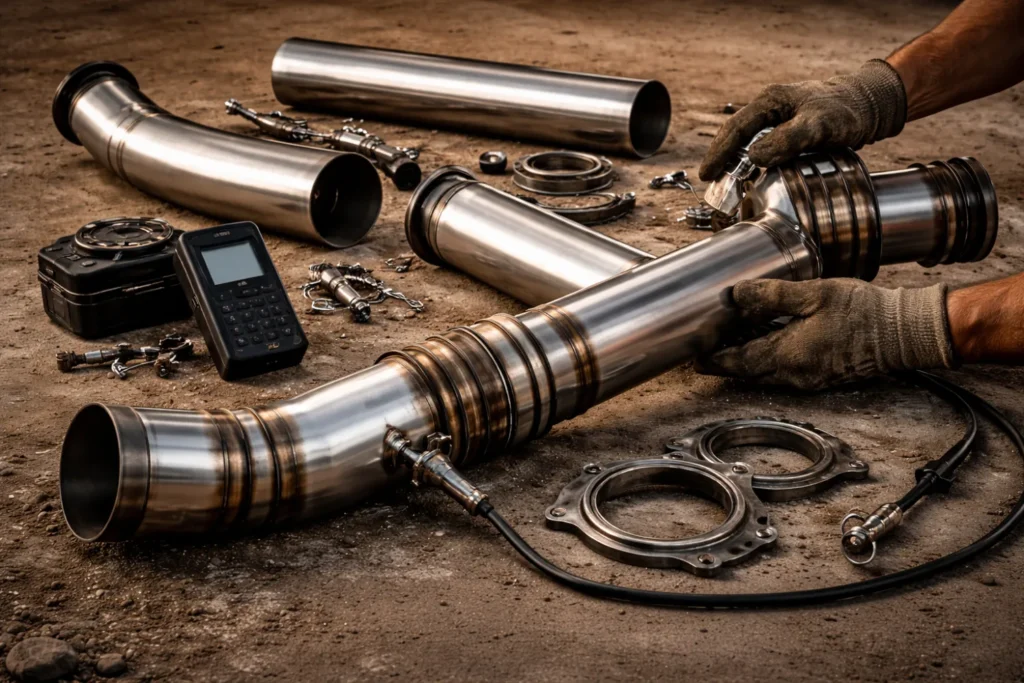
A quality 2013 Duramax DPF delete kit replaces the restrictive factory exhaust components with free-flowing piping designed specifically for the LML chassis.
Most complete kits include:
- DPF delete pipe
- Mid-pipe or race pipe section
- Exhaust clamps
- Required mounting hardware
Some kits also offer:
- Upgraded downpipes
- Optional mufflers
- Stainless vs aluminized steel options
4” vs 5” DPF Delete Systems
| Feature | 4” Delete Kit | 5” Delete Kit |
| Exhaust flow | Excellent | Maximum |
| Sound level | Controlled | Aggressive |
| Clearance | Easier fit | Tighter tolerances |
| Best use | Balanced builds | High-output setups |
Material quality matters. Stainless steel systems resist corrosion, maintain fitment, and handle heat cycles better over time. Cheap mild steel kits often rust or warp, especially on trucks used year-round.
Performance Gains You Can Feel Immediately
Once installed and tuned, a 2013 Duramax DPF delete kit delivers results you don’t need a dyno to notice.
Most owners experience:
- Faster turbo spool
- Improved throttle response
- Stronger mid-range torque
- Lower exhaust gas temperatures
Horsepower gains depend on tuning strategy, but realistic increases usually fall between 40 and 80 horsepower with conservative off-road tuning. Torque gains are even more noticeable, especially when towing or climbing under load.
The truck feels freer. Less strained. More responsive.
Reliability Improvements That Matter Long-Term
This is where deletes really earn their reputation.
Removing the DPF eliminates:
- Forced regeneration cycles
- Excessive exhaust backpressure
- Chronic soot buildup
That reduction in backpressure lowers exhaust temperatures and reduces thermal stress on critical components. Turbochargers tend to last longer. Exhaust manifolds are less likely to crack. Sensors fail less often.
For many owners, the 2013 Duramax DPF delete kit isn’t about chasing power it’s about keeping the truck on the road and out of limp mode.
Fuel Economy: What Actually Changes
Fuel economy gains are real, but expectations should be realistic.
Most off-road LML owners report:
- 1–3 MPG improvement in mixed driving
- More noticeable gains while towing
- Minimal gains if driving aggressively
Why? Because regen cycles burn fuel. Eliminating them reduces wasted fuel, but tuning and driving style still play the biggest role.
Smart, conservative tuning almost always outperforms aggressive fueling when it comes to efficiency.
Why Proper Tuning Is Mandatory
A 2013 Duramax DPF delete kit cannot function without proper tuning. The ECU expects emissions components to be present. Removing them without recalibration leads to fault codes, limp mode, or a truck that won’t run correctly.
Proper tuning:
- Disables emissions-related trouble codes
- Optimizes fueling and timing
- Refines transmission shift behavior
- Manages turbo response under load
Transmission tuning is especially important on LML trucks. Controlled torque delivery improves drivability and protects the Allison transmission over time.
Exhaust Sound After a DPF Delete
Deleting the DPF dramatically changes exhaust tone. The factory filter acts as a massive muffler.
Sound characteristics depend on setup:
- Straight pipe: Loud and raw
- Muffled delete: Deep, controlled, minimal drone
Cold starts will be louder. Turbo whistle becomes more noticeable. Under throttle, the truck finally sounds like a diesel should.
Drone can be managed with proper pipe diameter and muffler placement another reason quality kits matter.
Installation: What to Expect
Installing a 2013 Duramax DPF delete kit isn’t difficult, but it does require patience.
What You’ll Need
- Basic hand tools
- Penetrating oil
- Jack stands or a lift
- Time
Time Estimates
- DIY install: 4–6 hours
- Professional install: 2–3 hours
Heat-cycled bolts and tight sensor fittings are the biggest challenges. Take your time and avoid forcing components.
Supporting Mods That Add Real Value
A DPF delete works best as part of a complete setup.
Recommended supporting mods:
- Cold air intake
- Upgraded intercooler piping
- EGT and boost monitoring
- Transmission tuning
- Additional transmission cooling for towing
These upgrades don’t just add power they improve durability.
Common Mistakes to Avoid

Avoid these common pitfalls:
- Choosing the cheapest kit available
- Skipping proper tuning
- Ignoring exhaust fitment
- Running aggressive tunes without monitoring
A 2013 Duramax DPF delete kit should simplify ownership, not create new problems.
Is a 2013 Duramax DPF Delete Kit Right for You?
This setup makes sense if:
- Your truck sees off-road or competition use
- You tow heavy loads frequently
- Reliability is a top priority
It may not be ideal if:
- Your truck is strictly street-driven
- You require emissions compliance
- You’re unwilling to invest in proper tuning
Being honest about usage makes the decision clear.
Legal and Off-Road Use Considerations
From a regulatory standpoint, emissions systems fall under federal Clean Air Act enforcement. The U.S. Environmental Protection Agency (EPA) clearly states that removing or disabling emissions equipment on vehicles intended for public-road use is prohibited. This is why delete kits are sold strictly for off-road or competition applications.
Understanding this distinction helps owners make informed, responsible decisions about how and where a 2013 Duramax DPF delete kit can be used.
Final Thoughts: Building a Better 2013 Duramax
The 2013 LML Duramax is a strong platform weighed down by complexity. A properly selected 2013 Duramax DPF delete kit, paired with smart tuning and quality supporting mods, unlocks what the truck was always capable of delivering.
Lower temps. Better drivability. Improved longevity.
That’s the goal.
At Explosive Diesels, we believe performance upgrades should build confidence, not uncertainty. Choose quality parts, plan the build thoughtfully, and think long-term. Your Duramax will thank you for it.
FAQs
A 2013 Duramax DPF delete kit replaces the factory diesel particulate filter with free-flowing exhaust piping designed for off-road or competition use.
Yes, when paired with proper tuning, a DPF delete improves throttle response, lowers exhaust temperatures, and increases horsepower and torque.
Yes, tuning is mandatory to disable emissions-related fault codes and allow the truck to run correctly without the factory DPF system.
Most trucks see gains of 40–80 horsepower depending on tuning strategy and supporting modifications.
Many owners report a 1–3 MPG improvement, especially during towing, due to the elimination of fuel-consuming regeneration cycles.
Yes, removing the DPF increases exhaust volume, but sound levels can be controlled with muffled delete setups.
A 4-inch system offers excellent balance for most builds, while a 5-inch system is better suited for high-power or competition setups.
Installation typically takes 4–6 hours for a DIY install or 2–3 hours at a professional shop.
Yes, removing the DPF reduces exhaust backpressure and heat, which can help extend turbo and exhaust component life.
No, DPF delete kits are intended for off-road or competition use only and are not legal for use on public roads.