
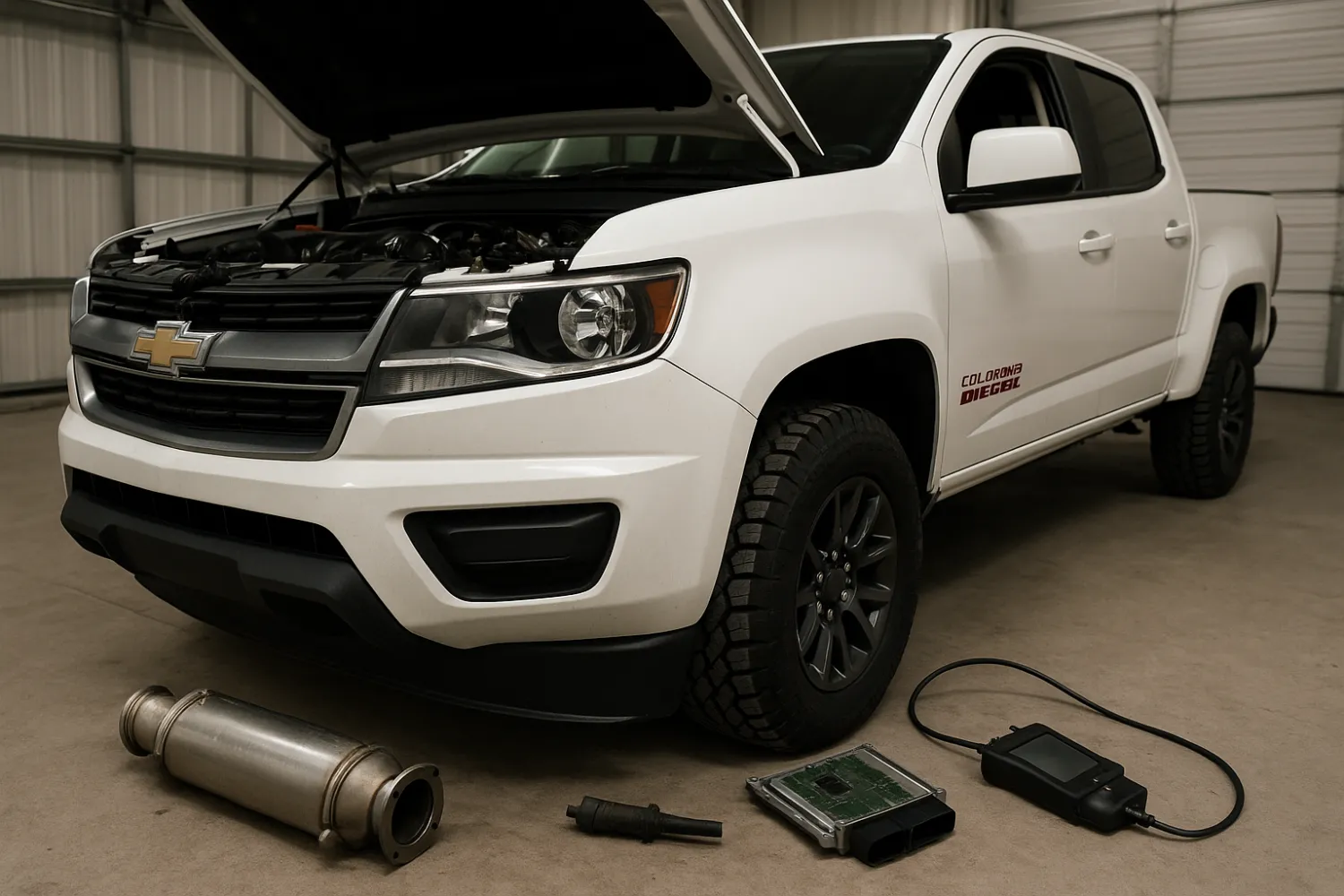
The Chevy Colorado 2.8 Duramax has become a favorite among off-road drivers who want torque, agility, and rock-solid reliability in a midsize package. But put it in the wrong terrain tight canyons, long climbs, dusty backroads, deep sand and the story changes. Suddenly you’re dealing with forced regens, climbing exhaust temps, sluggish throttle response, and the engine fighting itself instead of working for you. It’s no surprise more owners are turning to a Chevy Colorado 2.8 diesel delete kit to regain full control of their truck’s potential. Once the restrictions are lifted and the engine can breathe, the Colorado becomes exactly what it was meant to be: a tough, responsive, trail-ready machine.
Explosive Diesels was built on one goal helping enthusiasts push their off-road vehicles to peak performance. Not guesses. Not hype. Real, measurable gains that matter when you’re out on the trail and need your engine to respond instantly. So today we’re diving deep into what a delete kit does, the performance gains you can expect, what risks you must consider, and how to determine whether deleting is the right move for your build. Let’s get into the details that matter.
I. Why Colorado Owners Look Into Off-Road Delete Kits
The Colorado’s 2.8L Duramax engine is efficient and surprisingly capable for a midsize truck. With solid low-end torque and respectable towing capacity, it’s easy to see why the platform has a loyal following. But emissions systems DPF, EGR, SCR, DEF were engineered for consistent speeds and steady airflow. That’s the exact opposite of what happens on the trail.
Off-road driving brings low-speed, high-load conditions. Constant throttle modulation. High heat and low airflow. Dust and dirt getting everywhere. Under these conditions, regeneration cycles often fail to complete properly, which leads to:
- Heat spikes during regen attempts
- Excess soot loading
- Limp-mode triggers when the DPF gets overwhelmed
- Sensor failures or misreads caused by dust buildup
A Chevy Colorado 2.8 diesel delete kit removes these constraints in off-road environments, giving you smooth torque delivery and eliminating the unpredictable behavior tied to emissions cycling.
II. Understanding the 2.8L Duramax Before Modifying
Before deleting, you should understand the emissions ecosystem this engine relies on. The Duramax 2.8 uses:
- Diesel particulate filter (DPF) to capture soot
- Selective catalytic reduction (SCR) to reduce NOx using DEF
- Exhaust gas recirculation (EGR) to lower combustion temperatures
- A network of temp, pressure, and differential sensors
These systems work well for highway use, but off-road they’re challenged by inconsistent temperatures and airflow. The DPF relies on burning off particulate matter under high heat. The SCR needs steady exhaust flow. The EGR needs clean pathways to keep combustion stable. Off-road driving disrupts all of that.
This is why many off-road enthusiasts choose a Chevy Colorado 2.8 diesel delete kit it adapts the truck to an environment the emissions system struggles to survive in.
III. What’s Included in a Delete Kit?
A complete off-road delete kit includes several parts working together. Not all kits are equal, but most reputable options include:
1. Off-Road ECU/PCM Tune
This software recalibrates the engine to operate without emissions restrictions. It adjusts fueling, boost profiles, and throttle mapping.
2. DPF Race Pipe (DPF Delete Pipe)
This replaces the restrictive DPF, allowing consistent airflow and eliminating regen cycles.
3. EGR Block-Off Kit
Prevents exhaust gases from re-circulating, lowering soot levels in the intake system.
4. DEF/SCR System Deactivation
The off-road tune disables DEF consumption and SCR monitoring.
Typical Kit Comparison
| Kit Type | Included Parts | Best For |
|---|---|---|
| Basic | Tune + DPF race pipe | Mild off-road use |
| Standard | Tune + DPF delete + EGR block-off | Mixed terrain performance |
| Complete | Full off-road tune + DPF/EGR/DEF/SCR removal | Maximum reliability + towing + overlanding |
For most builds, a complete Chevy Colorado 2.8 diesel delete kit delivers the most noticeable improvements and long-term reliability.
IV. Off-Road Performance Improvements
Once the emissions restrictions are removed, the 2.8 Duramax wakes up instantly. The gains aren’t imaginary—they’re mechanical.
1. Faster Turbo Response
No soot buildup. No clogged airflow. Just clean, predictable turbo behavior.
2. Lower Exhaust Gas Temperatures
With EGR turned off and the DPF eliminated, exhaust flow becomes steady, reducing unnecessary heat spikes.
3. Consistent Torque Delivery
When rock crawling or maneuvering through deep ruts, consistent torque is crucial. Deleting improves low-end control dramatically.
4. Better Fuel Economy
Off-road, regens burn fuel aggressively. Removing the DPF eliminates this waste.
5. Noticeable Power Gains
Most off-road tunes add roughly:
- +30–60 HP
- +60–100 lb-ft torque
This extra power makes towing, climbing, and hauling much more manageable.
These benefits are why the Chevy Colorado 2.8 diesel delete kit has become one of the most popular upgrades in the off-road community.
V. How Deleting Helps Trail Rigs, Overlanders, and Towing Builds
Deleting a Colorado is not just about power it’s about reliability.
Trail Performance
No limp mode. No regen interruptions. No unpredictable power loss.
Overlanding Stability
On long multi-day trips, the last thing you want is a regen that won’t complete or an EGR failure that derails your route.
Towing Confidence
With more torque and cooler temps, you get smoother climbs and less engine strain on long grades.
Temperature Management
The absence of active regen events reduces heat load on the turbo and exhaust components.
All of these improvements make a Chevy Colorado 2.8 diesel delete kit a strategic upgrade not a cosmetic one.
VI. Important Risks & Considerations
Deleting comes with trade-offs. Make sure you understand them:
- Warranty implications: Deleting typically voids your emissions and sometimes powertrain warranty.
- Increased exhaust noise: Free-flowing exhaust has a deeper, more aggressive tone.
- Installation precision matters: A poor installation or incorrect tune can cause issues quickly.
- Added power = added stress: The transmission and driveline experience more load.
- Maintenance must be taken seriously: Dirty fuel, clogged filters, or neglected oil changes can harm a deleted engine.
Deleting is a commitment one that requires responsibility.
VII. Explosive Diesels Standard Legal Disclaimer
All delete modifications discussed on Explosive Diesels are for sanctioned off-road use only. Emissions-controlled vehicles must comply with federal, state, and local laws. We do not encourage or recommend tampering with emissions systems on vehicles used on public roads.
VIII. Tools, Install Time, and Required Skill Level
Common Tools Needed
- Socket set
- Wrenches + O₂ sensor tool
- Jack stands or a lift
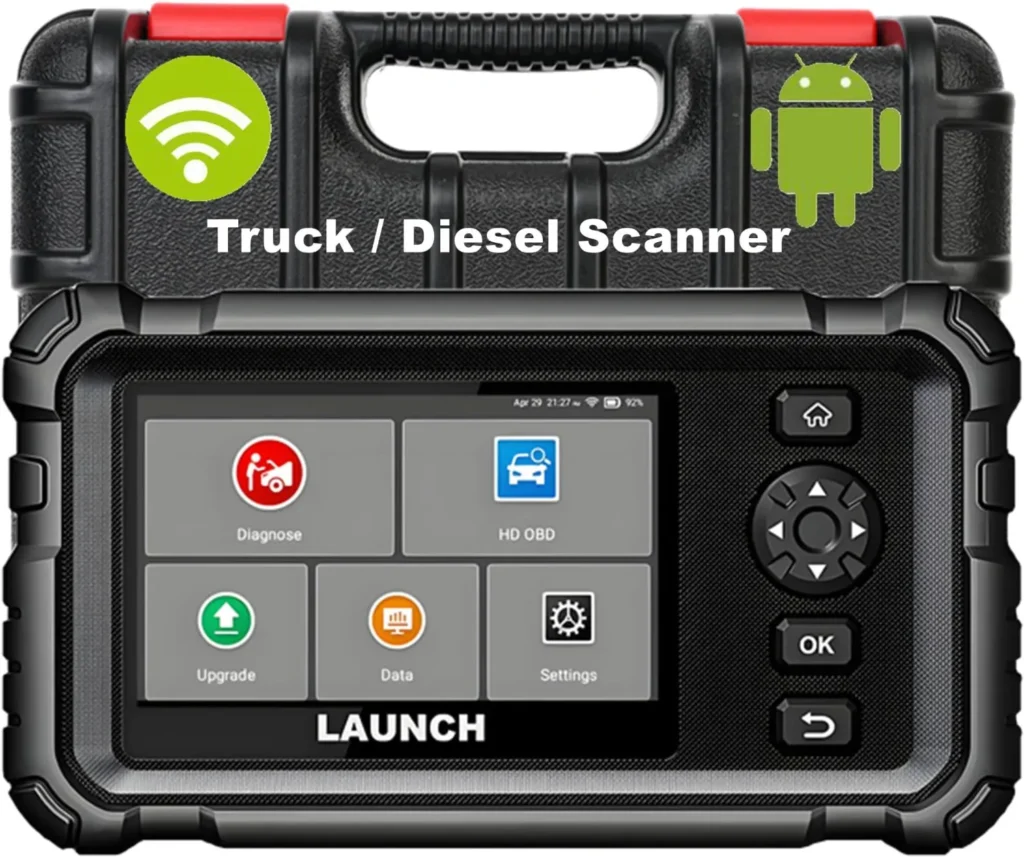
- Flashing device or laptop
- Torque wrench
Install Time Estimates
| Installer Level | Estimated Time |
|---|---|
| Beginner | 6–8 hours |
| Intermediate | 4–6 hours |
| Professional | 2–3 hours |
Difficulty level: Moderate, mostly due to tight exhaust clearances and tuning procedures.
IX. High-Level Delete Process Overview
This isn’t a full installation guide just enough to understand the workflow.
1. Preparation
Disconnect the battery. Lift the vehicle. Ensure safe working space.
2. Remove Factory Exhaust Components
This includes the DPF, SCR, and related sensors.
3. Block Off or Remove EGR Components
Install block plates and modify coolant routing where needed.
4. Flash the Off-Road Tune
Load the correct calibration designed for your hardware setup.
5. Final Inspection
Start the truck, check for leaks, confirm correct boost levels and temperatures.
The transformation from a stock to a deleted Colorado is immediate.
X. Supporting Mods for Maximum Gains
Deleting removes restrictions, but complementary mods help the engine run stronger and cooler.
Recommended Add-ons
- Upgraded intercooler
- Aftermarket intake
- Downpipe-back exhaust
- Transmission tuning
- Catch can
- Cooling system upgrades for desert or mountain environments
These modifications build a holistic off-road performance package around your Chevy Colorado 2.8 diesel delete kit.
XI. Fuel Economy After Deleting
Deleting typically improves off-road fuel efficiency. Not dramatically but noticeably.
Typical MPG Increase
| Driving Scenario | MPG Change |
|---|---|
| Low-Speed Off-Road | +1–3 MPG |
| Highway | +2–4 MPG |
| Mixed Driving | +2 MPG (average) |
Why? Eliminating regen cycles and improving combustion efficiency naturally reduces wasted fuel.
XII. Maintenance Expectations After Deleting

Deleting simplifies some maintenance tasks but increases the importance of others.
What Improves
- No DPF clogging
- No DEF refills
- Less soot contamination
- Lower heat from regen cycles
What Becomes More Important
- Oil change intervals
- Fuel filter replacements
- Monitoring turbo health
- Checking clamps and boost pipes
Think of it this way: deleting removes the sensitive parts, but makes the engine more performance-oriented so care matters.
XIII. Troubleshooting Common Problems After Deleting
Most issues come from incorrect tuning or installation mistakes.
Common Problems
- Check Engine Light: Often a missed sensor or loose plug.
- Exhaust Leak: Wrong alignment or loose clamps.
- Limp Mode: Usually tied to improper tune flashing.
- Smoke Issues: A sign of excessive fueling or sensor failure.
Most are minor, but they require quick attention.
XIV. Cost Breakdown of a Complete Delete Setup
Here’s a realistic cost overview:
| Component | Estimated Price |
|---|---|
| Off-Road Tune | $500–$900 |
| DPF Delete Pipe | $250–$500 |
| EGR Block-Off | $75–$150 |
| Full Delete Kit | $900–$1,500 |
| Professional Installation | $300–$700 |
| Supporting Mods | $200–$2,000+ |
Total investment: $1,200–$3,500+ depending on build complexity.
For many off-roaders, the performance consistency alone makes it worth it.
XV. Is a Chevy Colorado 2.8 Diesel Delete Kit Worth It?
If your truck spends most of its time off-road, absolutely.
Deleting gives you:
- Better low-end torque
- Cooler EGTs
- No regens
- Longer range
- Stronger towing capability
- Better drivability in technical terrain
If your truck is primarily a highway commuter, deleting could introduce unnecessary noise and legal complications. But for the off-road community, a Chevy Colorado 2.8 diesel delete kit is one of the highest-ROI upgrades available.
XVI. Final Thoughts
Deleting the 2.8 Duramax doesn’t turn it into a heavy-duty powerhouse but it does allow it to reach its full potential in the environments many owners actually use it in. Once the emissions restrictions are gone and the engine can breathe, everything becomes smoother, cooler, more predictable, and more enjoyable.
If you’re building a trail rig, overlander, or tow-support vehicle, deleting isn’t just a small tweak. It’s a foundation-level enhancement.
FAQs
A delete kit removes or disables emissions components like the DPF, EGR, and SCR systems for off-road use. It allows the engine to run cooler and more consistently in rough terrain.
Yes, deleting reduces heat, eliminates regens, and stabilizes torque delivery, which dramatically increases off-road drivability.
In most cases, yes deleting emissions equipment typically voids powertrain and emissions warranties.
Most off-road tunes add 30–60 HP and 60–100 lb-ft of torque depending on the tuning file.
Yes, fuel economy often improves because regens stop consuming extra fuel and airflow becomes more efficient.
No, emissions deletes are only legal for sanctioned off-road use, not public highway driving.
A professional can complete the installation in 2–3 hours, while DIY installs may take 4–8 hours.
Yes, removing the DPF typically increases exhaust noise and results in a deeper, more aggressive tone.
An upgraded intercooler, intake, and transmission tune help maximize performance and maintain reliability.
Maintenance becomes more focused on oil changes, fuel filtration, and monitoring turbo health since the engine runs as a performance setup.