
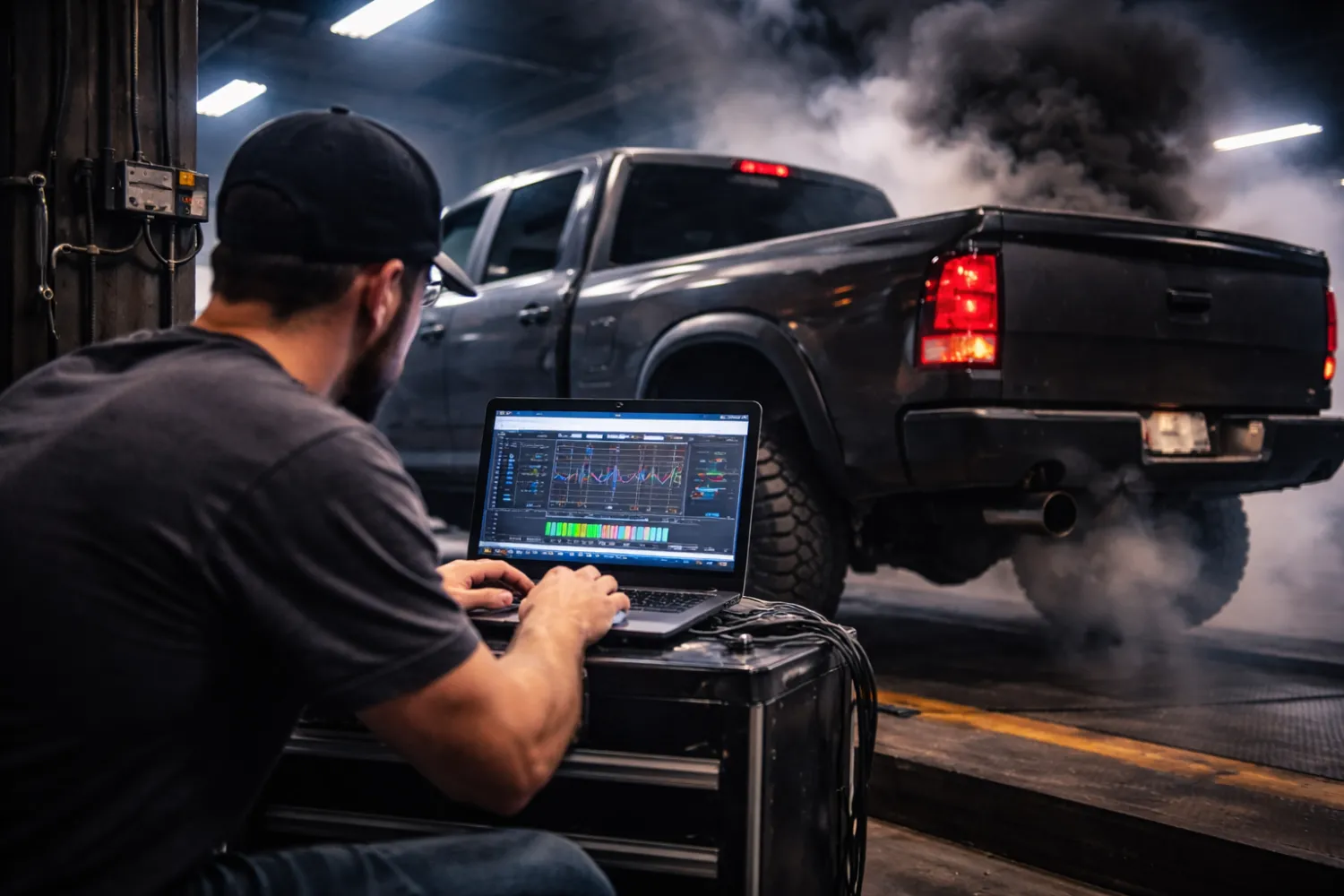
Delete tunes sit at the center of modern off-road diesel performance. They spark debate. They raise eyebrows. And they completely transform how a truck feels, pulls, and behaves under load. If you’ve spent any time in the diesel world, you’ve heard about delete tunes usually whispered at first, then discussed at full volume once someone experiences the difference firsthand.
I’ve been around deleted trucks long enough to say this confidently: delete tunes aren’t about chasing dyno numbers. They’re about fixing restrictions that never belonged on a performance-oriented diesel engine in the first place. When done correctly, delete tunes unlock smoother power delivery, improved reliability, and a driving experience that actually matches what diesel engines are capable of. This guide breaks it all down. No hype. No vague claims. Just straight information for off-road, competition, and closed-course use.
Why Factory Emissions Systems Hold Diesel Engines Back
Modern diesel trucks are engineered under intense emissions pressure. That reality shapes every part of the engine’s behavior. From the factory, your truck relies on a stack of emissions components designed to reduce particulate matter and nitrogen oxides. Those systems work but they also add complexity, heat, and restriction.
Here’s what’s commonly involved:
- DPF (Diesel Particulate Filter): Traps soot, then burns it off through regeneration cycles
- EGR (Exhaust Gas Recirculation): Pushes exhaust back into the intake to lower combustion temps
- SCR / DEF systems: Inject DEF to neutralize NOx emissions
- Throttle valves and exhaust restrictions: Create backpressure to manage emissions events
- Sensors everywhere: Ready to trigger limp mode if anything drifts out of range
Diesel emissions systems exist to reduce particulate matter and nitrogen oxides, but they do so by adding heat, restriction, and operational complexity to the engine. The U.S. Environmental Protection Agency explains how systems like DPFs, EGR, and SCR function as part of federal diesel emissions control strategies, including their dependence on aftertreatment and regeneration events that directly influence engine behavior and efficiency.
Source: U.S. Environmental Protection Agency – Diesel Emissions
https://www.epa.gov/regulations-emissions-vehicles-and-engines/diesel-emissions
On paper, this keeps regulators happy. In practice, it changes how the engine breathes, how hot it runs, and how often it interrupts itself.
That’s where delete tunes enter the conversation.
What Delete Tunes Actually Do
Delete tunes are specialized ECU and often TCM calibrations designed to work with emissions-deleted hardware on off-road vehicles. They don’t just “turn things off.” A proper delete tune rewrites how the engine and transmission operate once those restrictions are removed.
A well-written delete tune will:
- Disable regeneration logic completely
- Remove fault codes tied to deleted components
- Recalibrate fueling for unrestricted exhaust flow
- Optimize timing and boost control
- Improve transmission shift behavior and torque management
This is not a cosmetic change. Delete tunes reshape how the engine functions from idle to wide-open throttle.
Performance Gains You Can Feel, Not Just Measure
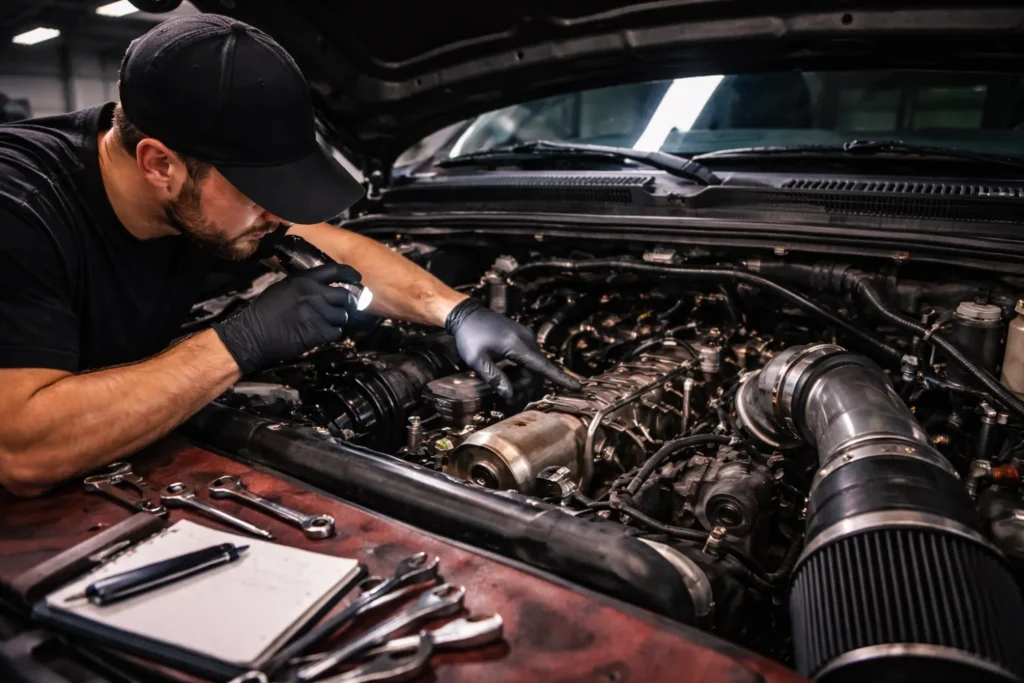
Let’s talk results.
Most people ask about horsepower first. Fair question. But numbers alone don’t tell the whole story.
With delete tunes, drivers typically experience:
- Faster throttle response
- Stronger mid-range torque
- Quicker turbo spool
- More consistent power under load
Peak horsepower gains vary by platform, but the feel of the truck changes immediately. Power becomes smoother and more predictable. The hesitation disappears. The engine finally responds the way a diesel should.
Typical Performance Changes (Generalized)
| Area | Stock Emissions Setup | Deleted with Proper Tune |
| Throttle Response | Delayed | Immediate |
| Turbo Spool | Sluggish | Faster |
| Power Delivery | Inconsistent | Smooth and linear |
| Exhaust Heat | Elevated | Reduced |
This is why delete tunes remain popular in off-road towing, competition pulling, and heavy trail use.
Reliability: The Real Reason Many Go with Delete Tunes
Horsepower gets attention. Reliability keeps trucks alive.
One of the biggest motivations behind delete tunes has nothing to do with speed. It’s about eliminating failure points.
Emissions systems introduce:
- Constant regen cycles
- Excessive exhaust backpressure
- Soot buildup in intake components
- Elevated exhaust gas temperatures
- High-cost component failures
Diesel particulate filters work by trapping soot and periodically burning it off through regeneration. According to technical documentation on diesel particulate filters, regeneration increases exhaust temperature and backpressure two conditions that accelerate wear and thermal stress under sustained load or off-road use.
Source: Wikipedia – Diesel Particulate Filter
By design, delete tunes remove regen entirely. No forced heat spikes. No clogged DPF. No EGR cooler failures. For off-road trucks that work hard, this isn’t a luxury it’s a safeguard.
Fuel Economy: A Quiet Benefit of Delete Tunes
Fuel economy rarely headlines delete tune discussions, but it should. Regen cycles burn fuel without moving the truck forward. Extra diesel is injected strictly to raise exhaust temperatures. That fuel is wasted as heat.
Once delete tunes remove regen logic, the engine operates in a steady, predictable state. Many owners see modest but consistent MPG improvements, especially during highway driving and steady loads. Delete tunes won’t turn a heavy diesel into an economy car. But they often eliminate unnecessary fuel consumption events that quietly drain efficiency.
Types of Delete Tunes Available
Not all delete tunes serve the same purpose. The right option depends on how the truck is used.
Common configurations include:
- Single-level delete tunes: Balanced power for daily off-road use
- Multi-level delete tunes: Multiple selectable power files
- SOTF (Switch On The Fly): Change power levels while driving
- Tow-focused delete tunes: Conservative fueling with strong torque curves
- Race-oriented delete tunes: Aggressive calibrations for competition use
More power isn’t always better. A properly calibrated moderate tune often delivers better real-world results than an overly aggressive file.
Tuning Platforms vs. Tune Quality
This point matters.
The tuning device itself is secondary. The calibration quality is everything. Handheld tuners, flash tools, and cloud-based platforms are simply delivery systems. The real difference lies in how well the delete tune is written.
A quality tune considers:
- Injector behavior
- Turbo efficiency
- Safe timing strategies
- Transmission load management
- Thermal limits
Cheap or poorly developed delete tunes create harsh shifts, unstable fueling, and unnecessary stress. Explosive Diesels prioritizes proper calibration over marketing claims for this exact reason.
Supporting Hardware That Makes Delete Tunes Work
Delete tunes don’t exist in isolation.
At minimum, most setups include:
- Free-flowing exhaust (straight pipe or performance exhaust)
- High-flow intake
- Proper sensor handling or simulators
As power increases, supporting upgrades become critical:
- Transmission tuning or reinforcement
- Improved intercooling
- Turbo or fueling upgrades
- EGT monitoring
Skipping support hardware is how problems start. Delete tunes amplify what’s already there.
Installation and Setup: What to Expect
The process itself is straightforward but should never be rushed.
Typical steps include:
- Installing all delete hardware correctly
- Backing up factory ECU and TCM files
- Flashing the delete tune
- Verifying no active fault codes
- Performing a controlled test drive
After installation, monitoring matters. Watch EGTs. Observe shift behavior. A good delete tune feels smooth, not aggressive for the sake of aggression.
Common Mistakes with Delete Tunes
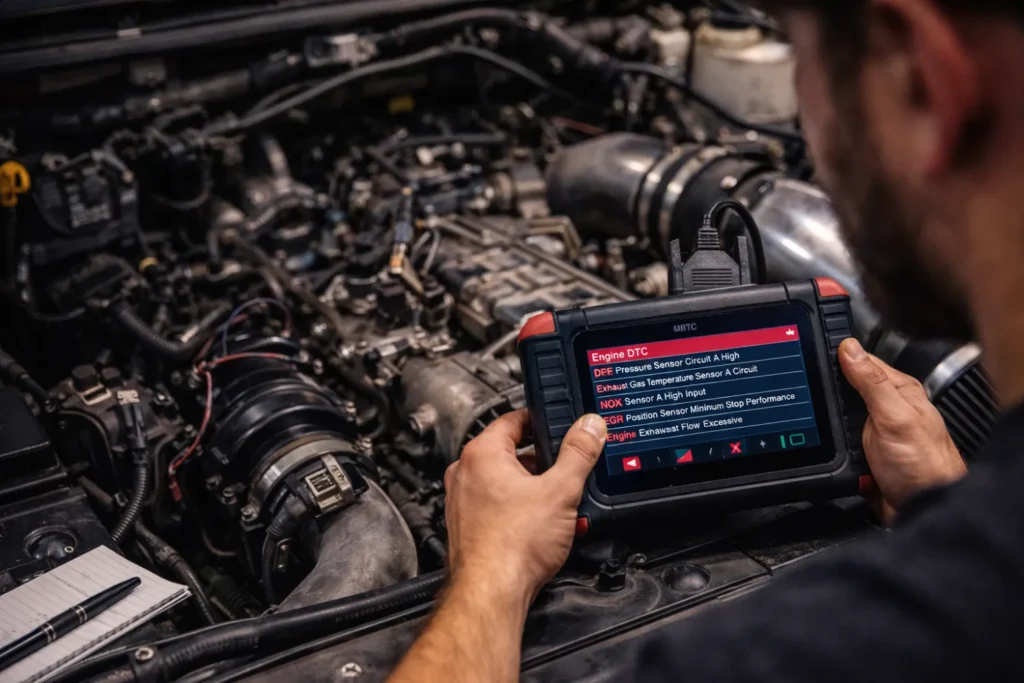
These mistakes show up repeatedly:
- Choosing maximum power without transmission support
- Ignoring EGT monitoring
- Mixing incompatible hardware and tuning
- Using low-quality or unknown tune files
- Assuming all delete tunes perform the same
Delete tunes reward thoughtful planning. Careless setups usually pay the price.
Legal and Off-Road Use Disclaimer
Delete tunes are intended for off-road, race, and closed-course use only. Federal emissions regulations govern on-road vehicles in the United States, and compliance remains the owner’s responsibility.
Explosive Diesels focuses on off-road performance education. Understanding local regulations is part of responsible ownership.
Is a Delete Tune Right for Your Build?
Delete tunes make sense when:
- The truck sees off-road or competition use
- Reliability under load matters
- Emissions components have become liabilities
- Performance and drivability matter more than factory constraints
They make less sense when emissions compliance is required for daily on-road use or when supporting upgrades are ignored.
Final Thoughts from Explosive Diesels
Delete tunes aren’t magic. They’re corrections. When emissions equipment is removed for off-road use, the engine must be recalibrated correctly. Delete tunes restore airflow, reduce unnecessary heat, and allow diesel engines to perform as intended. At Explosive Diesels, we see delete tunes as part of a complete off-road performance strategy not shortcuts. When done responsibly, they produce trucks that pull harder, run cooler, and last longer. Once you experience a properly tuned deleted diesel, going back feels impossible.
FAQs
Delete tunes are off-road ECU and TCM calibrations designed to work with emissions-deleted hardware by removing regen logic and recalibrating engine operation.
Yes, delete tunes typically increase horsepower and torque by removing exhaust restrictions and optimizing fueling and timing.
No, properly written delete tunes often reduce thermal stress and improve reliability by eliminating regen cycles and excessive backpressure.
You can, but delete tunes are intended for off-road or closed-course use, and on-road compliance depends on local regulations.
Many drivers see modest MPG gains because delete tunes eliminate fuel-consuming regeneration events.
Yes, transmission tuning is strongly recommended to handle increased torque and improve shift quality.
No, tune quality varies widely, and a well-written delete tune performs far better than a generic or aggressive file.
At minimum, a free-flowing exhaust is required, and higher power levels benefit from transmission tuning and EGT monitoring.
No, proper delete tunes disable emissions-related fault codes so the engine operates without warning lights.
Delete tunes are intended for off-road, race, or closed-course use, and emissions compliance is the responsibility of the vehicle owner.