If you spend any time around diesel trucks, sooner or later the question pops up: are diesel delete kits legal? It’s one of the most debated topics in the diesel performance world. Some owners swear by deletes for reliability and power. Others warn about legal risks, inspections, and hefty fines.
The truth sits somewhere in the middle. Diesel delete kits can transform the way a truck performs. They can also put owners on the wrong side of federal emissions law if used improperly. And that’s where things get complicated. In this guide, we’re breaking it all down. No confusion. No vague answers. Just clear explanations about are diesel delete kits legal, why emissions systems exist, the risks involved, and what off-road diesel owners should know before modifying their trucks.
Let’s get into it.
Understanding Diesel Delete Kits
Before diving into legality, it helps to understand what these kits actually do.A diesel delete kit removes or bypasses factory emissions systems installed on modern diesel engines. These emissions systems were added to meet environmental regulations, but they also add complexity to diesel trucks. A typical delete setup involves removing components designed to reduce exhaust pollution.
Common Components Removed in a Delete Kit
Most diesel delete kits target several emissions systems:
- EGR Delete (Exhaust Gas Recirculation)
Prevents exhaust gases from being routed back into the engine. - DPF Delete (Diesel Particulate Filter)
Removes the filter that captures soot from the exhaust. - DEF/SCR Delete (Diesel Exhaust Fluid system)
Eliminates the system that injects DEF to reduce nitrogen oxide emissions. - ECU tuning or programming
Reprograms the engine computer so it can run without emissions hardware.
When these parts are removed or bypassed, the engine operates more like older diesel trucks from the early 2000s. Simple. Mechanical. And often more responsive. But legality? That’s a different story.
Why Diesel Enthusiasts Install Delete Kits
Let’s be honest. People don’t install delete kits just for fun. There are real performance and reliability reasons behind the trend. In many cases, diesel owners are trying to solve recurring mechanical problems.
Here are the most common motivations.
1. Increased Engine Performance
Removing emissions restrictions allows exhaust gases to flow more freely. This can improve:
- Horsepower
- Torque
- Turbo response
- Throttle feel
The difference can be noticeable, especially when paired with performance tuning.
2. Reduced Maintenance Costs
Modern diesel emissions systems can be expensive to maintain.
Some common repairs include:
| Component | Average Repair Cost |
| DPF replacement | $2,000 – $4,000 |
| DEF system repair | $800 – $2,000 |
| EGR valve replacement | $500 – $1,500 |
These costs add up fast.
When emissions systems fail repeatedly, many owners begin asking the big question again: are diesel delete kits legal?
3. Improved Reliability
Some diesel engines struggle with carbon buildup inside emissions components.
Over time this can cause:
- Clogged DPF filters
- EGR valve sticking
- Sensor failures
- Engine derating or limp mode
Deleting these systems removes several potential failure points. That’s why deletes are common in off-road trucks, farm equipment, and competition vehicles. But again, legality depends heavily on how the vehicle is used.
Why Modern Diesel Trucks Have Emissions Systems
To fully understand are diesel delete kits legal, we need to step back and look at why these systems exist in the first place. Modern diesel trucks are designed to meet strict environmental regulations. These regulations aim to reduce harmful pollutants produced by diesel engines.
Major Diesel Emissions Components
Modern trucks include several systems working together.
EGR (Exhaust Gas Recirculation)
Reduces nitrogen oxide emissions by recirculating exhaust gases back into the engine.
DPF (Diesel Particulate Filter)
Captures soot particles from exhaust before they leave the tailpipe.
SCR / DEF System
Injects diesel exhaust fluid to convert harmful gases into nitrogen and water vapor.
These technologies drastically reduce diesel pollution. According to the U.S. Environmental Protection Agency, modern diesel emission standards significantly reduce particulate matter and nitrogen oxide pollution compared with older engines. You can review the federal emissions standards.
For a deeper explanation of diesel engine operation and emissions technology, see the overview. The environmental benefits are clear. But from a performance standpoint, these systems can create new mechanical challenges.And that tension leads many diesel owners to ask again: are diesel delete kits legal?
The Key Question: Are Diesel Delete Kits Legal?
Let’s address it directly.
Are diesel delete kits legal?
For vehicles driven on public roads in the United States, the answer is generally no. Under federal law, removing or tampering with emissions equipment installed by the manufacturer is illegal.
Federal Law: The Clean Air Act
The Clean Air Act prohibits tampering with emissions systems on vehicles used on public highways.
That means it is illegal to:
- Remove emissions components
- Disable emissions control systems
- Install defeat devices that bypass emissions controls
This law applies nationwide, regardless of state. So even if your state does not require emissions testing, federal law still applies. This is one of the biggest misconceptions in the diesel world.
Many owners assume:
“No emissions testing means deletes are legal.”
That’s not actually the case.
EPA Enforcement and Industry Crackdowns
Over the past decade, federal regulators have stepped up enforcement against companies selling delete equipment. Large fines have been issued to manufacturers and diesel performance shops that sold emissions defeat devices. Some enforcement actions have reached millions of dollars in penalties.
Shops installing delete kits can face:
- Federal fines
- Business shutdowns
- Equipment confiscation
The goal of these enforcement actions is to prevent widespread emissions tampering. Because of this, many performance shops today will not perform delete installations for on-road vehicles.
And that circles back to the core question: are diesel delete kits legal?
For highway vehicles — no. But the story doesn’t stop there.
The Off-Road Exception
This is where things become more nuanced. While deletes are illegal for vehicles driven on public roads, some vehicles are classified differently.
Vehicles Typically Considered Off-Road
Certain machines are not intended for public highways.
Examples include:
- Race trucks
- Farm tractors
- Mining equipment
- Construction vehicles
- Dedicated off-road rigs
These vehicles operate outside normal highway regulations. Because of this, emissions modifications may be permitted depending on the equipment classification. However, it’s important to understand that a truck registered for highway use does not automatically become legal for deletes simply because it is used off-road sometimes. Registration status matters.
That’s why dedicated race trucks often:
- Are not registered for road use
- Are trailered to events
- Operate strictly in competition environments
State Emissions Testing and Inspections
Another factor influencing the question are diesel delete kits legal is state inspection programs. Some states require emissions inspections during vehicle registration.
States With Strict Testing
Examples include:
- California
- New York
- Colorado
- Massachusetts
- Pennsylvania
Vehicles in these states must pass emissions inspections before they can be legally registered. Deleted trucks typically fail these tests immediately.
States With Limited or No Testing
Some states only require testing in certain counties or not at all.
Examples include many rural areas across:
- Texas
- Florida
- Arizona
- Tennessee
But remember something important. Lack of testing does not change federal law. It simply means enforcement may be less visible.
Potential Risks of Installing a Delete Kit
Even if enforcement varies, diesel owners should understand the risks involved. Deleting emissions systems carries several consequences.
Legal Risks
Possible consequences may include:
- Federal penalties
- State registration problems
- Vehicle inspection failure
While individual truck owners are rarely targeted, enforcement has increased in recent years.
Warranty Issues
Manufacturers can void warranties if emissions systems are removed. If your truck is still under warranty, deleting emissions components may eliminate coverage entirely. That can mean paying out of pocket for expensive repairs.
Resale Challenges
Selling a deleted truck can be more difficult. Some buyers avoid deleted vehicles because they:
- Cannot pass emissions testing
- Require reinstalling emissions systems
- May face registration issues
In many cases, owners reinstall factory parts before selling their trucks. That process can be expensive.
Why Some Diesel Owners Still Choose Deletes
Despite the legal risks, deletes remain popular among certain diesel communities. Especially among off-road enthusiasts.
Performance Gains
Deleting emissions restrictions allows engines to breathe more freely.
Potential benefits include:
- Increased horsepower
- Higher torque output
- Faster turbo spool
- Lower exhaust temperatures
These improvements can make trucks feel significantly stronger under load.
Reliability Improvements
Emissions components can become clogged with soot over time. When these systems fail, engines may enter limp mode. Deleting emissions hardware removes these potential failure points.
Lower Long-Term Maintenance
For trucks used in heavy towing or off-road environments, emissions systems sometimes struggle with constant load. Deleting the system can eliminate expensive recurring repairs. When researching different setups and parts, many enthusiasts compare options through guides like motorcraft egr delete kits reviews to understand compatibility and performance differences before modifying their trucks. But again, it brings us back to the legal discussion. And the same question appears once more: are diesel delete kits legal? For on-road vehicles still no.
Alternatives to Diesel Delete Kits
Fortunately, diesel owners have options besides removing emissions systems. Many upgrades can improve performance while keeping emissions equipment intact.
Performance Upgrades That Stay Emissions-Compliant
Consider upgrades like:
- High-flow air intake systems
- Performance intercoolers
- Turbo upgrades
- ECU tuning designed for emissions compliance
These upgrades improve airflow and engine efficiency without violating emissions laws.
Maintenance Strategies That Prevent Emissions Problems
Many emissions failures happen due to poor maintenance. Smart maintenance habits can reduce problems.
Helpful strategies include:
- Regular highway driving to allow DPF regeneration
- Using high-quality diesel fuel
- Maintaining proper oil change intervals
- Keeping sensors clean and functioning
Preventative maintenance can extend the life of emissions components dramatically.
What Diesel Owners Should Consider Before Deleting
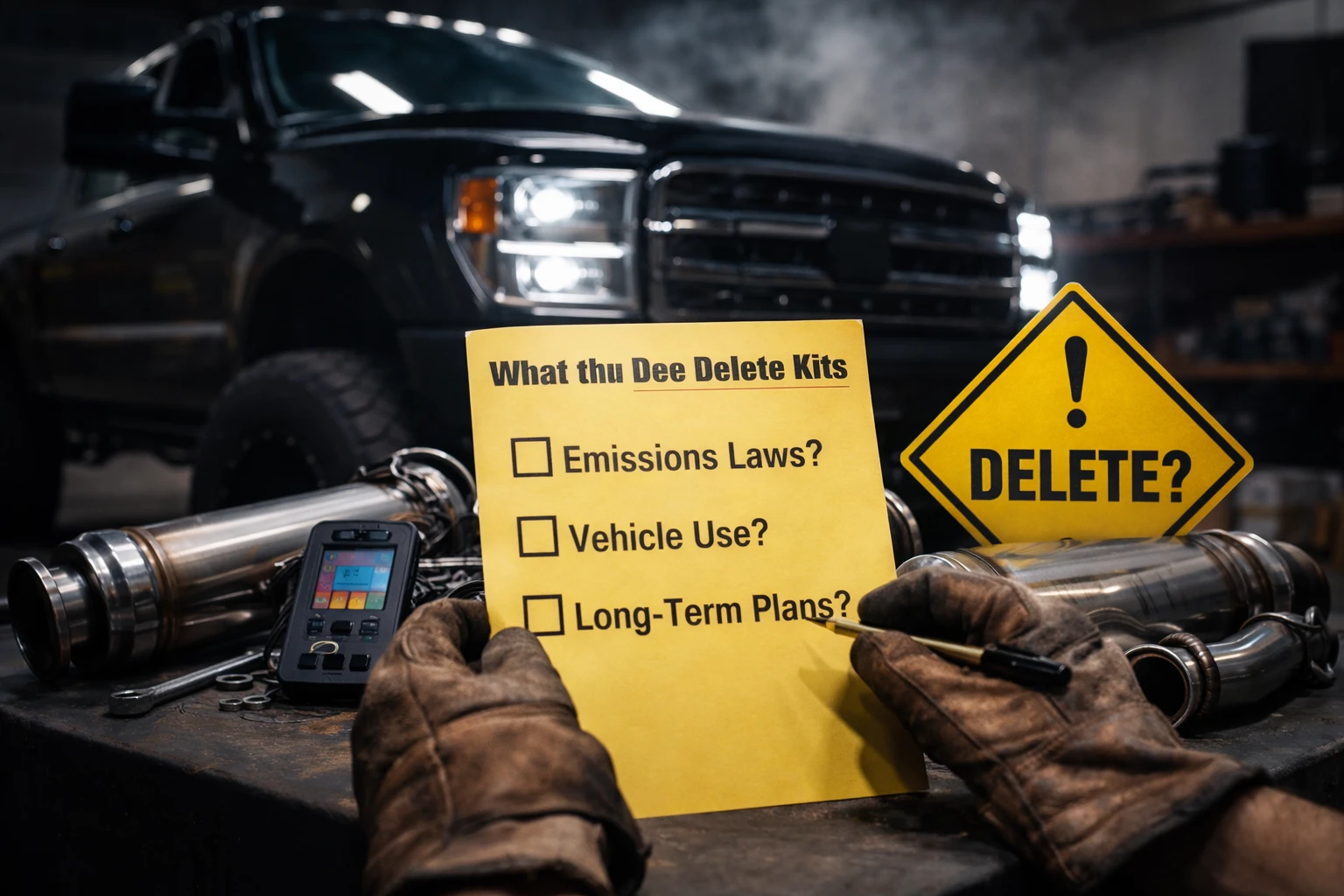
Before modifying your truck, take a step back. Ask a few important questions.
1. How Is the Truck Used?
Is the vehicle:
- A daily driver?
- A work truck?
- A race truck?
If it’s driven on public roads, emissions laws apply.
2. What Are Your Long-Term Plans?
Consider future plans for the truck:
- Selling it later
- Moving to a state with emissions testing
- Registering it for highway use
These factors can influence whether a delete makes sense.
3. Do You Understand the Legal Risks?
Many diesel owners modify their trucks without fully understanding the regulations. Knowing the law helps you make informed decisions.
Best Practices for Off-Road Diesel Builds
For enthusiasts building serious off-road trucks, planning matters. A properly designed build reduces problems later.
Smart Off-Road Build Strategies
Some helpful tips include:
- Build trucks specifically for competition or off-road use
- Transport them on trailers when possible
- Work with experienced diesel performance shops
- Maintain engines regularly to prevent failures
A thoughtful build plan avoids surprises. And keeps your truck performing at its best.
Final Thoughts
So let’s circle back to the original question one last time.
Are diesel delete kits legal?
For vehicles driven on public roads in the United States, the answer is generally no. Federal emissions laws prohibit removing or disabling factory emissions equipment. However, dedicated off-road vehicles and competition machines operate under different rules depending on their classification and use. For diesel enthusiasts, the best approach is simple:
Understand the law.
Understand your vehicle’s purpose.
And make informed decisions about performance upgrades.
Diesel trucks are incredible machines. With the right maintenance and smart modifications, they can deliver serious power, durability, and capability without unnecessary headaches. And that’s what the Explosive Diesels community is all about.
FAQs
In most cases, no. Federal law prohibits removing or disabling emissions systems on vehicles driven on public roads.
Many owners install them to improve performance, reduce maintenance costs, and avoid problems caused by emissions components.
They may be allowed for vehicles used strictly off-road, such as race trucks or farm equipment, but rules can still vary.
Common systems removed include the EGR (Exhaust Gas Recirculation), DPF (Diesel Particulate Filter), and DEF/SCR system.
Yes, removing exhaust restrictions can improve horsepower, torque, and turbo response in many diesel engines.
No, a truck with removed emissions equipment will almost always fail emissions inspections.
Yes, most manufacturers will void engine and emissions warranties if the system is removed or altered.
Many shops avoid installing delete kits because federal law prohibits selling or installing emissions defeat devices for road vehicles.
Yes, but it may be harder to sell since some buyers want trucks that can pass emissions inspections.
Performance upgrades like improved intakes, intercoolers, and emissions-compliant tuning can improve performance without breaking emissions laws.