If you’ve been researching diesel performance upgrades, you’ve probably come across dozens of Motorcraft EGR delete kits reviews while trying to solve EGR system issues on a Ford diesel engine. It’s one of the most common conversations among diesel enthusiasts. Forums debate it. Off-road truck builders discuss it constantly. And mechanics see it every week.
The reason is simple. Over time, EGR systems on diesel engines can create performance and reliability challenges. Carbon buildup inside the intake. Failing EGR coolers. Reduced airflow. Higher maintenance costs. When these issues start appearing, many diesel owners begin researching solutions and that’s where Motorcraft EGR delete kits reviews start showing up in search results.
But there’s an important detail many people miss. Motorcraft itself does not manufacture EGR delete kits. Instead, most products discussed in Motorcraft EGR delete kits reviews are aftermarket kits designed to replace factory Motorcraft emissions components. In this guide, we’ll walk through how the EGR system works, why off-road diesel owners sometimes remove it, which delete kits are commonly used with Ford engines, and how to choose the right setup for reliability and performance.
Understanding the EGR System in Diesel Trucks
Before diving deeper into Motorcraft EGR delete kits reviews, it helps to understand the purpose of the EGR system. EGR stands for Exhaust Gas Recirculation. This system routes a portion of exhaust gases back into the intake manifold. The goal is to reduce combustion temperatures inside the engine. Lower combustion temperatures help reduce nitrogen oxide emissions. According to the U.S. Environmental Protection Agency, EGR systems are used to reduce harmful emissions produced during combustion in internal combustion engines.
The concept works well for emissions compliance. However, the system introduces exhaust soot back into the engine’s intake system, which can cause long-term maintenance problems. For additional technical background on EGR systems. Understanding how this system works helps explain why Motorcraft EGR delete kits reviews are so common among diesel truck owners.
What Components Make Up the EGR System?
A diesel EGR system typically includes several parts working together.
The major components include:
- EGR Valve – controls the flow of exhaust gases
- EGR Cooler – reduces exhaust temperature before it enters the intake
- Intake Manifold Channels – routes recirculated gases
- Sensors and Electronics – monitor engine conditions
Many Ford diesel trucks use Motorcraft components for these systems. Over time, those factory parts can wear out or clog with carbon deposits. This is one of the main reasons people begin searching for Motorcraft EGR delete kits reviews.
Why EGR Systems Often Cause Problems
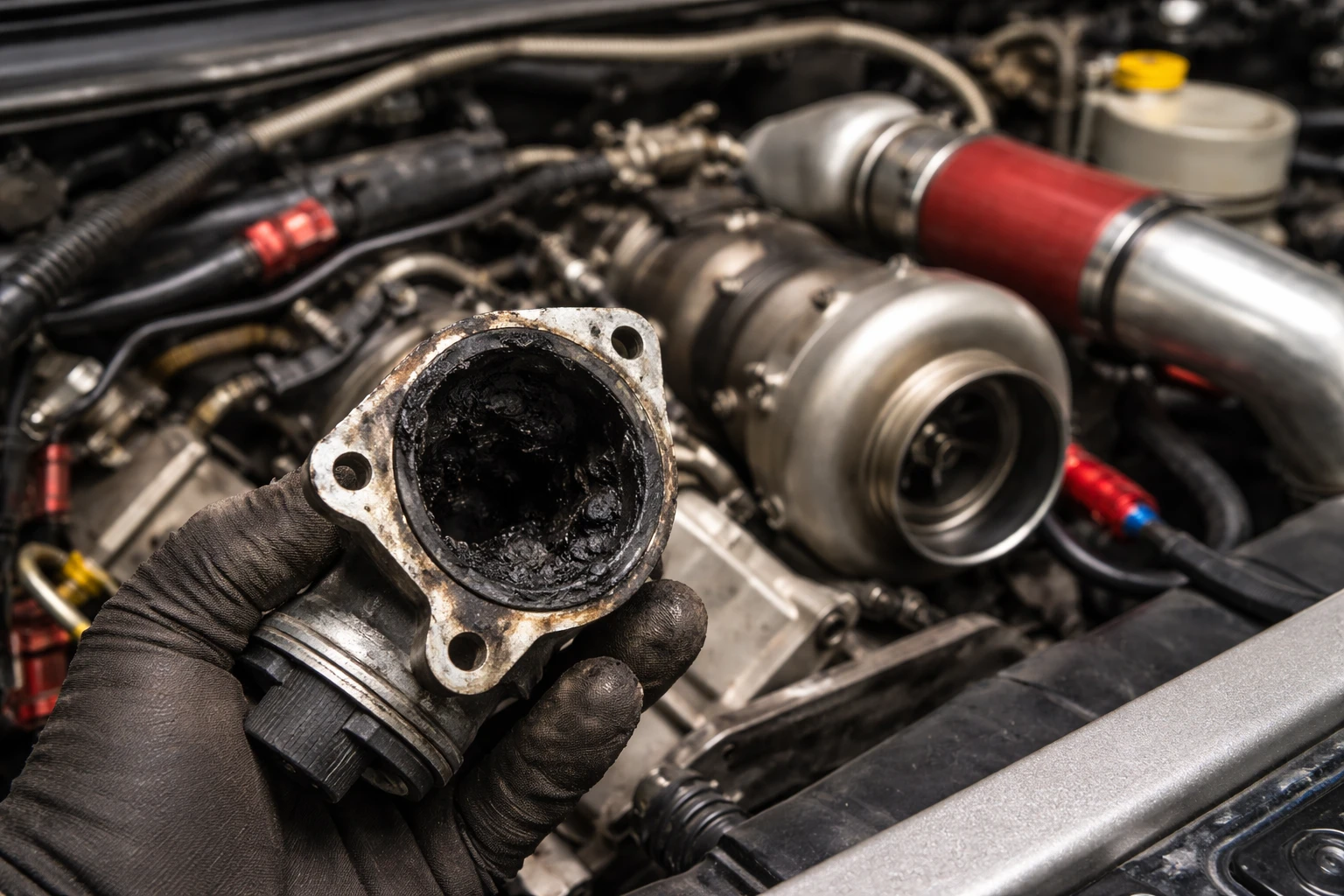
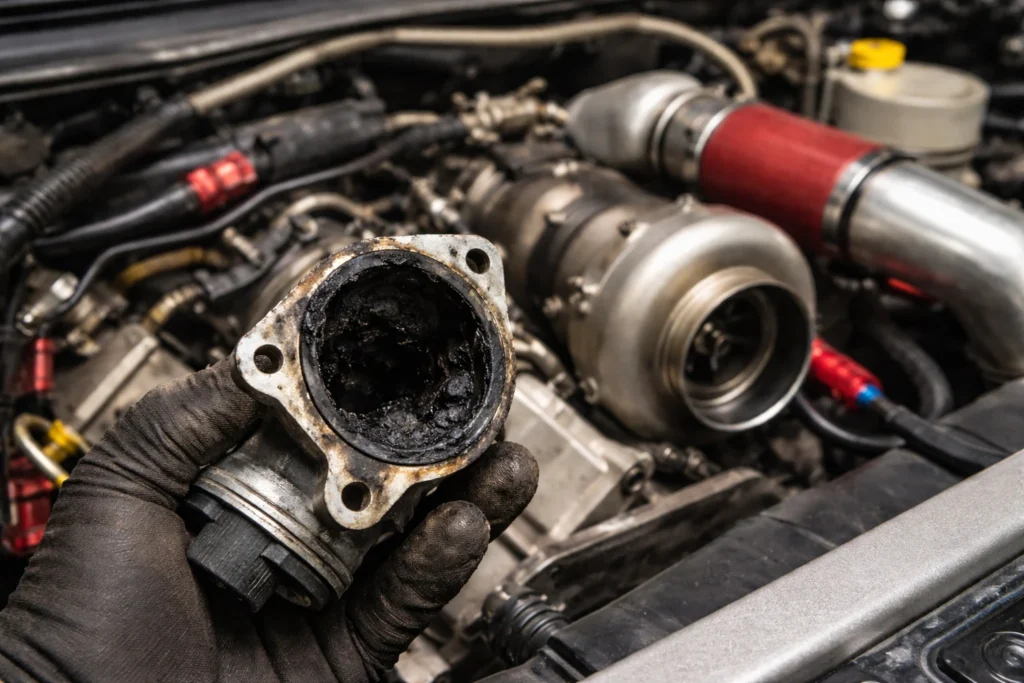
The biggest challenge with EGR systems comes from soot. Diesel exhaust contains microscopic carbon particles. When exhaust gases are recirculated back into the intake, those particles combine with oil vapors from the engine’s crankcase ventilation system.
The result?
Sticky, heavy deposits inside the intake system. Over time, this buildup can affect airflow and engine performance.
Common EGR-Related Issues
Diesel owners frequently report several problems related to EGR systems:
Carbon buildup in the intake
- Reduces airflow
- Restricts engine breathing
EGR cooler failures
- Coolant leaks
- Engine overheating
Reduced turbo efficiency
- Dirty airflow impacts boost pressure
Sensor problems
- Trigger warning lights
- Cause engine management errors
When these problems occur, many owners begin researching alternatives and that’s where Motorcraft EGR delete kits reviews become valuable.
Why Off-Road Diesel Owners Consider EGR Delete Kits
Removing the EGR system is rarely about dramatic horsepower gains. Instead, it’s about simplifying the engine system and improving reliability in off-road or competition vehicles. When the EGR system is removed, exhaust gases no longer flow back into the intake manifold. This means the engine receives cleaner air.
Performance Benefits
Diesel owners who install delete kits sometimes notice improvements such as:
- Faster throttle response
- More consistent turbo performance
- Smoother airflow through the intake system
These improvements are subtle but noticeable.
Reliability Improvements
The biggest advantage of an EGR delete is eliminating failure points. Once the system is removed:
- The EGR cooler can no longer leak
- Carbon buildup inside the intake slows dramatically
- Engine airflow becomes cleaner
That’s why reliability is one of the most common themes in Motorcraft EGR delete kits reviews. Truck owners want fewer mechanical problems.
Fuel Efficiency Improvements
Some diesel owners also report modest fuel efficiency gains after installing a delete kit. Cleaner airflow entering the combustion chamber can improve combustion efficiency. However, results vary depending on driving conditions and tuning.
Motorcraft and Its Role in Ford Diesel Engines
Motorcraft is Ford’s official parts brand. When Ford vehicles require replacement components, Motorcraft parts are often used because they are engineered to meet Ford specifications.
Motorcraft components are known for:
- OEM compatibility
- Reliable manufacturing standards
- Proper fitment for Ford engines
Many Powerstroke engines use Motorcraft EGR valves, coolers, and sensors. This is why owners researching upgrades often encounter Motorcraft EGR delete kits reviews. They are usually replacing factory Motorcraft emissions components.
Are There Real Motorcraft EGR Delete Kits?
This is one of the biggest misconceptions. Motorcraft itself does not manufacture EGR delete kits. Motorcraft produces emissions-compliant parts designed to maintain factory emissions systems. Delete kits are produced by aftermarket diesel performance manufacturers. So when diesel owners search for Motorcraft EGR delete kits reviews, they are usually referring to deleting the Motorcraft factory EGR system using aftermarket hardware.
Popular EGR Delete Kit Options for Ford Diesel Engines
Several manufacturers produce EGR delete kits compatible with Ford diesel engines. These are frequently discussed in Motorcraft EGR delete kits reviews.
SPELAB EGR Delete Kit
SPELAB offers affordable diesel performance upgrades.
Features include:
- CNC-machined aluminum plates
- Complete installation hardware
- Compatibility with Ford Powerstroke engines
Pros:
- Budget-friendly
- Straightforward installation
Cons:
- Not as heavy-duty as premium kits
BD Diesel EGR Delete Kit
BD Diesel is a well-known manufacturer in the diesel performance industry. Their kits emphasize durability and long-term reliability.
Pros:
- Heavy-duty materials
- Strong industry reputation
Cons:
- Higher price point
Sinister Diesel EGR Delete Kit
Sinister Diesel focuses on premium performance components.
Pros:
- High-quality billet aluminum parts
- Excellent machining and durability
Cons:
- Premium pricing
Many truck owners comparing these options also read bullet proof diesel egr delete kits reviews to evaluate how different brands handle reliability upgrades for Ford Powerstroke engines.
Quick Comparison Table
| Brand | Engine Compatibility | Material | Installation Difficulty | Best For |
| SPELAB | Ford Powerstroke | Aluminum | Moderate | Budget builds |
| BD Diesel | Multiple Ford engines | Steel | Moderate | Reliability |
| Sinister Diesel | Performance builds | Billet aluminum | Moderate | Premium builds |
This comparison reflects options commonly mentioned in motorcraft egr delete kits reviews.
Key Features to Look for in an EGR Delete Kit
Choosing the right kit is critical.
High-Quality Materials
Look for:
- Stainless steel components
- Billet aluminum plates
- Corrosion-resistant coatings
Cheap materials can warp under extreme heat.
Complete Installation Hardware
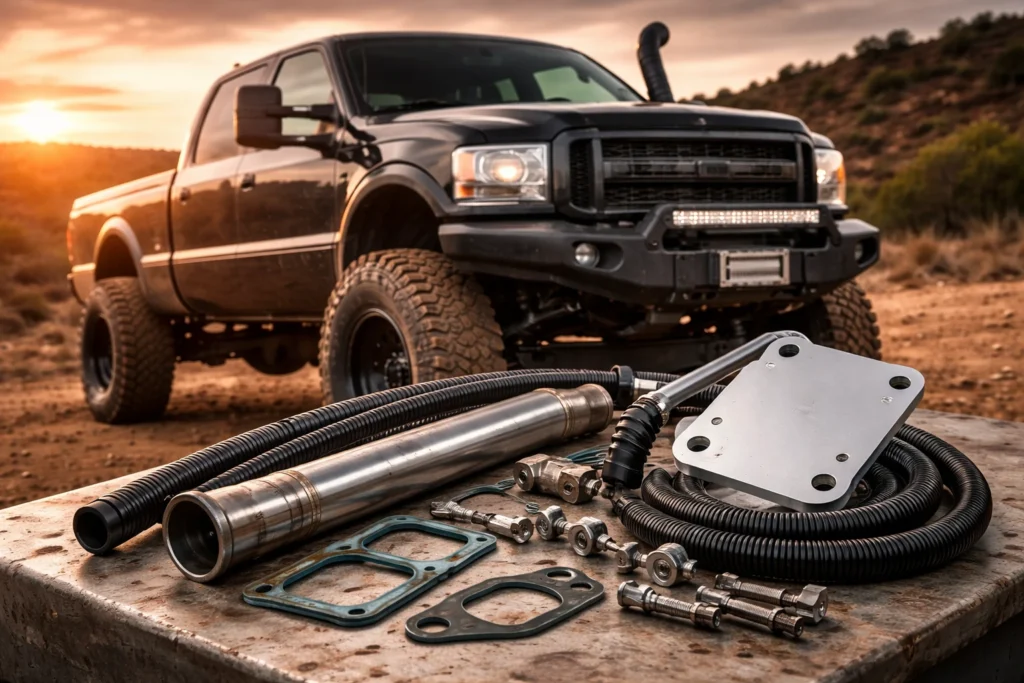
A quality kit should include:
- Block-off plates
- Coolant reroute hoses
- Gaskets
- Mounting bolts
Incomplete kits can complicate installation.
Engine Compatibility
Different Powerstroke engines require different delete kits.
Common engines include:
- 6.0 Powerstroke
- 6.4 Powerstroke
- 6.7 Powerstroke
Many Motorcraft EGR delete kits reviews stress verifying compatibility before purchase.
ECU Tuning Support
Deleting the EGR system usually requires ECU tuning.
Without tuning, drivers may encounter:
- Check engine lights
- Limp mode
- Reduced engine efficiency
Proper tuning ensures smooth operation after installation.
Installation Overview
Installing an EGR delete kit requires moderate mechanical knowledge. Typical installation time ranges from 3–6 hours.
Basic Tools Required
Most installations require:
- Socket wrench set
- Torque wrench
- Screwdrivers
- Coolant drain equipment
Typical Installation Steps
- Drain engine coolant
- Remove the EGR valve and cooler
- Install block-off plates
- Reroute coolant lines
- Reassemble intake components
- Install ECU tuning
Many Motorcraft EGR delete kits reviews recommend professional installation if you are unfamiliar with diesel engine work.
Reliability Improvements After an EGR Delete
The biggest benefit of deleting the EGR system is reliability.
Cleaner Intake System
Without exhaust gases entering the intake, soot buildup is dramatically reduced.
Reduced Risk of Coolant Leaks
EGR cooler failures are a known issue in some diesel engines. Deleting the cooler eliminates that risk.
Improved Long-Term Engine Performance
Cleaner airflow helps maintain:
- Consistent combustion
- Efficient turbo performance
- Stable engine temperatures
These improvements are commonly highlighted in Motorcraft EGR delete kits reviews.
Maintenance Tips After Installing an EGR Delete
Deleting the EGR system does not eliminate the need for maintenance.
Monitor Engine Temperatures
Track:
- Exhaust gas temperatures
- Coolant temperatures
Maintain the Turbocharger
Good turbo maintenance includes:
- Regular oil changes
- Monitoring boost pressure
- Inspecting intercooler hoses
Inspect the Intake System
Even after deleting the EGR system, occasional inspections help maintain optimal airflow.
Use High-Quality Diesel Fuel
Quality fuel protects injectors and supports better combustion.
Final Thoughts on Motorcraft EGR Delete Kits Reviews
After reviewing dozens of Motorcraft EGR delete kits reviews, one conclusion becomes clear. Motorcraft itself does not produce delete kits. Instead, diesel owners typically replace factory Motorcraft EGR components with aftermarket delete systems designed for off-road performance applications. For diesel enthusiasts building off-road trucks, deleting the EGR system can simplify the engine setup and reduce known failure points.
But the key to success is simple. Choose quality parts. Install them properly. And understand the regulations that apply to emissions equipment. When done correctly, an EGR delete can improve reliability, airflow, and long-term diesel performance.
FAQs
An EGR delete kit removes the exhaust gas recirculation system from a diesel engine. It replaces the factory components with block-off plates and rerouted coolant lines.
No, Motorcraft does not manufacture EGR delete kits. Most kits mentioned in Motorcraft EGR delete kits reviews are produced by aftermarket diesel performance companies.
Many off-road diesel owners install them to reduce carbon buildup, improve airflow, and eliminate common EGR cooler failures.
It can improve throttle response and airflow in some off-road builds. However, the main benefit is usually long-term reliability.
Yes, most engines require ECU tuning after an EGR delete. Proper tuning prevents check engine lights and ensures smooth operation.
In many areas, removing emissions equipment is illegal for vehicles used on public roads. These kits are generally intended for off-road or competition vehicles.
Installation typically takes between 3 and 6 hours. The exact time depends on the engine model and the installer’s experience.
Ford Powerstroke engines such as the 6.0L, 6.4L, and 6.7L are commonly paired with EGR delete kits.
Common problems include carbon buildup in the intake, EGR cooler leaks, and reduced engine airflow.
Look for durable materials, full installation hardware, and compatibility with your specific engine model.