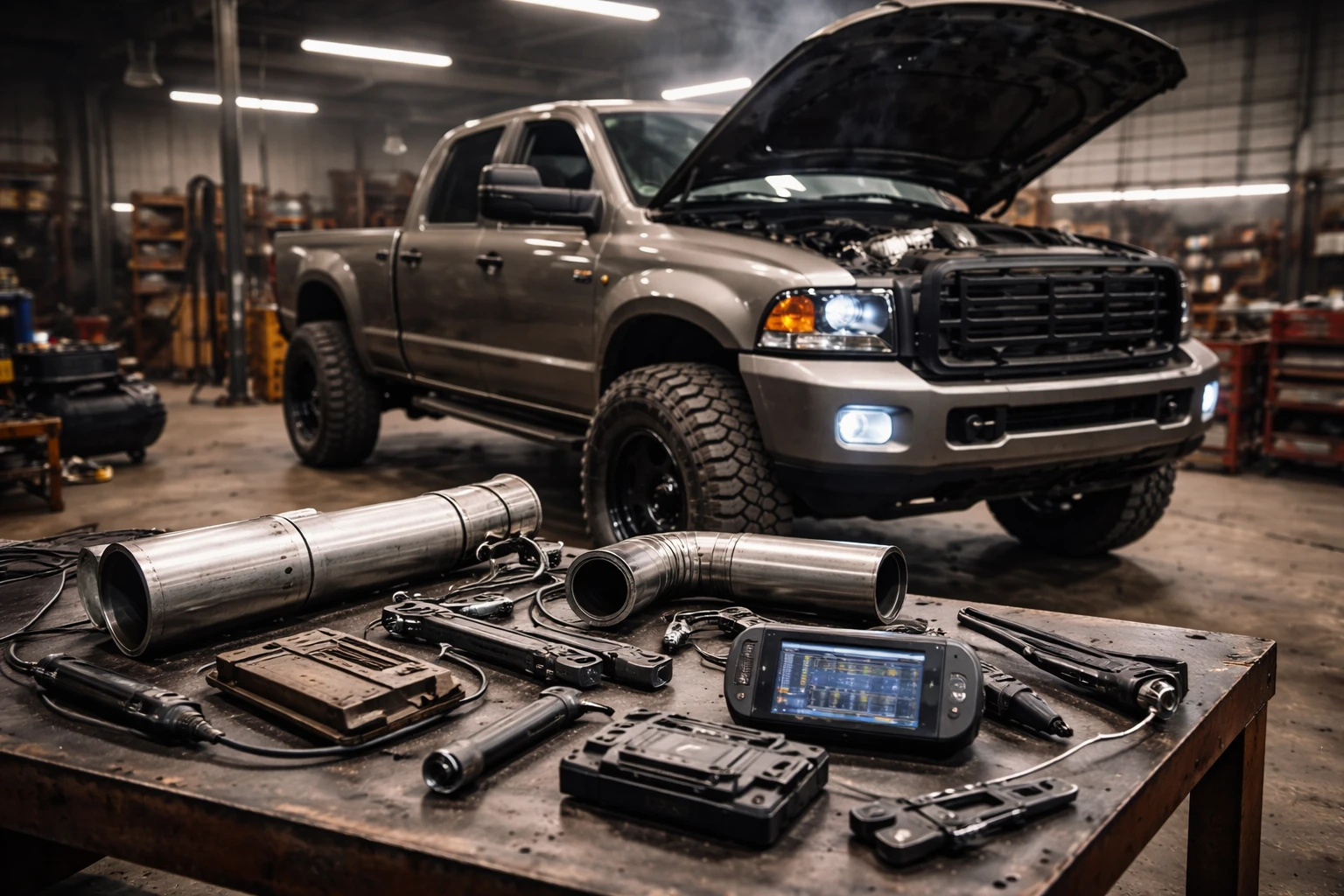
Modern diesel trucks are engineering marvels. They’re built to tow heavy loads, survive harsh environments, and rack up hundreds of thousands of miles. But here’s the truth many performance enthusiasts discover quickly: factory settings are often conservative. Manufacturers prioritize emissions compliance, reliability across global markets, and fuel economy standards. Performance? That’s usually left on the table.
That’s exactly why so many off-road truck owners start researching a diesel delete kits and custom tuning performance guide. When done properly for off-road use, delete kits combined with professional tuning can dramatically change how a diesel engine behaves. Power increases. Throttle response sharpens. And the engine often runs cleaner internally because airflow improves. But unlocking those gains isn’t about randomly installing parts. It requires understanding the relationship between emissions systems, airflow, fueling, and ECU programming.
Let’s break it down.
Why Diesel Owners Turn to Delete Kits and Custom Tuning
Every diesel engine relies on three fundamental ingredients to produce power:
- Air
- Fuel
- Compression
Modern emissions systems interfere with that balance by restricting airflow and introducing additional exhaust recirculation. These systems serve an environmental purpose, but they also create bottlenecks in performance. This is why enthusiasts exploring off-road builds begin studying a diesel delete kits and custom tuning performance guide. Removing certain restrictions allows engines to breathe more freely, while custom ECU tuning recalibrates fuel delivery and turbo behavior.
When these two elements work together, the result can be dramatic.
Common goals include:
- Increased horsepower and torque
- Faster throttle response
- Lower exhaust gas temperatures
- Reduced maintenance related to emissions components
- Better long-term reliability in off-road environments
Understanding Modern Diesel Emissions Systems
Before discussing delete kits, it helps to understand what factory emissions equipment actually does. Modern diesel engines typically include several systems designed to reduce pollutants.
Key Emissions Components
EGR (Exhaust Gas Recirculation)
This system redirects a portion of exhaust gases back into the intake manifold to lower combustion temperatures and reduce nitrogen oxide emissions. More information about how EGR systems function.
DPF (Diesel Particulate Filter)
The DPF traps soot particles from diesel exhaust and periodically burns them off through a process called regeneration.
SCR (Selective Catalytic Reduction)
SCR systems inject Diesel Exhaust Fluid (DEF) into the exhaust stream to break down nitrogen oxides.
DEF Injection System
The DEF system supports SCR by delivering urea-based fluid that reacts with exhaust gases. According to the U.S. Environmental Protection Agency, modern diesel emissions regulations were introduced to significantly reduce harmful pollutants from diesel engines. While these systems serve environmental goals, they also introduce additional complexity and restrictions that can influence performance.
What Is a Diesel Delete Kit?
A diesel delete kit is a set of hardware components designed to remove or bypass certain emissions systems for off-road vehicles. The goal is to reduce restrictions in the intake and exhaust systems. But hardware alone is not enough. Without ECU tuning, the vehicle will typically trigger error codes or enter limp mode.
Core Components of a Delete Kit
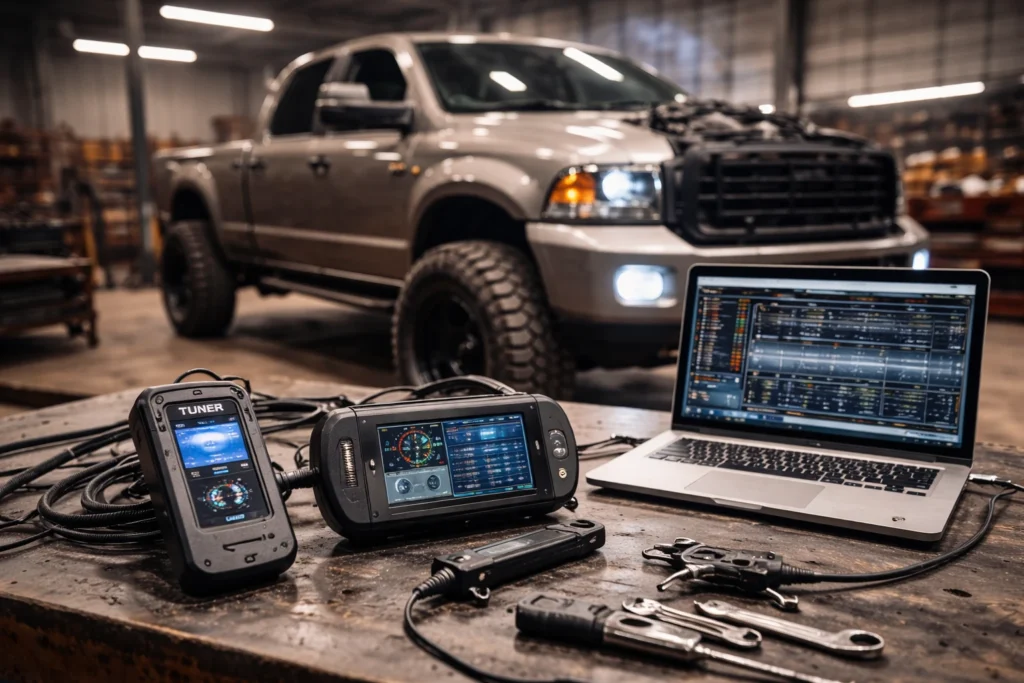
Typical delete kits include components such as:
- EGR block-off plates
- DPF delete pipes
- DEF system removal hardware
- Replacement exhaust sections
- Sensor relocation fittings
These parts simplify the exhaust pathway and reduce airflow restrictions.
Types of Diesel Delete Kits
Different kits remove different emissions systems depending on the vehicle and performance goals.
| Delete Type | Components Removed | Purpose |
| EGR Delete | EGR valve and cooler | Prevent soot buildup in intake |
| DPF Delete | Diesel particulate filter | Reduce exhaust restriction |
| Full Delete | EGR, DPF, DEF | Maximum airflow improvement |
| Partial Delete | Selected systems | Moderate performance gains |
For many off-road builds, enthusiasts study a diesel delete kits and custom tuning performance guide before selecting the right configuration.
What Is Custom Diesel Tuning?
Hardware upgrades improve airflow, but software changes unlock the real performance.
Every modern diesel engine uses an Engine Control Unit (ECU) to manage fuel delivery, turbo boost pressure, and injection timing. Custom tuning modifies these factory parameters.
What Diesel Tuners Adjust
Professional diesel tuners typically adjust:
- Fuel injection timing
- Air-to-fuel ratio
- Turbo boost pressure
- Throttle mapping
- Torque management limits
- Transmission shift points
These adjustments allow the engine to operate efficiently after emissions components are removed.
Why Delete Kits Require Custom Tuning
Installing delete hardware without ECU tuning will almost always cause issues.
The ECU constantly monitors emissions sensors. When those sensors are removed, the computer registers faults and may activate limp mode.
Custom tuning prevents this by recalibrating the ECU.
This ensures:
- Proper fuel delivery
- Stable turbo operation
- No warning codes
- Consistent engine performance
That’s why hardware and software must always work together in any serious diesel delete kits and custom tuning performance guide.
Performance Benefits of Diesel Delete Kits and Custom Tuning
When airflow restrictions are removed and the ECU is properly tuned, diesel engines can perform dramatically better.
One of the main reasons enthusiasts pursue these upgrades is simple: Diesel Delete Kits Improve Diesel Engine Performance when paired with high-quality tuning and properly matched hardware. With fewer exhaust restrictions and cleaner airflow through the engine, combustion becomes more efficient and power delivery improves significantly.
Increased Horsepower and Torque
Improved airflow allows the turbocharger to operate more efficiently.
Benefits include:
- Higher peak horsepower
- Increased torque at low RPM
- Faster acceleration
For trucks used in towing or off-road environments, these improvements can be immediately noticeable.
Improved Fuel Economy
When the engine operates under less restriction, combustion efficiency often improves.
Drivers sometimes report:
- Better highway mileage
- More consistent fuel consumption
- Fewer regeneration cycles
Lower Exhaust Gas Temperatures
High exhaust gas temperatures can damage engine components over time.
Reducing exhaust restriction can lower EGT levels, which helps protect:
- Turbochargers
- Pistons
- Exhaust valves
Faster Throttle Response
Turbo lag decreases when airflow improves.
This results in quicker throttle response and more immediate power delivery.
Popular Diesel Engines for Delete and Tuning Builds
Some diesel engines are particularly popular for performance builds because they respond well to tuning.
Cummins Engines
Cummins engines are widely respected for durability and torque potential.
Popular platforms include:
- 5.9L Cummins
- 6.7L Cummins
Duramax Engines
GM’s Duramax lineup has also become a favorite for performance diesel enthusiasts.
Popular platforms include:
- LBZ Duramax
- LML Duramax
- L5P Duramax
Power Stroke Engines
Ford’s Power Stroke engines have improved significantly over time.
Common performance platforms include:
- 6.0L Power Stroke
- 6.4L Power Stroke
- 6.7L Power Stroke
Each of these engines has unique characteristics, which is why owners often consult a diesel delete kits and custom tuning performance guide before modifying them.
Types of Diesel Tuners Used With Delete Kits
Different tuning tools exist depending on the level of customization needed.
Handheld Tuners
Handheld devices plug into the truck’s OBD port and upload preloaded performance maps.
Advantages include:
- Easy installation
- Multiple power levels
- Quick updates
Custom ECU Flashing
Professional tuners create custom files designed for specific engine setups.
Benefits include:
- Precise fuel mapping
- Optimized turbo control
- Reduced smoke output
Remote Live Tuning
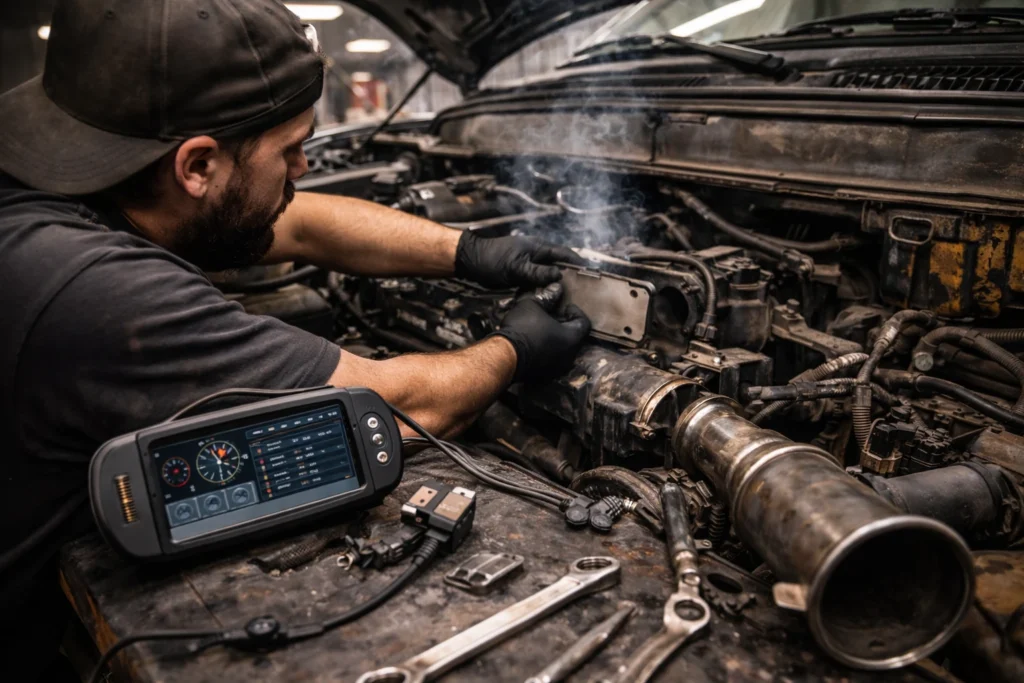
Some tuners offer remote sessions that allow real-time adjustments while the engine runs.
This approach often produces the most refined results.
Installation Overview
Installing delete kits involves both mechanical work and ECU programming.
Mechanical Installation
Typical steps include:
- Removing emissions components
- Installing block-off plates
- Replacing exhaust pipes
- Rerouting sensors
Installation time varies depending on the truck platform.
Software Installation
Once hardware installation is complete, the ECU must be recalibrated.
This usually involves:
- Connecting a tuning device
- Uploading new calibration files
- Restarting the ECU
- Testing engine parameters
Maintenance After Installing Delete Kits
Performance upgrades still require responsible maintenance.
Recommended practices include:
- Monitoring exhaust gas temperatures
- Performing regular oil changes
- Inspecting turbo components
- Checking boost pressure
- Maintaining fuel system cleanliness
With proper maintenance, tuned diesel engines can remain extremely reliable.
Supporting Performance Upgrades
Delete kits and tuning are often combined with additional performance upgrades.
Common supporting modifications include:
- High-flow cold air intake systems
- Performance exhaust systems
- Upgraded intercoolers
- Lift pumps and fuel delivery upgrades
- Larger turbochargers
These components help the engine make the most of increased airflow and fuel delivery.
Real-World Performance Gains
Performance improvements vary depending on engine platform and tuning quality.
Typical gains look like this:
| Upgrade Level | Horsepower Gain | Torque Gain |
| Basic Tune | 50–80 HP | 100–150 lb-ft |
| Delete + Tune | 100–150 HP | 200–300 lb-ft |
| Full Performance Build | 200+ HP | 400+ lb-ft |
These numbers explain why many off-road enthusiasts continue researching the diesel delete kits and custom tuning performance guide when upgrading their trucks.
Common Mistakes Diesel Owners Make
Even experienced truck owners sometimes make avoidable mistakes.
Common issues include:
- Buying low-quality delete kits
- Using poorly written tuning files
- Ignoring EGT monitoring
- Overloading stock turbochargers
- Skipping supporting upgrades
Avoiding these mistakes can save thousands of dollars in repairs.
Final Thoughts: Unlocking Diesel Performance
Diesel engines are built for durability and torque. Even in factory form they deliver impressive performance.
But when airflow restrictions are reduced and ECU tuning is optimized, these engines reveal an entirely different level of capability.
Power increases. Throttle response sharpens. The engine feels stronger and more responsive.
That transformation is exactly why so many enthusiasts continue exploring the diesel delete kits and custom tuning performance guide when building high-performance off-road trucks.
Just remember: the best results come from balancing hardware upgrades with professional tuning and responsible maintenance.
Get that balance right and your diesel truck can deliver performance that truly lives up to the name Explosive Diesels.
FAQs
Diesel delete kits are hardware modifications that remove certain emissions components from a diesel engine to reduce exhaust restriction and improve airflow for off-road performance.
Many enthusiasts install them to increase horsepower, improve throttle response, and reduce maintenance issues related to emissions systems.
Yes. Without custom ECU tuning, the engine will typically trigger warning codes or enter limp mode because emissions sensors are no longer detected.
Depending on the engine and tuning quality, gains can range from about 50 horsepower with a tune alone to over 150 horsepower with a full delete and custom tune.
Some drivers report better fuel efficiency because the engine operates with less exhaust restriction and improved combustion efficiency.
In many regions they are not legal for on-road use and are intended only for off-road or competition vehicles.
Popular platforms include Cummins, Duramax, and Power Stroke engines because they typically respond well to airflow and ECU modifications.
They can reduce issues related to clogged emissions systems, but proper engine maintenance is still essential for long-term reliability.
Common upgrades include cold air intakes, upgraded intercoolers, performance exhaust systems, and improved fuel delivery components.
Yes. Low-quality tuning files or aggressive settings can increase engine stress, making professional tuning extremely important.